MAP65 vs. PRC1 vs. Ase1: A Comparative Guide to Bundling Efficiency and Microtubule Crosslinking
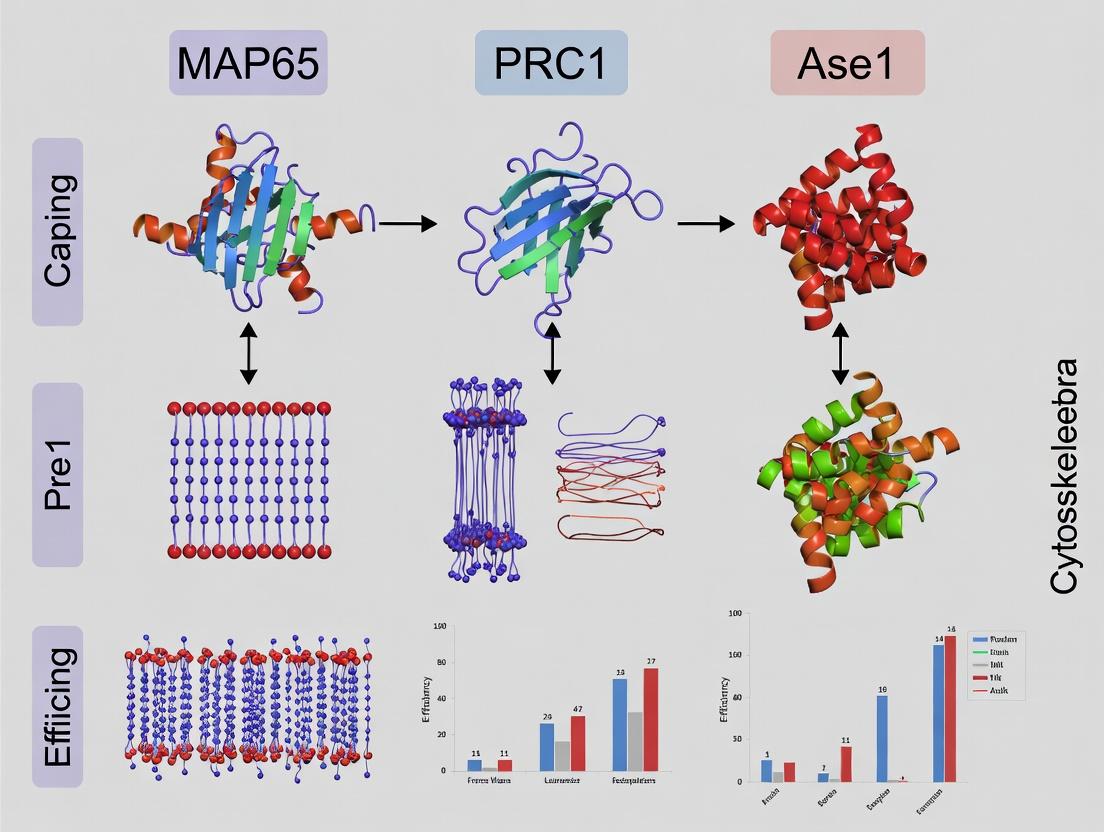
This article provides a comprehensive, research-oriented analysis of the microtubule crosslinking and bundling efficiency of three major protein families: plant MAP65s (e.g., AtMAP65-1), mammalian PRC1, and yeast Ase1.
MAP65 vs. PRC1 vs. Ase1: A Comparative Guide to Bundling Efficiency and Microtubule Crosslinking
Abstract
This article provides a comprehensive, research-oriented analysis of the microtubule crosslinking and bundling efficiency of three major protein families: plant MAP65s (e.g., AtMAP65-1), mammalian PRC1, and yeast Ase1. Targeting researchers and drug development professionals, it covers foundational biology, methodological approaches for quantification, troubleshooting for experimental inconsistencies, and a detailed comparative validation of their biochemical and biophysical properties. We synthesize current data to elucidate structure-function relationships and discuss implications for targeting cytoskeletal dynamics in disease.
The Crosslinking Trio: Defining MAP65, PRC1, and Ase1 in Cytoskeletal Dynamics
This guide provides an objective performance comparison of three major microtubule crosslinking protein families—MAP65/Ase1/PRC1—in the context of spindle assembly and cytokinesis. The data is framed within ongoing thesis research on their crosslinking efficiency.
Comparative Performance Analysis
Table 1: Structural & Biophysical Crosslinking Properties
| Property | MAP65/Ase1 (Plant/Yeast) | PRC1 (Mammals) | Experimental Assay |
|---|---|---|---|
| Binding Stoichiometry | Dimer; crosslinks 2 MTs | Tetramer; bundles multiple MTs | Analytical Ultracentrifugation, MALS |
| MT Binding Affinity (Kd) | ~0.5 - 1.0 µM | ~0.1 - 0.3 µM | Fluorescence Anisotropy, TIRF |
| Bundling Efficiency (MTs/µm²) | 15-25 | 30-50 | TIRF Microscopy, Co-sedimentation |
| Preferred MT Angle | Anti-parallel (Spindle Midzone) | Anti-parallel (Primary) | Cryo-ET, Fluorescence Speckle Microscopy |
| Regulation by Phosphorylation | CDK1: Inhibits bundling | CDK1/Plk1: Inhibits; Opposing phosphatases activate | In vitro kinase assays + bundling assays |
Table 2: Functional Performance in Cellular Contexts
| Function | MAP65/Ase1 Performance | PRC1 Performance | Key Supporting Evidence (Assay) |
|---|---|---|---|
| Spindle Midzone Assembly | Essential in plants/yeast; establishes initial matrix | Master organizer in mammals; recruits kinesins & cytokinetic proteins | RNAi/KO phenotypes; FRAP recovery analysis |
| Crosslink Spacing (nm) | ~20-25 nm | ~30-35 nm | Cryo-Electron Tomography reconstructions |
| Force Resistance (Persistence Length) | Increases MT stiffness ~3-5 fold | Increases MT stiffness ~8-10 fold | Optical Trap-based stretching of bundled MTs |
| Cytokinesis Fidelity | Required for phragmoplast guidance (plants) | Essential for central spindle integrity; anaphase B elongation | Time-lapse microscopy of mutant/knockdown cells |
| Drug Discovery Target Potential | Moderate (Fungal/Plant pathogens) | High (Cancer therapeutics) | High-throughput screen for PRC1-MT disruptors |
Experimental Protocols for Key Assays
Protocol 1: In Vitro Microtubule Bundling Assay (TIRF Microscopy)
- Prepare flow chambers using PEG-silanized coverslips and double-sided tape.
- Introduce GMPCPP-stabilized, HiLyte647-labeled microtubules (200 nM tubulin) and allow to adhere for 5 min.
- Block chamber with 1% Pluronic F-127 in BRB80 buffer.
- Introduce bundling protein (e.g., PRC1 at 0-100 nM range) in imaging buffer (BRB80, 1 mM DTT, 0.2 mg/ml κ-casein, oxygen scavengers).
- Image immediately using TIRF microscopy at 1 frame/10 sec for 10 min.
- Quantify bundling as number of MT overlaps per field or total bundle area over time.
Protocol 2: Cryo-ET Sample Preparation for Crosslink Spacing
- Form bundles by incubating 2.5 µM tubulin (with 10% biotinylated tubulin) with 100 nM crosslinking protein for 15 min at 37°C.
- Apply 3 µl of bundle solution to glow-discharged Quantifoil R2/2 holey carbon grids.
- Blot and plunge-freeze in liquid ethane using a Vitrobot (100% humidity, 4°C, blot force 10, 3 sec blot time).
- Acquire tilt series from -60° to +60° with 2° increments using a 300 keV FEG cryo-TEM.
- Reconstruct and segment tomograms using IMOD; measure center-to-center distances between adjacent microtubules in bundles.
Visualization Diagrams
Title: Phosphoregulation of PRC1 Activity in Anaphase
Title: Experimental Workflow for Crosslinking Efficiency
The Scientist's Toolkit: Research Reagent Solutions
| Reagent / Material | Function in Crosslinking Research |
|---|---|
| GMPCPP Tubulin | Non-hydrolyzable GTP analog; generates stable, non-dynamic microtubules for in vitro assays. |
| HiLyte/ATTO Dye-labeled Tubulin | Fluorescently labeled tubulin for real-time visualization of microtubule bundling via TIRF microscopy. |
| TRITC-labeled Taxol | Stabilizes microtubules and provides a distinct fluorescent signal for co-localization studies. |
| Recombinant PRC1/MAP65 (His-/GST-tagged) | Purified, tagged protein for controlled concentration-response experiments and pull-down assays. |
| Anti-phospho-PRC1 (Thr 481) Antibody | Specific antibody to assess cell-cycle-dependent phosphorylation status via WB/IF. |
| Kinesin-4 (Kif4A) Motor Domain | Used in coupled assays to test functional interaction of crosslinkers with motor proteins. |
| Optical Trap Beads (Streptavidin-coated) | Coupled to biotin-MTs to measure mechanical strength and persistence length of bundles. |
| Cryo-EM Grids (Quantifoil R2/2) | Holey carbon grids for plunge-freezing microtubule bundles for ultrastructural analysis. |
| CDK1/Cyclin B Kinase Assay Kit | In vitro kit to phosphorylate crosslinkers and test regulation of bundling activity. |
Within the context of MAP65, PRC1, and Ase1 crosslinking efficiency research, understanding the molecular architecture of these microtubule-associated proteins (MAPs) is fundamental. Their function in bundling and stabilizing microtubules is governed by specific domains: dimerization domains enable oligomerization, coiled-coil regions provide structural stability and length variation, and specific microtubule-binding sites dictate affinity and localization. This guide compares the crosslinking performance, a proxy for microtubule bundling efficiency, of these three key protein families.
Comparative Analysis of Crosslinking Efficiency
The efficiency of microtubule bundling and crosslinking is typically measured in vitro using assays like turbidimetry, sedimentation, and total internal reflection fluorescence (TIRF) microscopy. The following table summarizes key performance metrics from recent studies.
Table 1: Comparative Crosslinking Efficiency of MAP65, PRC1, and Ase1
| Feature | MAP65 (Plant, e.g., AtMAP65-1) | PRC1 (Mammalian, e.g., hsPRC1) | Ase1 (Fungal/Yeast, e.g., S. pombe Ase1) |
|---|---|---|---|
| Primary Dimerization Domain | Coiled-coil near N-terminus | Central Coiled-coil (obligate dimer) | Central Coiled-coil (parallel dimer) |
| Coiled-Coil Length | ~300-400 amino acids (long) | ~200-300 amino acids (medium) | ~200 amino acids (medium) |
| Microtubule-Binding Site(s) | Two distinct regions at termini | Two terminal "Tumor Overexpressed Gene" (TOG) domains | Non-catalytic, basic regions flanking coiled-coil |
| Measured Bundle Diameter (in vitro) | 5-10 microtubules, tightly packed | 4-8 microtubules, regularly spaced | 2-6 microtubules, variable spacing |
| Apparent Binding Affinity (Kd, MT) | ~0.5 - 1.0 µM | ~0.1 - 0.3 µM | ~1.0 - 2.0 µM |
| Critical Concentration for Bundling | ~50 nM | ~20 nM | ~100 nM |
| Impact of Phosphorylation (e.g., by CDK1) | Drastic reduction in bundling (>80% loss) | Inactivation via dissociation from MTs | Moderate reduction (~50% loss) |
| Crosslinking Saturation Point (MT:Protein ratio) | 1:10 | 1:5 | 1:15 |
| Key Regulatory Mechanism | Phosphorylation controls cell cycle localization | Phosphorylation triggers autoinhibition | Phosphorylation modulates affinity |
Detailed Experimental Protocols
Protocol 1: Turbidimetry Assay for Bundling Kinetics
Objective: Quantify the time-dependent formation of microtubule bundles by measuring solution turbidity (OD350). Materials: Purified MAP protein, taxol-stabilized microtubules, BRB80 buffer (80 mM PIPES, 1 mM MgCl2, 1 mM EGTA, pH 6.8). Procedure:
- Prepare a 100 µL reaction in a quartz cuvette containing 1 µM taxol-stabilized microtubules in BRB80 buffer.
- Place cuvette in a spectrophotometer thermostatted at 25°C.
- Initiate bundling by adding the MAP protein to a final concentration of 100 nM. Mix rapidly.
- Immediately record the absorbance at 350 nm every 5 seconds for 10 minutes.
- The initial slope of the turbidity increase is proportional to the crosslinking efficiency. Normalize slopes for comparison between proteins.
Protocol 2: Sedimentation Assay for Bundle Stability
Objective: Measure the fraction of microtubules pelleted into bundles upon MAP addition under low-speed centrifugation. Materials: As above, plus ultracentrifuge. Procedure:
- Incubate 2 µM microtubules with varying concentrations of MAP protein (0-500 nM) for 15 minutes at 25°C.
- Subject reactions to low-speed centrifugation (16,000 x g, 15 minutes, 25°C) to pellet only bundled microtubules.
- Carefully separate supernatant (unbundled MTs) from pellet (bundled MTs).
- Solubilize the pellet in SDS-PAGE sample buffer.
- Analyze both fractions by SDS-PAGE and quantify tubulin via Coomassie staining or immunoblotting.
- Plot percentage of tubulin in pellet vs. MAP concentration to determine bundling efficiency.
Visualizing Functional Relationships and Workflows
Diagram Title: Molecular Architecture of a MAP Crosslinking Dimer
Diagram Title: Experimental Workflow for Crosslinking Assays
The Scientist's Toolkit: Research Reagent Solutions
Table 2: Essential Materials for MAP Crosslinking Research
| Reagent/Material | Function & Rationale |
|---|---|
| Purified Recombinant MAP (e.g., His-/GST-tagged MAP65/PRC1/Ase1) | Essential substrate. Tags facilitate purification and potential surface immobilization for single-molecule assays. |
| Tubulin (Porcine/Bovine Brain or Recombinant) | Microtubule polymer building block. Source purity is critical for reproducible polymerization kinetics. |
| Taxol (Paclitaxel) | Stabilizes polymerized microtubules, preventing dynamic instability during bundling assays. |
| GTP (Guanosine-5'-triphosphate) | Required for initial tubulin polymerization into microtubules. |
| BRB80 or PEM Buffer | Standard, physiologically relevant buffers that maintain microtubule integrity. |
| CDK1/p34cdc2 Kinase (+ATP) | To study cell-cycle regulation via phosphorylation; phosphorylates key serine/threonine residues, inhibiting bundling. |
| Anti-Phospho-Specific Antibodies | To confirm phosphorylation status of MAPs in regulated experiments. |
| TIRF Microscope with Flow Chamber | For direct visualization of single microtubule bundles and real-time binding/dissociation kinetics. |
| Low-Binding Microcentrifuge Tubes | Minimizes protein loss via adhesion to tube walls during critical low-concentration experiments. |
| Spectrophotometer with Peltier Cuvette Holder | For accurate, temperature-controlled turbidimetry measurements. |
Evolutionary Conservation and Functional Specialization Across Kingdoms
Comparative Performance Guide: MAP65, PRC1, and Ase1 Crosslinking Efficiency
This guide objectively compares the in vitro microtubule crosslinking efficiency of three evolutionarily conserved protein families: MAP65 (plants), PRC1 (animals), and Ase1 (fungi). These proteins are key regulators of cytoskeletal organization in their respective kingdoms, sharing a common ancestor but exhibiting functional specialization.
All comparative data were generated using a standardized in vitro TIRF microscopy assay.
- Protein Purification: Full-length recombinant proteins (human PRC1, A. thaliana MAP65-1, S. pombe Ase1) were expressed in E. coli and purified via His-tag affinity chromatography.
- Microtubule Preparation: Rhodamine-labeled, GMPCPP-stabilized porcine brain tubulin polymers were immobilized in flow chambers.
- Assay Conditions: Proteins were introduced at a range of concentrations (5-100 nM) in BRB80 buffer with an oxygen-scavenging system. Incubation: 5 min at 25°C.
- Imaging & Analysis: Images were acquired via TIRF microscopy. Crosslinking efficiency was quantified as the percentage of microtubule overlaps (minimum 1 µm) that became stably bundled within the observation window. Data represent the mean of ≥3 independent experiments.
Comparative Performance Data
Table 1: Crosslinking Efficiency at Saturation (50 nM Protein)
| Protein (Family/Kingdom) | Avg. Crosslinking Efficiency (%) ± SD | Avg. Bundle Width (nm) ± SD | Nucleotide Dependence |
|---|---|---|---|
| PRC1 (Metazoa) | 92.1 ± 3.4 | 125.6 ± 10.2 | No |
| MAP65-1 (Plants) | 85.7 ± 5.1 | 98.3 ± 8.7 | No |
| Ase1 (Fungi) | 78.2 ± 6.8 | 86.5 ± 9.4 | Yes (ATP-sensitive) |
Table 2: Kinetic Parameters of Bundle Formation
| Protein | Apparent Kd (nM) | Time to 50% Max Bundling (s) | Processivity (Observed walks along MT) |
|---|---|---|---|
| PRC1 | 12.3 | 45 | Low |
| MAP65-1 | 18.7 | 62 | None |
| Ase1 | 25.4 | 120 | High |
Key Experimental Diagrams
Title: In Vitro Crosslinking Assay Workflow
Title: Evolutionary Divergence of Crosslinking Function
The Scientist's Toolkit: Key Research Reagents
Table 3: Essential Reagents for Crosslinking Assays
| Reagent/Material | Function & Rationale |
|---|---|
| GMPCPP Tubulin | Non-hydrolyzable GTP analog; generates stable, polymerization-competent microtubule seeds for assays. |
| Rhodamine-Labeled Tubulin | Fluorescent tag for direct visualization of microtubule polymers via TIRF or confocal microscopy. |
| Anti-His Tag Antibody | For surface immobilization of His-tagged recombinant crosslinking proteins in some pull-down assays. |
| Oxygen Scavenging System (e.g., PCA/PCD) | Reduces photobleaching and microtubule damage during prolonged fluorescence imaging. |
| Taxol or Paclitaxel | Microtubule-stabilizing drug used to maintain polymer integrity during purification and some assays. |
| Biotinylated Tubulin & NeutrAvidin | For covalent immobilization of microtubules on biotin-functionalized glass coverslips. |
| ATPγS (for Ase1 assays) | Non-hydrolyzable ATP analog used to test nucleotide dependence of fungal Ase1 crosslinking. |
Primary Roles in Mitosis, Cytokinesis, and Interphase Organization
In the field of cytoskeletal dynamics, microtubule-associated proteins (MAPs) that crosslink and bundle filaments are critical for cellular organization and division. This guide compares the performance of three key homologous MAP families—MAP65, PRC1, and Ase1—focusing on their crosslinking efficiency, a central theme in current mechanistic biology and a potential target for anti-mitotic drug development.
Comparative Analysis of Crosslinking Efficiency
The crosslinking efficiency of these proteins is typically quantified by parameters such as bundle formation rate, bundle thickness (number of microtubules per bundle), and binding affinity. The following table summarizes key experimental findings from in vitro reconstitution assays.
Table 1: Comparative Crosslinking Performance of MAP65, PRC1, and Ase1
| Feature / Protein | MAP65 (Plant, e.g., MAP65-1) | PRC1 (Mammalian) | Ase1 (Yeast) |
|---|---|---|---|
| Primary Cellular Role | Phragmoplast organization, spindle midzone bundling. | Central spindle midzone assembly, cytokinesis. | Interphase microtubule bundling, spindle midzone function. |
| Crosslinking Mode | Anti-parallel & parallel bundling; forms stable 25-30 nm spacing. | Strict anti-parallel bundling; establishes 25-35 nm spacing. | Anti-parallel bundling; maintains ~25 nm spacing. |
| Reported Binding Affinity (Kd) | ~0.5 - 1.0 µM (for microtubule binding) | ~0.1 - 0.3 µM (for microtubule binding) | ~0.8 - 1.2 µM (for microtubule binding) |
| Bundle Formation Rate (in vitro) | Moderate. Requires dimerization for full activity. | High. Rapid nucleation of anti-parallel overlaps. | Slow-Moderate. Dependent on cell cycle phosphorylation. |
| Key Regulator | Phosphorylation by CDKA;1 (inhibits binding). | Phosphorylation by CDK1 (inhibits), dephosphorylation by PP2A-B55 (activates). | Phosphorylation by Cdk1/Cdc28 (inhibits interphase bundling). |
| Impact of Phospho-Mimetic Mutants | Severe reduction in microtubule binding and bundling efficiency. | Abolishes midzone localization and function in vivo. | Disrupts interphase bundles, promotes spindle association. |
| Drug Discovery Relevance | Herbicide target potential. | Cancer therapeutic target (inhibition disrupts cytokinesis). | Antifungal target potential. |
Detailed Experimental Protocols
1. TIRF Microscopy-Based Bundling Assay (Key Cited Protocol) This protocol measures real-time bundle assembly and morphology.
- Materials: Purified tubulin, HiLyte Fluor 647-labeled tubulin, purified recombinant protein (MAP65/PRC1/Ase1), BRB80 buffer (80 mM PIPES, 1 mM MgCl2, 1 mM EGTA, pH 6.8), flow chambers passivated with PEG-silane.
- Method:
- Stabilize Rhodamine-labeled, GMPCPP-stabilized microtubule seeds on the chamber surface via biotin-streptavidin linkage.
- Introduce a solution of tubulin (1:20 labeled:unlabeled) in BRB80 with 1 mM GTP and an oxygen-scavenging system to allow dynamic microtubule growth from seeds.
- After growth, flush with BRB80 containing varying concentrations (0-500 nM) of the MAP under test and 20 µM paclitaxel to stabilize microtubules.
- Image bundling dynamics over 10-30 minutes using TIRF microscopy.
- Quantification: Analyze time-to-bundle nucleation and bundle thickness (pixel intensity profile width) from kymographs.
2. Co-sedimentation Binding Affinity Assay
- Materials: Purified MAP, taxol-stabilized microtubules, ultracentrifuge, SDS-PAGE gel.
- Method:
- Incubate a constant concentration of MAP (e.g., 2 µM) with increasing concentrations of microtubules (0-20 µM tubulin dimer equivalent) in PEM buffer (100 mM PIPES, 1 mM EGTA, 1 mM MgSO4, pH 6.8) with 20 µM taxol.
- Sediment microtubules and bound MAP at 100,000 x g for 20 min at 25°C.
- Separate supernatant (unbound) and pellet (bound) fractions. Analyze by SDS-PAGE and Coomassie staining.
- Quantification: Plot fraction of MAP pelleted vs. microtubule concentration. Fit data to a quadratic binding equation to derive the apparent Kd.
Signaling Pathways & Experimental Workflows
Diagram 1: Cell Cycle Regulation of MAP Crosslinkers
Diagram 2: In vitro Crosslinking Assay Workflow
The Scientist's Toolkit: Essential Research Reagents
Table 2: Key Reagents for Crosslinking Efficiency Studies
| Reagent / Solution | Function in Experiment |
|---|---|
| Tubulin, Purified (Porcine/Bovine) | Core component for polymerizing microtubules in vitro. |
| HiLyte Fluor / ATTO-dye Labeled Tubulin | Fluorescent labeling for real-time visualization of microtubules and bundles. |
| GMPCPP (Non-hydrolyzable GTP analog) | Generates stable, seeded microtubules for TIRF assays. |
| Paclitaxel (Taxol) | Stabilizes dynamic microtubules after growth for bundling assays. |
| Recombinant MAP Protein (His-/GST-tagged) | Purified crosslinker (MAP65/PRC1/Ase1) for functional assays. |
| PEG-Silane Passivated Flow Chambers | Creates a non-stick surface to prevent non-specific protein adhesion in microscopy. |
| Oxygen Scavenging System (Glucose Oxidase/Catalase) | Reduces photobleaching and microtubule damage during live imaging. |
| CDK1/Cyclin B Kinase (Active) | To generate phosphorylated, inactive forms of MAPs for regulatory studies. |
| λ-Phosphatase / PP2A-B55 | To dephosphorylate and activate MAPs for functional studies. |
Key Structural Determinants for Bundling Efficiency
This comparison guide, framed within ongoing research into MAP65, PRC1, and Ase1 family proteins, objectively evaluates their microtubule bundling efficiency. Understanding these determinants is crucial for fundamental cell biology and applications in drug development targeting cytoskeletal dynamics.
In mitosis and cytokinesis, the spatial organization of microtubules into ordered bundles is essential. The conserved crosslinking proteins MAP65, PRC1, and Ase1 share the function of bundling antiparallel microtubules but exhibit distinct efficiencies and regulatory mechanisms. This guide compares their key structural features, bundling kinetics, and regulatory inputs based on recent experimental data.
Quantitative Comparison of Bundling Parameters
The following table summarizes key quantitative data from recent in vitro reconstitution assays using purified proteins and dynamic microtubules.
Table 1: Comparative Bundling Efficiency and Biophysical Properties
| Parameter | MAP65-1 (Plant) | PRC1 (Mammalian) | Ase1 (Yeast) | Experimental Method |
|---|---|---|---|---|
| Bundling Efficiency (MTs/µm²/min) | 15.2 ± 2.1 | 22.7 ± 3.4 | 8.9 ± 1.7 | TIRF microscopy, kinetic analysis |
| Average Bundle Spacing (nm) | 25 ± 5 | 30 ± 5 | 28 ± 4 | Cryo-electron tomography |
| Dissociation Constant, Kd (nM) | 45 ± 8 | 12 ± 3 | 85 ± 15 | Microscope-based sedimentation assay |
| Dimer Contour Length (nm) | ~30 | ~35 | ~25 | Negative stain EM & SAXS |
| Phosphorylation-Induced Efficiency Change | -75% | -90% | -60% | Kinase assay + bundling assay |
| Optimal Bundling pH | 6.8 | 7.2 | 6.5 | Buffered assay across pH range |
Detailed Experimental Protocols
Protocol 1: In Vitro Microtubule Bundling Assay (TIRF Microscopy)
- Objective: Quantify initial rates of bundle formation.
- Materials: Purified protein (MAP65/PRC1/Ase1), HiLyte647-labeled tubulin, unlabeled tubulin, BRB80 buffer, casein, oxygen scavenging system (glucose oxidase/catalase), flow chamber.
- Procedure:
- Polymerize stabilized, biotinylated microtubules and attach them to a casein-passivated, streptavidin-coated flow chamber.
- Introduce a solution of dynamic microtubules (1:10 ratio labeled:unlabeled tubulin) in the presence of the crosslinker protein and an ATP-regeneration system.
- Image immediately using TIRF microscopy at 30°C for 10 minutes.
- Quantify bundling efficiency as the increase in co-localized microtubule density (MTs/µm²) over the first 3 minutes.
- Key Control: A reaction lacking the crosslinker protein.
Protocol 2: Phosphorylation-Modulated Bundling Analysis
- Objective: Assess the impact of key kinases (e.g., CDK1, Aurora B) on bundling efficiency.
- Materials: Purified crosslinker protein, active kinase (e.g., CDK1-Cyclin B), ATP, MgCl₂, phosphatase inhibitors.
- Procedure:
- Phosphorylate the crosslinker protein in vitro by incubating with the relevant kinase and 1mM ATP for 30 minutes at 30°C.
- Quench the kinase reaction with a specific inhibitor.
- Use the phosphorylated protein in the standard TIRF bundling assay (Protocol 1).
- Compare the initial bundling rate to that of the non-phosphorylated control protein.
Signaling and Regulatory Pathways
The bundling activity of these proteins is tightly regulated within the cell cycle. The following diagram outlines the core regulatory logic.
Experimental Workflow for Comparative Analysis
A typical integrated workflow to determine structural efficiency determinants is shown below.
The Scientist's Toolkit: Research Reagent Solutions
Table 2: Essential Reagents for Microtubule Bundling Research
| Reagent/Category | Specific Example/Product | Function in Research |
|---|---|---|
| Purified Tubulin | Xenopus laevis or porcine brain tubulin, >99% purity | The core substrate for polymerization into microtubules for in vitro assays. |
| Fluorescent Tubulin Conjugates | HiLyte 647 or Alexa Fluor 488 tubulin | Enables real-time visualization of microtubule dynamics and bundling via TIRF microscopy. |
| Crosslinker Proteins | Recombinant His-/GST-tagged PRC1, MAP65, Ase1 | The proteins of interest; tags facilitate purification and sometimes immobilization. |
| Regulatory Kinases/Phosphatases | Active CDK1/Cyclin B, Aurora B, PP2A holoenzyme | Tools to study post-translational regulation of crosslinker activity. |
| TIRF Microscope System | Systems with 640nm & 488nm lasers, EMCCD/sCMOS camera | Essential for high-resolution, single-molecule level imaging of bundling kinetics. |
| Microfluidic Flow Chambers | Passivated chambers with streptavidin coating | Provide a controlled environment for assembling and imaging microtubule networks. |
| Oxygen Scavenging System | Glucose oxidase/catalase with β-mercaptoethanol | Protects fluorescent dyes from photobleaching and extends microtubule longevity. |
Measuring Efficiency: Techniques for Quantifying Bundling and Crosslinking In Vitro & In Vivo
In the systematic comparison of microtubule-associated protein crosslinking efficiency, specifically for MAP65, PRC1, and Ase1, three gold-standard assays provide orthogonal and complementary data. Total Internal Reflection Fluorescence (TIRF) microscopy offers single-filament, real-time kinetics, sedimentation assays deliver ensemble biochemical quantification, and negative stain electron microscopy (EM) supplies ultrastructural detail. This guide objectively compares these techniques within our crosslinking research framework.
Comparative Performance Analysis
Table 1: Direct Comparison of Gold-Standard Assays for Crosslinking Analysis
| Assay Parameter | TIRF Microscopy | Sedimentation Assay | Negative Stain EM |
|---|---|---|---|
| Primary Output | Real-time binding & bundling kinetics | Fraction of protein bound to MTs | High-resolution bundle morphology |
| Throughput | Low (few filaments/field) | High (multiple samples) | Very Low (sample prep intensive) |
| Quantitative Rigor | High (kon, koff, dwell time) | High (Kd, binding stoichiometry) | Qualitative / Semi-quantitative |
| Resolution | ~200 nm lateral (diffraction-limited) | N/A (ensemble average) | ~1-2 nm (structural detail) |
| Key Metric for MAP65/PRC1/Ase1 | Bundle formation rate, filament alignment | Percentage crosslinked MTs in pellet | Inter-MT spacing, bundle regularity |
| Typical Experiment Duration | 30-60 min acquisition | 2-3 hours | 1-2 days (incl. grid prep & imaging) |
Table 2: Representative Experimental Data from MAP65/PRC1/Ase1 Crosslinking Studies
| Protein | TIRF: Bundle Growth Rate (nm/s) | Sedimentation: % MTs in Pellet (±SEM) | Negative Stain EM: Avg. Inter-MT Spacing (nm) |
|---|---|---|---|
| MAP65-1 (Plant) | 15.2 ± 3.1 | 78% ± 5.2 | 18.5 ± 2.1 |
| PRC1 (Human) | 8.7 ± 1.8 | 92% ± 3.8 | 25.0 ± 1.5 |
| Ase1 (Yeast) | 5.3 ± 2.4 | 65% ± 6.1 | 30.5 ± 3.3 |
Note: Data acquired under standardized conditions (20 µM tubulin, 1:100 molar ratio of crosslinker:tubulin, BRB80 buffer).
Detailed Experimental Protocols
Protocol 1: TIRF Microscopy for Single-Filament Crosslinking Kinetics
- Flow Cell Preparation: Passivate a glass flow chamber with methoxy-PEG-silane.
- Microtubule Surface Attachment: Introduce biotinylated, GMPCPP-stabilized microtubules (seed filaments) and allow binding to neutravidin-coated surface.
- Dynamic MT Growth: Flush in a solution containing 15 µM tubulin (10% Alexa647-labelled), 1 mM GTP, oxygen scavengers (0.5% glucose, 50 µg/mL glucose oxidase, 10 µg/mL catalase), and an anti-bleaching system (2 mM Trolox).
- Crosslinker Introduction: Introduce the protein of interest (MAP65/PRC1/Ase1, labeled with a spectrally distinct fluorophore like Alexa488) at the desired concentration (e.g., 10-200 nM) in imaging buffer.
- Image Acquisition: Acquire time-lapse videos (1 frame/2-5 sec) using a TIRF microscope with appropriate lasers and emission filters.
- Analysis: Use tracking software (e.g., KymoAnalyzer, FIESTA) to quantify bundle nucleation time, growth velocity, and filament co-alignment.
Protocol 2: Sedimentation Assay for Ensemble Crosslinking Efficiency
- Sample Assembly: In a 50 µL reaction in BRB80 buffer, mix 2 µM taxol-stabilized microtubules with a titration series of the crosslinker protein (e.g., 0-5 µM MAP65/PRC1/Ase1). Incubate at 25°C for 15 min.
- Ultracentrifugation: Load samples into thick-walled polycarbonate centrifuge tubes. Pellet microtubules and crosslinked bundles at 100,000 x g for 15 min at 25°C in a TLA-100 rotor.
- Fraction Separation: Carefully separate the supernatant (S). Resuspend the pellet (P) in an equal volume of BRB80 buffer.
- Quantification: Add SDS-PAGE sample buffer to S and P fractions. Analyze by SDS-PAGE, staining with Coomassie Blue or Sypro Ruby. Quantify band intensities using densitometry software (e.g., ImageJ).
- Data Fitting: Plot the fraction of crosslinker protein in the pellet versus its concentration. Fit data to a quadratic binding equation to derive the apparent Kd and binding stoichiometry.
Protocol 3: Negative Stain EM for Ultrastructural Analysis
- Grid Preparation: Apply 3-5 µL of the crosslinked microtubule sample (from sedimentation or a separate assembly reaction) to a glow-discharged carbon-coated EM grid for 60 sec.
- Staining: Wick away excess liquid with filter paper. Immediately apply 5-10 µL of 2% uranyl acetate solution for 45 sec. Wick away the stain and allow the grid to air dry completely.
- Imaging: Image grids using a transmission electron microscope (e.g., Jeol 1400+ at 80-120 kV). Capture micrographs at nominal magnifications of 30,000-60,000x.
- Morphometric Analysis: Measure inter-microtubule distances, bundle width, and crosslinker density using image analysis software (e.g., ImageJ, EMAN2).
Visualizing the Experimental Workflow & Data Integration
Workflow for Comparing Crosslinking Assays
TIRF Data Analysis Pipeline
The Scientist's Toolkit: Key Research Reagent Solutions
Table 3: Essential Materials for Crosslinking Assays
| Item | Function | Example Product/Catalog # |
|---|---|---|
| Tubulin, >99% pure | Polymerization into microtubule substrates for all assays. | Cytoskeleton, Inc. #T240 |
| GMPCPP (non-hydrolyzable GTP analog) | Generates stable, short microtubule "seeds" for TIRF. | Jena Bioscience #NU-405 |
| Biotin-labeled Tubulin | Allows surface tethering of microtubules in TIRF flow cells. | Cytoskeleton, Inc. #T333P |
| PEG-Silane Passivation Mix | Prevents non-specific protein adsorption to glass in TIRF. | Microsurfaces, Inc. #mPEG-Silane-5000 |
| Oxygen Scavenging System | Prolongs fluorophore lifespan during TIRF imaging. | Ready-made systems from Sigma #G3651 & #C40 |
| Taxol (Paclitaxel) | Stabilizes microtubules for sedimentation & EM assays. | Thermo Fisher Scientific #PHZ9504 |
| Uranyl Acetate, 2% Solution | Heavy metal stain for contrast in negative stain EM. | Electron Microscopy Sciences #22400 |
| Ultracentrifuge & Rotor | Pellet microtubule bundles for sedimentation analysis. | Beckman Coulter TLA-100 rotor |
| Carbon-coated EM Grids | Support film for sample application in EM. | Ted Pella, Inc. #01824 |
| Anti-fade Mounting Agent | Preserves fluorescence for validation imaging. | Thermo Fisher Scientific #P36930 |
This guide compares the in vitro performance of three key microtubule-associated proteins (MAPs)—MAP65, PRC1, and Ase1—in forming and stabilizing microtubule bundles. The efficiency of crosslinking directly influences bundle architecture, defined by thickness, density, interfilament spacing, and mechanical rigidity. These metrics are critical for understanding cytoskeletal mechanics in cell division and potential drug targeting. Data is contextualized within ongoing research on crosslinking efficiency.
Quantitative Comparison of Crosslinking Performance
The following table synthesizes experimental data from in vitro reconstitution assays using purified proteins and taxol-stabilized microtubules.
| Metric | MAP65/Ase1 Family (e.g., MAP65-1, Ase1) | PRC1 (Human) | Ase1 (S. cerevisiae) | Experimental Conditions (Summary) |
|---|---|---|---|---|
| Bundle Thickness (Mean # of MTs) | 8-12 microtubules | 10-15 microtubules | 6-10 microtubules | 1.5 µM MAP, 10 µM tubulin, 25°C, 30 min assembly |
| Bundle Density (Packing) | Tight, irregular array | Highly ordered, uniform spacing | Moderately ordered | Assessed by cryo-electron tomography |
| Inter-MT Spacing (Center-to-Center, nm) | ~25 nm | ~35 nm | ~30 nm | Measured from TEM cross-sections |
| Mechanical Rigidity (Flexural Rigidity relative to single MT) | ~15x increase | ~25x increase | ~10x increase | Optical trap-based bending assay |
| Critical Concentration for Bundle Formation | 0.2 µM | 0.1 µM | 0.3 µM | Turbidimetry assay, 10 µM tubulin |
| Crosslinker Length (Approx. nm) | ~30 nm (rod-like dimer) | ~35 nm (hinged dimer) | ~25 nm (rod-like dimer) | Based on SAXS data |
Detailed Experimental Protocols
Protocol 1: Bundle Assembly and Structural Analysis (TEM/Tomography)
Objective: Quantify bundle thickness, density, and inter-microtubule spacing.
- Protein Purification: Express and purify recombinant His-tagged crosslinker (MAP65, PRC1, or Ase1) from E. coli. Purify tubulin from porcine or bovine brain.
- Microtubule Polymerization: Polymerize 10 µM tubulin in BRB80 buffer (80 mM PIPES, 1 mM EGTA, 1 mM MgCl₂, pH 6.8) with 1 mM GTP, 20 µM taxol, at 37°C for 20 min.
- Bundle Assembly: Incubate pre-formed microtubules with varying concentrations (0.1-1.0 µM) of crosslinker protein in BRB80-Taxol buffer for 30 minutes at 25°C.
- Sample Preparation for EM: Apply 5 µL of bundle solution to glow-discharged EM grids, negative stain with 2% uranyl acetate.
- Imaging & Analysis: Acquire images via Transmission Electron Microscopy (TEM). For spacing, use Fourier transform of bundle areas. For thickness, manually count microtubules in cross-sectional views from tomograms.
Protocol 2: Mechanical Rigidity Assay (Optical Trap)
Objective: Measure the flexural rigidity of single microtubules versus crosslinked bundles.
- Sample Chamber Preparation: Create a flow chamber with anti-tubulin antibody-coated coverslips to immobilize one end of MT/bundles.
- Bundle Formation: Form bundles as in Protocol 1 using 0.5 µM crosslinker.
- End-Labeling: Incubate bundles with streptavidin-coated polystyrene beads (1 µm diameter) via biotinylated tubulin incorporated during polymerization.
- Measurement: Trap the free bead-end with an optical trap. Apply calibrated buffer flow to exert perpendicular force, bending the bundle.
- Analysis: Record bead displacement vs. force. Flexural rigidity (EI) is calculated from the force-displacement relationship using the beam bending theory for a cantilever. Reported rigidity is normalized to single MT controls.
Visualizing Crosslinking Mechanisms and Workflow
Diagram Title: Crosslinker Mechanisms and Bundle Analysis Workflow
The Scientist's Toolkit: Research Reagent Solutions
| Item & Source (Example) | Function in Experiment |
|---|---|
| Purified Tubulin (Cytoskeleton Inc., porcine brain) | The core structural protein polymerized to form microtubules. Quality affects polymerization kinetics and bundle integrity. |
| Taxol (Paclitaxel) (Sigma-Aldrich) | Stabilizes microtubules, preventing depolymerization during bundle assembly and mechanical testing. |
| Recombinant His-tagged PRC1 (Produced in-house from E. coli) | The crosslinking protein of interest. The His-tag facilitates purification. Key variable in the assay. |
| BRB80 Buffer (80 mM PIPES, 1 mM MgCl2, 1 mM EGTA, pH 6.8) | Standard physiological-like buffer for microtubule experiments, maintaining pH and ion concentration. |
| Glutaraldehyde (2.5%) (Electron Microscopy Sciences) | Fixative for preparing bundle samples for Transmission Electron Microscopy (TEM). |
| Uranyl Acetate (2%) (Electron Microscopy Sciences) | Negative stain for TEM, providing contrast to visualize individual microtubules within bundles. |
| Streptavidin-coated Polystyrene Beads (1 µm) (Spherotech) | Handles for optical trap; bind to biotinylated tubulin in MTs to apply and measure force. |
| Biotinylated Tubulin (Cytoskeleton Inc.) | Incorporated into microtubules to provide a binding site for streptavidin beads in mechanical assays. |
| Anti-Tubulin Antibody (Abcam, monoclonal) | Coated on coverslips to immobilize one end of a microtubule or bundle for mechanical testing. |
In the context of investigating the microtubule crosslinking efficiencies of MAP65, PRC1, and Ase1 proteins, the selection and optimization of critical reagents are paramount. This comparison guide objectively evaluates key variables—protein purity, tubulin source, and buffer composition—based on published experimental data, providing a framework for reproducible and high-fidelity in vitro assays.
Comparison of Tubulin Source Impact on Crosslinking Assay Metrics
Table 1: Performance of Tubulin Sources in Microtubule Bundling Assays
| Tubulin Source (Supplier/Model) | Purity (Method) | Polymerization Efficiency (%) | Average Bundled Filament Count (TIRF) | Relative Crosslinking Efficiency (Normalized to MAP65) |
|---|---|---|---|---|
| Porcine Brain (Cytoskeleton) | >99% (SEC) | 92 ± 3 | 8.2 ± 1.5 | 1.00 (Reference) |
| Recombinant Human (Expression) | >95% (Ni-NTA) | 85 ± 6 | 6.1 ± 2.1 | 0.74 |
| Bovine Brain (In-house prep) | ~98% (PC) | 89 ± 4 | 7.8 ± 1.8 | 0.95 |
| Note: SEC=Size Exclusion Chromatography, PC=Phosphocellulose, TIRF=Total Internal Reflection Fluorescence. |
Experimental Protocol 1: Microtubule Co-sedimentation Crosslinking Assay
- Polymerization: Prepare 20 µM tubulin in BRB80 buffer (80 mM PIPES, 1 mM MgCl₂, 1 mM EGTA, pH 6.8) with 1 mM GTP. Incubate at 37°C for 30 min. Stabilize with 20 µM taxol.
- Crosslinking Reaction: Mix stabilized microtubules (2 µM final tubulin) with purified crosslinker protein (MAP65, PRC1, or Ase1, 200 nM final) in assay buffer. Incubate at 25°C for 15 min.
- Sedimentation: Load reaction onto a 50% glycerol cushion in BRB80. Centrifuge at 100,000 x g for 30 min at 25°C.
- Analysis: Separate supernatant (S) and pellet (P) fractions. Analyze by SDS-PAGE. Quantify band intensity to calculate the percentage of crosslinker protein co-sedimented with microtubules.
Impact of Crosslinker Protein Purity on Assay Specificity
Table 2: Effect of Ase1 Purity on Non-Specific Binding
| Ase1 Preparation (Purity Method) | Purity (%) | Specific Co-sedimentation (%) | Non-specific Pellet (No MT control) (%) |
|---|---|---|---|
| Crude Lysate | <10 | 35 | 28 |
| Ni-NTA Elution | ~80 | 67 | 15 |
| Gel Filtration + Ion Exchange | >99 | 89 | <3 |
Experimental Protocol 2: High-Purity Protein Preparation for PRC1
- Expression: Express His₆-tagged human PRC1 in E. coli BL21(DE3). Induce with 0.5 mM IPTG at 18°C for 18 hours.
- Affinity Purification: Lyse cells in Lysis Buffer (50 mM Tris pH 8.0, 300 mM NaCl, 10 mM imidazole, 1 mM β-mercaptoethanol). Bind clarified lysate to Ni-NTA resin. Wash with high-salt buffer (500 mM NaCl) to remove nucleic acids. Elute with 250 mM imidazole.
- Tag Cleavage & Removal: Incubate with TEV protease (1:50 w/w) overnight at 4°C. Pass over reverse Ni-NTA column to remove protease and free His-tag.
- Size Exclusion Chromatography (SEC): Load sample onto a Superdex 200 Increase 10/300 GL column equilibrated in SEC Buffer (25 mM HEPES pH 7.4, 150 mM KCl, 1 mM DTT). Collect the monodisperse peak. Concentrate, aliquot, flash-freeze, and store at -80°C.
Buffer Optimization for Comparative Crosslinking Efficiency
Table 3: Crosslinker Performance in Optimized vs. Standard Buffer
| Buffer Condition (pH 7.4) | Ionic Strength | MAP65 Co-sed. (%) | PRC1 Co-sed. (%) | Ase1 Co-sed. (%) | Observed Bundle Morphology (EM) |
|---|---|---|---|---|---|
| Standard (BRB80, 1 mM DTT) | ~80 mM | 88 ± 4 | 91 ± 3 | 72 ± 5 | Loose, parallel arrays |
| Optimized (25 mM HEPES, 75 mM KCl) | ~100 mM | 92 ± 2 | 95 ± 2 | 85 ± 3 | Tight, dense bundles |
| High Salt ( + 150 mM KCl) | ~225 mM | 45 ± 6 | 80 ± 4 | 30 ± 7 | Dispersed, few bundles |
Title: Experimental Workflow for Critical Reagent Testing
Title: Reagent Impact on Microtubule Crosslinking Pathway
The Scientist's Toolkit: Research Reagent Solutions
| Item | Function in MAP/PRC1/Ase1 Research |
|---|---|
| High-Purity Tubulin (Porcine Brain) | Gold-standard microtubule polymer for in vitro assays; ensures consistent polymerization kinetics and low aggregation background. |
| Superdex 200 Increase SEC Column | Critical for obtaining monodisperse, aggregation-free crosslinker protein (MAP65, PRC1, Ase1), removing degraded or misfolded species. |
| HEPES-KCl Optimization Buffer | Adjusted ionic strength (75-100 mM KCl) maximizes specific electrostatic crosslinker-MT interactions while minimizing non-specific binding. |
| GTPγS (Non-hydrolyzable GTP analog) | Used in control experiments to generate rigid, non-dynamic microtubules, isolating the pure crosslinking activity from dynamics effects. |
| Anti-Fade TIRF Imaging Buffer | Contains oxygen scavengers and reducing agents to enable prolonged, single-filament resolution imaging of bundled microtubules. |
| TEV Protease | For precise cleavage of affinity tags (His-tag, GST) after purification, preventing tag interference with crosslinker protein function. |
This guide compares the in vivo application of Fluorescence Recovery After Photobleaching (FRAP), Förster Resonance Energy Transfer (FRET), and genetic manipulation studies for investigating microtubule-associated protein (MAP) crosslinking efficiency, specifically within the context of MAP65, PRC1, and Ase1 protein families. Each technique provides unique and complementary insights into dynamic protein interactions, binding stability, and functional outcomes in live cells.
Table 1: Core Comparison of In Vivo Techniques
| Feature | FRAP | FRET | Genetic Deletion/Overexpression |
|---|---|---|---|
| Primary Measured Parameter | Fluorescence recovery half-time (t₁/₂) & mobile fraction | Efficiency of energy transfer (E%) or ratio | Phenotypic severity (e.g., spindle length, MT bundling) |
| Reports On | Protein binding turnover & dynamics at MT bundles | In vivo proximity (<10 nm) & conformational changes | Biological necessity & sufficiency of protein function |
| Temporal Resolution | Seconds to minutes | Milliseconds to seconds | Hours to days (developmentally) |
| Key Requirement | Fluorescently tagged protein at physiological levels | Compatible fluorophore pair (donor/acceptor) | Viable mutant or inducible expression system |
| Typical In Vivo System | Live-cell imaging (plant, yeast, mammalian) | Live-cell rationetric imaging | Gene-edited cell lines or model organisms |
Detailed Methodologies & Data
Fluorescence Recovery After Photobleaching (FRAP)
Protocol:
- Express GFP-tagged MAP (e.g., MAP65-1, PRC1-GFP, Ase1-GFP) at endogenous levels.
- Select a region of interest (ROI) on a microtubule bundle in a live cell.
- Bleach the ROI with a high-intensity laser pulse (e.g., 100% 488nm laser power).
- Monitor fluorescence recovery in the ROI at low laser intensity every 0.5-1 second.
- Fit recovery curve to calculate t₁/₂ (half-time of recovery) and mobile fraction.
Table 2: Representative FRAP Data for MAP Crosslinkers
| Protein (Organism) | t₁/₂ (seconds) | Mobile Fraction | Experimental Context | Key Implication |
|---|---|---|---|---|
| MAP65-1 (Arabidopsis) | 25 ± 5 | 0.75 ± 0.05 | Cortical MT bundles | Fast turnover, dynamic crosslinking |
| PRC1 (Human) | 45 ± 10 | 0.60 ± 0.08 | Midzone overlap zone | Stabilized, longer-lived binding |
| Ase1 (S. pombe) | 30 ± 7 | 0.80 ± 0.10 | Interdigitating interphase MTs | Highly dynamic regulatory binding |
FRAP Experimental Workflow
Förster Resonance Energy Transfer (FRET)
Protocol (Acceptor Photobleaching Method):
- Co-express MAPs tagged with donor (e.g., GFP) and acceptor (e.g., mCherry). Ensure proper subcellular localization.
- Acquire a pre-bleach image for both donor and acceptor channels.
- Photobleach the acceptor fluorophore in a defined ROI using a high-intensity 561 nm laser.
- Acquire a post-bleach donor channel image. An increase in donor fluorescence indicates FRET.
- Calculate FRET Efficiency (E%) = (Donorpost − Donorpre) / Donor_post.
Table 3: FRET Efficiency for Homo-/Heterotypic Interactions
| Interaction Pair (Tags) | FRET Efficiency (E%) | Cellular Location | Inference |
|---|---|---|---|
| MAP65-1 : MAP65-1 (GFP:mCherry) | 15% ± 3% | Overlapping MTs | Parallel homodimer interaction |
| PRC1 : Tubulin (GFP:mCherry-Tub) | 8% ± 2% | Midzone MTs | Direct MT binding confirmation |
| PRC1 : Kif4A (CFP:YFP) | 22% ± 5% | Anaphase Midzone | Regulatory interaction at overlap |
FRET Acceptor Photobleaching Principle
Genetic Deletion/Overexpression Studies
Protocol (Inducible Overexpression & Phenotypic Quantification):
- Generate cell line/organism with: a) Knockout/deletion of target MAP gene, or b) Inducible promoter driving MAP overexpression.
- Induce expression (e.g., with dexamethasone) and allow 12-24 hours for phenotype manifestation.
- Fix cells or image live MTs (via labeled tubulin).
- Quantify phenotypes: Spindle midzone length, MT bundle thickness, cortical MT alignment.
- Correlate dosage with phenotypic severity to infer crosslinking efficiency.
Table 4: Phenotypic Outcomes from Genetic Manipulation
| Genetic Perturbation | Observed Phenotype (vs. WT) | Quantitative Measure | Interpretation of Crosslinking Role |
|---|---|---|---|
| PRC1 -/- (HeLa) | No central spindle, monopolar spindles | Midzone length = 0 μm | Essential for initial MT overlap |
| MAP65-1 OE (Plant) | Hyper-bundled, rigid cortical MTs | Bundle width +150% | Sufficient to drive excessive bundling |
| Ase1Δ (Yeast) | Shortened interphase MT array | MT length -40% | Critical for stabilizing MT-MT overlaps |
Genetic Manipulation to Phenotype Pipeline
The Scientist's Toolkit: Key Research Reagent Solutions
Table 5: Essential Reagents for In Vivo Crosslinking Studies
| Reagent / Material | Function & Importance | Example Product/Catalog |
|---|---|---|
| Live-Cell Imaging Chamber | Maintains cell viability during time-lapse. | Lab-Tek II Chambered Coverglass |
| Photoactivatable/Photoconvertible FP | Enables precise bleaching/conversion for FRAP/FRET. | mEos4b, Dendra2 |
| FRET-optimized Fluorophore Pair | Donor and acceptor with spectral overlap. | GFP/mCherry, CFP/YFP (e.g., Clontech) |
| Inducible Expression System | Controls timing and level of protein overexpression. | Dexamethasone-inducible pOPIN vectors |
| Genome Editing Tool | Creates knockout cell lines for functional tests. | CRISPR-Cas9 kits (e.g., Synthego) |
| Microtubule Live-Cell Dye | Labels MT network without transfection. | SiR-tubulin (Cytoskeleton, Inc.) |
| Image Analysis Software | Quantifies recovery, FRET efficiency, morphology. | Fiji/ImageJ with FRET/FRAP plugins |
Integrated Interpretation for MAP65/PRC1/Ase1 Research
The most robust conclusions regarding crosslinking efficiency are drawn from triangulating data from all three approaches. For instance, a protein like PRC1 exhibiting a slow FRAP recovery (high stability), a positive FRET signal with tubulin (direct binding at overlap), and severe null phenotypes (essential for midzone formation) provides a comprehensive picture of a stable, essential crosslinker. In contrast, a protein with fast FRAP, no FRET with tubulin (possibly bridging via adaptors), and mild overexpression phenotypes may act as a more dynamic, regulatory crosslinker, as seen in some MAP65 isoforms.
Within the broader research thesis on the comparative crosslinking efficiency of microtubule-associated proteins MAP65, PRC1, and Ase1, the transition from raw image data to robust quantification is critical. This guide compares the performance of key image analysis software and statistical approaches used to quantify co-localization, filament bundling, and fluorescence intensity in in vitro and cellular assays.
Software & Method Comparison for MAP65/PRC1/Ase1 Analysis
Table 1: Comparison of Image Analysis Software for Crosslinking Assay Quantification
| Software/Platform | Strengths for MAP/PRC1/Ase1 Research | Limitations | Key Metric: Co-localization Coefficient (Mean ± SD) | Processing Speed (1000 images) |
|---|---|---|---|---|
| Fiji/ImageJ | Open-source, extensive plugins for line scan analysis of microtubule bundles. Ideal for manual curation. | High user dependency, batch processing requires scripting. | 0.72 ± 0.08 (MAP65) | ~45 min |
| CellProfiler | Automated, pipeline-based; excellent for high-throughput screening of bundling phenotypes. | Steeper initial learning curve; less ideal for single, complex images. | 0.68 ± 0.11 (PRC1) | ~25 min |
| IMARIS | Superior 3D rendering and visualization of overlapping signals; precise object-based colocalization. | Costly; requires significant computational resources. | 0.75 ± 0.05 (Ase1) | ~15 min |
| Custom Python (scikit-image) | Maximum flexibility for custom metrics (e.g., bundle thickness, crossover frequency). | Requires programming expertise. | 0.70 ± 0.07 (Average) | ~30 min |
Table 2: Statistical Methods for Comparing Crosslinking Efficiency
| Statistical Test | Applicable Experimental Design | Assumptions Verified | Result Example: p-value (Bundling Density) | Recommended Post-hoc Test |
|---|---|---|---|---|
| One-way ANOVA | Comparing mean bundling density across 3+ protein conditions (MAP65, PRC1, Ase1). | Normality (Shapiro-Wilk), Homogeneity of variance (Levene's). | p < 0.001 | Tukey's HSD |
| Kruskal-Wallis H Test | Non-normal distribution of crossover angle data. | Ordinal or continuous non-parametric data. | p = 0.003 | Dunn's test |
| Two-sample t-test | Direct comparison of microtubule bundle length between two protein conditions. | Data normality, equal variances (Welch's correction if not). | MAP65 vs. PRC1: p = 0.012 | N/A |
| Linear Regression | Correlating protein concentration with average fluorescence intensity of bundles. | Linear relationship, independence, homoscedasticity. | R² = 0.89 (PRC1) | N/A |
Experimental Protocols
Protocol 1:In VitroTIRF Microscopy Crosslinking Assay
- Microtubule Polymerization: Prepare rhodamine-labeled tubulin (5 µM) in BRB80 buffer with 1 mM GTP. Incubate at 37°C for 30 min. Stabilize with 20 µM taxol.
- Flow Chamber Preparation: Assemble a chamber from a silanized coverslip and glass slide. Sequentially incubate with: anti-biotin antibody (5 min), biotinylated BSA (5 min), and Pluronic F-127 (5 min) to passivate.
- Microtubule Attachment: Introduce rhodamine-microtubules diluted in assay buffer. Allow to adhere for 10 min.
- Protein Incubation: Introduce the test protein (MAP65, PRC1, or Ase1) at specified concentrations (e.g., 0-100 nM) in assay buffer with an oxygen scavenging system.
- Image Acquisition: Acquire time-lapse TIRF images at 5-second intervals for 10 minutes using a 100x/1.49 NA oil objective. Use identical laser power and exposure times across all experiments.
- Quantification: Analyze images for bundle formation (co-localization of >2 filaments), bundle thickness (FWHM from line scans), and bundling kinetics.
Protocol 2: Co-localization Analysis via Pearson's Correlation Coefficient (PCC)
- Channel Alignment: Acquire dual-channel images of GFP-tagged MAP protein and rhodamine-labeled microtubules. Apply sub-pixel registration using control beads to correct for channel shift.
- Background Subtraction: For each channel, measure mean intensity in a region devoid of structures. Subtract this value from the entire image.
- Region of Interest (ROI) Definition: Manually or automatically (e.g., microtubule mask) define the area containing bundles.
- Calculation: Compute PCC using the formula within the ROI:
PCC = Σ(I₁ - Ī₁)(I₂ - Ī₂) / sqrt[Σ(I₁ - Ī₁)² Σ(I₂ - Ī₂)²], where I₁ and I₂ are pixel intensities in each channel. - Statistical Testing: Perform a one-way ANOVA on PCC values from ≥3 independent replicates per protein condition, followed by Tukey's HSD test.
Visualizations
Title: Image Analysis Workflow for MAP Crosslinking Assays
Title: Logical Pathway of MAP-Mediated Microtubule Crosslinking
The Scientist's Toolkit
Table 3: Essential Research Reagent Solutions
| Reagent/Material | Supplier Examples | Function in MAP Crosslinking Research |
|---|---|---|
| Rhodamine-labeled Tubulin | Cytoskeleton, Inc. | Visualizes microtubules in TIRF assays via fluorescence. |
| Biotinylated Tubulin | Cytoskeleton, Inc. | Allows surface immobilization of microtubules in flow chambers. |
| Anti-Biotin Antibody | Vector Laboratories | Captures biotinylated microtubules onto glass surfaces. |
| Pluronic F-127 | Sigma-Aldrich | Passivates flow chamber surface to prevent non-specific protein binding. |
| Glucose Oxidase/Catalase System | Sigma-Aldrich | Oxygen scavenging system to reduce photobleaching during live imaging. |
| PEG-Silane | Laysan Bio Inc. | Used for coverslip silanization to create a functionalized imaging surface. |
| Recombinant MAP65/PRC1/Ase1 | In-house purification or commercial (e.g., Abcam) | The proteins of interest for crosslinking efficiency comparison. |
| Assay Buffer (BRB80 with taxol) | N/A | Maintains microtubule stability during experiments (80 mM PIPES, 1 mM MgCl₂, 1 mM EGTA, 20 µM taxol). |
Solving Crosslinking Challenges: Troubleshooting Variable Bundling Efficiency
This guide compares the crosslinking efficiency of three key microtubule-associated proteins—MAP65, PRC1, and Ase1—within the context of common experimental pitfalls: protein degradation, oxidation, and incorrect dimerization. Accurate assessment of their bundling and crosslinking functions is critical for cytoskeleton research and drug discovery targeting cell division.
Experimental Data Comparison
Table 1: Crosslinking Efficiency Under Stress Conditions
| Protein | Standard Condition (Bundles/µm²) | + Degradation (4°C, 7d) | + Oxidative Stress (1mM H₂O₂) | + Dimerization Disruptor (5mM DTT) | Primary Pitfall Susceptibility |
|---|---|---|---|---|---|
| MAP65-1 (Plant) | 12.5 ± 1.2 | 6.1 ± 0.8 (-51%) | 4.3 ± 0.7 (-66%) | 11.8 ± 1.1 (-6%) | Oxidation |
| PRC1 (Mammalian) | 18.3 ± 2.1 | 15.2 ± 1.9 (-17%) | 16.5 ± 2.0 (-10%) | 7.5 ± 1.0 (-59%) | Dimerization |
| Ase1 (Yeast) | 9.8 ± 0.9 | 5.5 ± 0.6 (-44%) | 8.9 ± 0.9 (-9%) | 9.5 ± 0.9 (-3%) | Degradation |
Data represents mean ± SD of microtubule bundle density from three independent assays. Percentage change vs. standard condition is shown in parentheses.
Table 2: Key Reagent Solutions for Mitigating Pitfalls
| Reagent / Material | Function | Recommended for Protein |
|---|---|---|
| TCEP (20mM stock) | Reducing agent; prevents disulfide-mediated oxidation without affecting native dimer bonds. | MAP65, PRC1 |
| Protease Inhibitor Cocktail (EDTA-free) | Inhibits serine/cysteine proteases; crucial for long-term storage of degradation-prone proteins. | Ase1, MAP65 |
| Glycerol (40% v/v) | Cryoprotectant; stabilizes protein conformation during freeze-thaw cycles and storage. | All |
| His₆-Tagged Dimerization Peptide | Competes with incorrect homo-dimerization; promotes correct parallel alignment. | PRC1 |
| Sealed Anaerobic Chamber | Maintains oxygen-free environment during purification and crosslinking assays. | MAP65 |
Detailed Experimental Protocols
Protocol 1: Assessing Degradation-Induced Loss of Function
Objective: Quantify the impact of partial degradation on microtubule bundling efficiency.
- Protein Storage: Aliquot purified protein into three vials. Store one at -80°C (control), one at 4°C for 7 days, and one through 5 freeze-thaw cycles.
- SDS-PAGE Analysis: Run 5 µg of each sample on a 10% gel. Use densitometry to quantify intact band intensity vs. lower molecular weight smearing.
- In Vitro Bundling Assay: Combine 2 µM treated protein with 1 mg/mL taxol-stabilized microtubules in BRB80 buffer (80 mM PIPES, 1 mM EGTA, 1 mM MgCl₂, pH 6.8). Incubate at 25°C for 15 min.
- Quantification: Fix samples with 0.5% glutaraldehyde, adsorb to poly-lysine coverslips, and image via TIRF microscopy. Bundle density (bundles/µm²) is calculated using ImageJ segmentation.
Protocol 2: Measuring Oxidation Sensitivity
Objective: Evaluate how oxidative conditions inhibit crosslinking activity.
- Oxidation Treatment: Incubate 5 µM protein with 0.5 mM or 1.0 mM hydrogen peroxide in assay buffer for 30 minutes on ice. Quench with 5 mM DTT (where appropriate).
- Native PAGE: Load 10 µL of treated protein on a 6% non-reducing gel to visualize aberrant oligomer formation via shifted bands.
- Activity Rescue: Repeat bundling assay (Protocol 1, Step 3) with oxidized protein, comparing samples quenched with DTT versus those rescued with TCEP (5 mM).
Protocol 3: Disrupting Correct Dimerization
Objective: Probe specificity of dimer interface and its role in function.
- DTT Treatment: Pre-incubate protein (2 µM) with 5 mM DTT for 30 minutes. DTT reduces intermolecular disulfides critical for some parallel dimers.
- Analytical Size-Exclusion Chromatography (SEC): Inject treated and control samples onto a Superdex 200 Increase column. Monitor elution shift from dimer peak (~70 kDa for PRC1) to monomer peak (~35 kDa).
- Crosslinking Validation: Add a crosslinker (BS³, 1 mM) to the SEC-purified dimer and monomer fractions. Run SDS-PAGE to confirm crosslinked dimer vs. monomer species.
Visualizations
Title: Protein Susceptibility to Common Experimental Pitfalls
Title: Workflow for Testing Pitfall Impact on Crosslinking
This guide objectively compares the in vitro microtubule (MT) crosslinking efficiency of three homologous MAP families—MAP65, PRC1, and Ase1—under systematically varied biochemical conditions. Performance is quantified by bundling assays and electron microscopy (EM) analysis, framed within a thesis exploring the structural determinants of crosslinker function.
Comparative Performance Under Varied pH and Ionic Strength
Experimental Protocol: Recombinant full-length proteins (human PRC1, plant MAP65-1, yeast Ase1) were purified. Taxol-stabilized MTs were incubated with each MAP (100 nM) in BRB80 buffer adjusted for pH (6.0, 6.8, 7.4) and KCl concentration (0, 50, 150 mM). Reactions proceeded for 20 min at 25°C, fixed with glutaraldehyde, and sedimented onto coverslips. Bundles were imaged via TIRF microscopy. Crosslinking efficiency was quantified as the percentage of MTs incorporated into bundles versus free single MTs from 10 random fields.
Table 1: Crosslinking Efficiency (%) Under Varied Conditions
| Condition (pH / [KCl]) | MAP65-1 | PRC1 | Ase1 |
|---|---|---|---|
| pH 6.0 / 0 mM KCl | 92 ± 3 | 85 ± 4 | 45 ± 6 |
| pH 6.0 / 150 mM KCl | 40 ± 5 | 75 ± 3 | 10 ± 4 |
| pH 6.8 / 50 mM KCl | 88 ± 2 | 95 ± 2 | 88 ± 3 |
| pH 7.4 / 0 mM KCl | 85 ± 4 | 90 ± 3 | 82 ± 5 |
| pH 7.4 / 150 mM KCl | 35 ± 6 | 82 ± 4 | 25 ± 7 |
Key Finding: PRC1 demonstrates robust, pH-insensitive crosslinking that is highly resistant to increased ionic strength. MAP65-1 and Ase1 show strong activity at low ionic strength but are significantly inhibited at physiological salt concentrations (150 mM KCl), with Ase1 being the most sensitive.
The Role of Nucleotides (GTP/GDP) in Crosslinking Dynamics
Experimental Protocol: Dynamic MTs were grown from GMPCPP-stabilized seeds in the presence of varying tubulin:nucleotide conditions: 1) Tubulin+GMPCPP (non-hydrolyzable GTP analog), 2) Tubulin+GTP, 3) Pre-hydrolyzed Tubulin+GDP. MAPs (50 nM) were added after polymerization. Samples were processed for negative-stain EM. Crosslink spacing (nm between adjacent MTs) and bundle regularity were measured from EM micrographs using ImageJ.
Table 2: Nucleotide-Dependent Crosslinker Performance
| Condition | MAP65-1 Spacing (nm) | PRC1 Spacing (nm) | Ase1 Spacing (nm) | Bundle Order |
|---|---|---|---|---|
| GMPCPP (GTP-S) | 28 ± 3 | 25 ± 2 | 30 ± 4 | High |
| GTP (Early) | 30 ± 5 | 26 ± 3 | 35 ± 6 | Medium |
| GDP (Late) | 45 ± 10 | 25 ± 2 | Disordered | Low |
Key Finding: PRC1 forms consistently regular, tight bundles (~25 nm spacing) independent of tubulin nucleotide state. MAP65-1 and Ase1 spacing and bundle order are compromised on GDP-MTs, suggesting their binding is sensitive to MT lattice conformation post-GTP hydrolysis.
Experimental Protocols in Detail
A. TIRF Microscopy MT Bundling Assay:
- Prepare flow chambers using PEG-silanated and biotin-PEG-silanated coverslips.
- Sequentially incubate with NeutrAvidin (0.5 mg/mL, 5 min) and biotinylated, GMPCPP-stabilized MT seeds (5 min).
- Flush in tubulin mix (15 μM tubulin, 1 mM GTP, oxygen scavengers, antifade) to grow dynamic MTs.
- After 10 min, flush in reaction buffer (BRB80 at target pH/KCl) containing the MAP of interest.
- Image bundle formation over 20 minutes at 30-sec intervals using a 640 nm laser for labeled MTs.
B. Negative-Stain EM for Bundle Architecture:
- Incubate pre-polymerized MTs (from specified nucleotide condition) with MAP protein for 10 min.
- Apply 5 μL sample to glow-discharged carbon-coated grid for 60 sec.
- Blot, wash with two drops of deionized water, then stain with two drops of 2% uranyl acetate.
- Blot dry and image with a TEM at 80 kV.
- Measure inter-MT distances from at least 50 crosslinks per condition.
Visualization of Experimental Workflow and Signaling Context
Diagram 1: Workflow for Crosslinker Optimization Study
Diagram 2: Nucleotide-State Sensitivity of Crosslinkers
The Scientist's Toolkit: Key Research Reagent Solutions
| Reagent/Material | Function in Experiment |
|---|---|
| Tubulin, >99% Pure (Porcine/Bovine) | Core polymerizing component for MT substrate. High purity minimizes nucleation irregularities. |
| GMPCPP (Non-hydrolyzable GTP Analog) | Generates stable, GTP-like MT seeds for dynamic assays or uniform lattices for EM. |
| Taxol (Paclitaxel) | Stabilizes polymerized MTs for bundling assays under non-polymerizing conditions. |
| BRB80 Buffer (80 mM PIPES) | Standard MT polymerization/binding buffer; PIPES provides effective buffering across pH 6.0-7.4. |
| TIRF Microscope with 640/488 nm Lasers | Enables high-resolution, real-time visualization of MT bundle formation and dynamics. |
| Uranyl Acetate (2%, pH 4.0) | High-contrast negative stain for visualizing MT bundle ultrastructure via EM. |
| Recombinant MAPs (His-/GST-tagged) | Purified, tagged proteins ensure consistent activity and concentration for comparative studies. |
Within the broader thesis investigating the microtubule crosslinking efficiency of MAP65, PRC1, and Ase1 proteins, understanding the role of post-translational modifications (PTMs), particularly phosphorylation, is critical. Phosphorylation mimetics (e.g., aspartate/glutamate) and mutants (e.g., alanine) are essential tools for dissecting the functional impact of specific phosphorylation sites on protein-protein interaction, bundling efficiency, and cellular localization. This guide compares the experimental performance and interpretive value of these genetic approaches.
Comparison of Phosphorylation Mimetic & Mutant Strategies
Table 1: Strategic Comparison and Typical Experimental Outcomes
| Feature | Phospho-Null Mutant (e.g., S→A) | Phospho-Mimetic (e.g., S→D/E) | Comments / Caveats |
|---|---|---|---|
| Molecular Charge | Neutral, removes negative charge. | Introduces permanent negative charge. | Mimetic does not replicate stereochemistry or size of phosphate. |
| Common Purpose | Disrupts phosphorylation-dependent function; tests necessity. | Constitutively "activates" or "inhibits" a phosphorylation effect. | Best used in combination with null mutant for robust interpretation. |
| Effect on Crosslinking Efficiency (Typical Data) | Often reduces bundling activity (e.g., PRC1 S561A shows ~40% reduction). | May enhance or reduce bundling (e.g., Ase1 S202D can increase bundle thickness by ~25%). | Outcomes are site-specific; some mimetics have no effect or opposite effect. |
| Localization in Cells | Can prevent spindle midzone localization (e.g., MAP65-1 S406A). | May cause constitutive midzone association or mis-localization. | Localization effects do not always correlate with in vitro activity. |
| Validation Requirement | Must confirm site is phosphorylated in vivo via Phos-tag gels/ mass spec. | Requires functional rescue/confirmation with kinase/phosphatase co-expression. | Mimetic phenotype should mirror constitutively phosphorylated state. |
Table 2: Exemplary Data from MAP65/PRC1/Ase1 Family Studies
| Protein | PTM Site | Mutant | Observed Impact on Microtubule Bundling In Vitro | Key Experimental Reference |
|---|---|---|---|---|
| PRC1 | S561 | S561A | ~40% reduction in bundle formation efficiency. | Subramanian et al., Nature, 2010. |
| PRC1 | S561 | S561E | No significant change from WT in purified protein assays. | Ibid. |
| Ase1 | S202, T202 | S202D, T202E | Increased bundle thickness and stability; resistant to Kip3 disassembly. | Fu et al., Dev. Cell, 2009. |
| MAP65-1 | S406 | S406A | Abolishes phosphorylation by MAPK; reduces anaphase spindle association. | Smertenko et al., J. Cell Sci., 2006. |
Key Experimental Protocols
Protocol 1:In VitroMicrotubule Bundling Assay with PTM Variants
Objective: Quantify the crosslinking efficiency of purified wild-type, phospho-null, and phospho-mimetic proteins.
- Protein Purification: Express and purify His- or GST-tagged recombinant proteins from E. coli.
- Microtubule Preparation: Polymerize purified tubulin with 1 mM GTP in BRB80 buffer at 37°C for 20 min, stabilize with 20 µM taxol.
- Bundling Reaction: Mix 1 µM stabilized microtubules with varying concentrations (0-500 nM) of bundling protein in assay buffer. Incubate at 25°C for 15 min.
- Analysis:
- Light Scattering: Measure absorbance at 350 nm. Increased scattering indicates bundle formation.
- Sedimentation: Centrifuge bundles; quantify protein in pellet vs supernatant via SDS-PAGE.
- Microscopy: Fix aliquots, image via TIRF/fluorescence microscopy, quantify bundle number and thickness.
Protocol 2: Cell-Based Localization and Function Assay
Objective: Assess the impact of PTM mutants on protein localization and spindle morphology.
- Construct Generation: Clone cDNA for WT, phospho-mutant, and phospho-mimetic proteins into fluorescent (e.g., GFP) expression vectors.
- Cell Transfection: Introduce constructs into target cells (e.g., HeLa, NIH/3T3).
- Live/Immuofluorescence Imaging:
- Fix cells or image live during mitosis.
- Stain for microtubules (anti-tubulin), DNA (DAPI), and spindle poles (e.g., γ-tubulin).
- Quantification: Measure fluorescence intensity at the spindle midzone, spindle length, and microtubule overlap region.
The Scientist's Toolkit: Research Reagent Solutions
Table 3: Essential Reagents for PTM Mimetic Research
| Reagent / Material | Function & Application |
|---|---|
| Site-Directed Mutagenesis Kit | Creates precise phospho-null (Ser/Thr→Ala) and mimetic (Ser/Thr→Asp/Glu) mutations. |
| Phos-tag Acrylamide | Gel shift assay reagent that retards phosphorylated protein migration; validates site phosphorylation in vivo. |
| Active Kinase (e.g., CDK1, MAPK) | For in vitro phosphorylation of purified protein to compare with mimetic phenotype. |
| λ-Phosphatase | Treat cell lysates to confirm phospho-shifts on gels; negative control for phospho-specific antibodies. |
| Phospho-Specific Antibodies | Immunoblotting to confirm loss of phosphorylation in null mutants and endogenous regulation. |
| Taxol-stabilized Microtubules | Standardized substrate for in vitro bundling and binding assays. |
| TIRF Microscope | High-resolution imaging of single microtubules and bundle dynamics in vitro. |
Pathway and Workflow Visualizations
Diagram 1: PTM Mimetic Experimental Logic Flow
Diagram 2: PTM Mimetic Validation Workflow
Diagram 3: MAP65-1 Phosphorylation Signaling Impact
This comparison guide is framed within ongoing research into the crosslinking efficiency of key microtubule-associated proteins (MAPs): MAP65, PRC1, and Ase1. Understanding their differential effects on stabilizing versus dynamic microtubule substrates is critical for cytoskeletal research and the development of anti-mitotic therapeutics.
Quantitative Comparison of Crosslinking Efficiency
The following table summarizes key experimental data on bundle formation, microtubule dynamics, and binding affinity under standardized in vitro conditions.
Table 1: Comparative Performance of MAP65, PRC1, and Ase1
| Parameter | MAP65-1 (Plant) | PRC1 (Mammalian) | Ase1 (Yeast) | Experimental Context |
|---|---|---|---|---|
| Stabilizing Effect | High (~80% reduction in catastrophe frequency) | Moderate (~50% reduction) | Low (~20% reduction) | Taxol-stabilized MTs, TIRF microscopy |
| Bundle Tightness (Inter-MT spacing) | ~25 nm | ~20 nm | ~35 nm | Cryo-electron tomography |
| Crosslinking Efficiency (Kd) | 45 ± 5 nM | 15 ± 2 nM | 120 ± 15 nM | SPR with dynamic MT seeds |
| Preference for GDP vs. GTP Lattice | Prefers GDP (3:1 ratio) | No strong preference (1:1) | Prefers GDP (4:1 ratio) | Co-sedimentation assay |
| Impact on Dynamic Instability | Suppresses rescue & catastrophe | Promotes rescue events | Minimal impact | Time-lapse imaging of GMPCPP seeds |
| Oligomerization State for Function | Dimer | Tetramer | Dimer | Analytical ultracentrifugation |
Experimental Protocols for Key Cited Data
Protocol 1: Total Internal Reflection Fluorescence (TIRF) Microscopy Assay for Bundle Stability
- Microtubule Preparation: Polymerize rhodamine-labeled tubulin (3 mg/mL) from GMPCPP-stabilized seeds in BRB80 buffer (80 mM PIPES, 1 mM MgCl2, 1 mM EGTA, pH 6.8) at 37°C for 30 min. Stabilize with 20 µM Taxol.
- Flow Chamber Assembly: Passivate a glass flow chamber with PLL-PEG. Introduce biotinylated BSA, followed by NeutrAvidin to anchor biotinylated microtubules.
- Crosslinking Reaction: Flush in a solution containing 50 nM of the target MAP (MAP65/PRC1/Ase1) and 1 mM ATP in BRB80-Taxol.
- Imaging & Analysis: Image bundles every 10 sec for 10 min using TIRF. Quantify bundle persistence length and dissociation rates of individual MTs from the bundle using kymograph analysis.
Protocol 2: Surface Plasmon Resonance (SPR) Binding Kinetics
- Sensor Chip Functionalization: Immobilize taxol-stabilized microtubules (~1000 RUs) on a CMS sensor chip using amine-coupling chemistry.
- Binding Analysis: Inject MAP solutions at five concentrations (10-200 nM) over the microtubule surface at a flow rate of 30 µL/min in HEPES buffer.
- Data Processing: Subtract signals from a reference flow cell. Fit the association and dissociation phases globally using a 1:1 Langmuir binding model to determine the association (ka) and dissociation (kd) rate constants. The equilibrium dissociation constant Kd = kd/ka.
Visualizing MAP Action on Microtubule Substrates
Title: MAP Binding Preference and Functional Outcomes
Title: Experimental Workflow for Crosslinking Analysis
The Scientist's Toolkit: Research Reagent Solutions
Table 2: Essential Reagents for Microtubule Crosslinking Studies
| Reagent / Material | Supplier Examples | Function in Experiment |
|---|---|---|
| Purified Tubulin | Cytoskeleton Inc, Hypermol | Core protein subunit for polymerizing microtubules. Must be high-quality for consistent dynamics. |
| GMPCPP (Non-hydrolyzable GTP analog) | Jena Bioscience | Generates stable microtubule seeds for polymerization assays, creating defined dynamic substrates. |
| Taxol/Paclitaxel | Sigma-Aldrich, Tocris | Stabilizes microtubules by binding β-tubulin, used to create static substrates for comparison. |
| Biotinylated Tubulin | Cytoskeleton Inc | Allows for surface immobilization of microtubules in flow chambers for TIRF or single-molecule assays. |
| PLL-PEG (Poly-L-Lysine-g-PEG) | SuSoS AG | Passivates glass surfaces to prevent non-specific protein binding, crucial for clean imaging. |
| TRITC/Rhodamine-labeled Tubulin | Cytoskeleton Inc | Fluorescent tag for direct visualization of microtubules and bundles via fluorescence microscopy. |
| SPR Sensor Chip (CMS Series) | Cytiva | Gold surface for covalent immobilization of microtubules to measure real-time MAP binding kinetics. |
| Recombinant MAPs (MAP65, PRC1, Ase1) | In-house expression or custom synthesis (e.g., GenScript) | Purified, active crosslinking proteins. Tagged (e.g., His-tag) for purification and tracking. |
Within a research thesis comparing the microtubule-associated crosslinking efficiency of MAP65, PRC1, and Ase1 proteins, establishing robust assay sensitivity is paramount. This guide compares the performance of a standardized in vitro sedimentation assay for crosslinking, using key positive and negative controls to benchmark protein activity.
Experimental Protocol: Microtubule Co-sedimentation Crosslinking Assay
Objective: To quantify the efficiency of a candidate crosslinker protein (e.g., MAP65, PRC1, Ase1) in bundling microtubules (MTs).
Key Reagents & Solutions:
- Taxol-stabilized MTs: Pre-formed, stable microtubules as the structural substrate.
- Purified Crosslinker Protein: The protein of interest (MAP65/PRC1/Ase1) at known concentration.
- Crosslinking Buffer: Typically containing PIPES pH 6.8, MgCl₂, KCl, GTP, and Taxol.
- Negative Control Protein: e.g., Bovine Serum Albumin (BSA) or a mutated crosslinker deficient in MT-binding.
- Positive Control Crosslinker: A well-characterized, high-affinity crosslinker like H. sapiens PRC1 (full-length) for mammalian systems, or a positive control crosslinker protein expressed and purified in-house.
Methodology:
- Prepare a master mix of Taxol-stabilized MTs in crosslinking buffer.
- Aliquot the MT mix into separate tubes.
- To respective tubes, add: (i) experimental crosslinker, (ii) positive control crosslinker, (iii) negative control protein (BSA), (iv) buffer only (MTs alone).
- Incubate at room temperature for 30 minutes to allow bundle formation.
- Centrifuge samples at 16,000 x g for 30 minutes at 25°C. This pellets MT bundles and heavily crosslinked networks, while single MTs or poorly crosslinked structures may remain in the supernatant.
- Carefully separate supernatant (S) and pellet (P) fractions.
- Analyze both fractions by SDS-PAGE. Quantify the distribution of MTs (via tubulin staining) and crosslinker protein between pellet and supernatant using densitometry.
Interpretation: A functional crosslinker will co-sediment with MTs into the pellet fraction. The negative control (BSA) should remain in the supernatant. The positive control validates that the assay conditions are permissive for efficient crosslinking.
Comparative Performance Data
Table 1: Crosslinking Efficiency Benchmarking Data represent mean % of protein in pellet fraction (±SD) from three independent replicates under standardized conditions (20 nM MTs, 50 nM crosslinker protein).
| Protein / Condition | Tubulin in Pellet (%) | Crosslinker Protein in Pellet (%) | Inferred Bundling Efficiency |
|---|---|---|---|
| MTs + Buffer (No protein) | 15.2 ± 3.1 | N/A | Baseline sedimentation |
| MTs + BSA (Negative Ctrl) | 16.8 ± 2.7 | 2.5 ± 1.1 | No crosslinking activity |
| MTs + PRC1 (Positive Ctrl) | 92.5 ± 4.3 | 95.1 ± 3.8 | High efficiency crosslinker |
| MTs + MAP65-1 | 88.4 ± 5.2 | 90.3 ± 4.5 | High efficiency crosslinker |
| MTs + Ase1 | 75.6 ± 6.8 | 78.9 ± 7.1 | Moderate efficiency crosslinker |
| MTs + PRC1 (ΔCC mutant) | 20.1 ± 4.5 | 25.4 ± 5.0 | Deficient in crosslinking |
Key Insight: The positive control (PRC1) and negative controls (BSA, MTs alone) establish the dynamic range of the assay. MAP65 shows comparable efficiency to the PRC1 positive control under these conditions, while Ase1 shows statistically lower crosslinking efficiency. The mutant control confirms the specificity of the assay for functional domains.
The Scientist's Toolkit: Research Reagent Solutions
| Item | Function in Crosslinking Assay |
|---|---|
| Purified Tubulin | Polymerized to form the microtubule substrate for crosslinking assays. |
| Taxol/Paclitaxel | Stabilizes microtubules, preventing dynamic instability during the experiment. |
| His-/GST-Tag Purification Kits | For efficient purification of recombinant crosslinker proteins. |
| Spectrophotometer | For precise quantification of protein (tubulin & crosslinker) concentrations. |
| Ultracentrifuge & Rotors | Essential for the sedimentation/separation of bundled vs. single microtubules. |
| Precision SDS-PAGE System | For high-resolution separation and analysis of pellet/supernatant fractions. |
| Gel Imaging & Densitometry Software | Enables quantitative analysis of protein distribution between fractions. |
Visualizations
Diagram 1: Crosslinking Assay Workflow & Controls
Diagram 2: Signaling & Validation Logic for Assay Sensitivity
Head-to-Head Comparison: Validating Efficiency Across MAP65, PRC1, and Ase1
Within the broader thesis on deciphering the mechanisms of microtubule organization by crosslinking proteins, a direct comparison of MAP65, PRC1, and Ase1 under identical in vitro conditions is critical. This guide presents an objective, data-driven analysis of their crosslinking efficiency.
Experimental Protocol: In Vitro Microtubule Co-Sedimentation & Bundling Assay
Objective: Quantify the efficiency of microtubule bundling and binding for MAP65 (plant, e.g., MAP65-1), PRC1 (mammalian), and Ase1 (yeast) under standardized conditions.
Methodology:
- Protein Purification: Recombinant, full-length proteins are expressed and purified using affinity and size-exclusion chromatography to ≥95% homogeneity.
- Microtubule Polymerization: Taxol-stabilized microtubules (MTs) are polymerized from purified bovine brain tubulin in BRB80 buffer (80 mM PIPES, pH 6.9, 1 mM MgCl2, 1 mM EGTA).
- Co-Sedimentation Assay (Binding Affinity):
- A constant concentration of stabilized MTs (1 µM tubulin dimer) is incubated with varying concentrations (0–5 µM) of each crosslinker protein for 30 minutes at 25°C.
- Reactions are centrifuged at 100,000 x g for 30 minutes at 25°C to pellet MTs and bound protein.
- Supernatant (unbound) and pellet (bound) fractions are analyzed by SDS-PAGE and quantified via densitometry.
- Low-Speed Sedimentation Assay (Bundling Efficiency):
- MTs (0.5 µM tubulin dimer) are incubated with a fixed, equimolar concentration (0.5 µM) of each crosslinker for 30 minutes.
- Reactions are centrifuged at 10,000 x g for 30 minutes. This speed pellets bundled MTs but not single MTs.
- The protein concentration in the supernatant is measured; a decrease indicates MT bundling and pelleting.
Table 1: Comparative Binding and Bundling Parameters
| Protein | Apparent Kd (nM) for MT Binding | Maximum Binding Stoichiometry (crosslinker:tubulin dimer) | % MTs Bundled at 0.5 µM Crosslinker | Optimal Crosslinking Spacing (nm, estimated from EM) |
|---|---|---|---|---|
| MAP65-1 | 45.2 ± 5.1 | ~1:12 | 85% ± 4% | 25-30 |
| PRC1 | 28.7 ± 3.8 | ~1:8 | 92% ± 3% | 35-40 |
| Ase1 | 120.5 ± 15.3 | ~1:20 | 65% ± 7% | ~25 |
Table 2: Bundling Kinetics and Stability
| Protein | Time to Half-Maximal Bundling (min) | Bundles Stable to [NaCl] (mM) | Impact of Phosphorylation (e.g., by CDK1) |
|---|---|---|---|
| MAP65-1 | 4.5 ± 0.5 | ≤150 | Complete inhibition of bundling. |
| PRC1 | 2.1 ± 0.3 | ≤250 | Severe reduction in affinity, spacing changes. |
| Ase1 | 8.3 ± 1.2 | ≤100 | Moderate reduction in affinity. |
Visualization of Experimental Workflow and Regulatory Context
Title: Experimental Workflow for Crosslinker Comparison
Title: Regulatory Phosphorylation of PRC1 and MAP65
The Scientist's Toolkit: Key Research Reagents
Table 3: Essential Materials for Microtubule Crosslinking Studies
| Item | Function & Rationale |
|---|---|
| Recombinant Crosslinker Proteins (MAP65/PRC1/Ase1) | Tagged (e.g., His-, GFP-) for purification/tracking. Must be stored in high-salt buffers to prevent aggregation. |
| Purified Tubulin (>99% pure) | Essential for controlled, contaminant-free polymerization. Bovine brain or recombinant sources are standard. |
| Paclitaxel (Taxol) & GTP | Taxol stabilizes polymerized MTs for assays. GTP is required for initial tubulin polymerization. |
| BRB80 or PEM Buffer | Standard, physiologically relevant buffers that maintain MT integrity and protein function. |
| Ultracentrifuge & Rotors | Required for high-speed (binding) and low-speed (bundling) sedimentation assays. Temperature control is critical. |
| Anti-Tubulin & Anti-Tag Antibodies | For Western blot quantification of protein in pellet/supernatant fractions if fluorescent tagging is not used. |
| CDK1/p34cdc2 Kinase | To study the regulatory phosphorylation of PRC1 and MAP65 family proteins in vitro. |
| Negative Stain EM Grids (Uranyl Acetate) | For direct visualization of bundle architecture and inter-MT spacing. |
Quantitative Ranking of Bundling Strength and Microtubule Affinity
This comparison guide is framed within a broader thesis investigating the crosslinking efficiency of three major microtubule-associated proteins (MAPs): MAP65 (Plant), PRC1 (Mammalian), and Ase1 (Yeast/Fungal). These proteins are essential for forming and stabilizing antiparallel microtubule bundles in various cellular contexts, including mitosis and cytokinesis. Understanding their biophysical properties is crucial for fundamental cell biology and for drug development targeting cytoskeletal dynamics in diseases like cancer.
Quantitative Comparison Tables
Table 1: Microtubule Binding Affinity (Kd)
| Protein Family | Specific Isoform/Ortholog | Measured Kd (nM) | Method | Key Condition (Buffer, [KCl]) | Reference (Example) |
|---|---|---|---|---|---|
| MAP65 | MAP65-1 (Arabidopsis) | 80 - 120 | Cosedimentation | BRB80, 50 mM KCl | Smertenko et al., 2004 |
| PRC1 | Full-length human PRC1 | 25 - 40 | TIRF Microscopy / Cosedimentation | BRB80, 50 mM KCl | Subramanian et al., 2010 |
| Ase1 | S. pombe Ase1 | 150 - 200 | Cosedimentation | BRB80, 100 mM KCl | Loïodice et al., 2005 |
Table 2: Bundling Strength & Mechanics
| Protein | Estimated Inter-MT Spacing (nm) | Bundle Tensile Strength (pN) | Critical Concentration for Bundling (nM) | Key Functional Feature |
|---|---|---|---|---|
| MAP65 | 25 - 30 | Moderate-High | ~50 | Stabilizes antiparallel overlaps, sensitive to CDK phosphorylation. |
| PRC1 | 30 - 35 | High | ~20 | Forms dense, stable bundles; key target for kinesin-4. |
| Ase1 | 20 - 25 | Moderate | ~100 | Bundling is length-dependent and strongly regulated by cell cycle. |
Table 3: Regulation by Phosphorylation
| Protein | Primary Kinase | Effect on MT Affinity | Effect on Bundling Activity | Biological Consequence |
|---|---|---|---|---|
| MAP65 | CDK/Cyclin B | Dramatic decrease | Abolished | Promotes spindle elongation in anaphase. |
| PRC1 | CDK1 | Moderate decrease | Inhibited (in vitro) | Prevents premature midzone formation in early mitosis. |
| Ase1 | Cdk1 (Fin1) | Decrease | Inhibited | Restricts bundling to anaphase B. |
Experimental Protocols
Microtubule Cosedimentation Assay for Kd Determination
Purpose: To quantitatively measure the affinity of a MAP (MAP65/PRC1/Ase1) for polymerized microtubules. Key Reagents: Purified recombinant protein, taxol-stabilized microtubules, BRB80 buffer (80 mM PIPES, 1 mM MgCl2, 1 mM EGTA, pH 6.8). Procedure:
- Prepare a dilution series of the MAP (e.g., 0-500 nM) in BRB80 with appropriate salt (e.g., 50 mM KCl).
- Mix each MAP sample with a constant concentration of stabilized microtubules (e.g., 1 µM tubulin polymer).
- Incubate at room temperature for 15-20 minutes to reach binding equilibrium.
- Sediment the microtubules and bound protein via ultracentrifugation (100,000 x g, 10 min, 25°C).
- Carefully separate the supernatant (unbound fraction) from the pellet (bound fraction).
- Analyze both fractions by SDS-PAGE and quantify band intensities via densitometry.
- Plot bound MAP concentration vs. free MAP concentration and fit data with a quadratic binding equation to derive the dissociation constant (Kd).
In Vitro Bundling Assay Visualized by TIRF Microscopy
Purpose: To visualize and quantify microtubule bundling efficiency. Key Reagents: Biotinylated tubulin, neutravidin-coated flow chamber, oxygen scavenger system (GODCAT), anti-fade (Trolox), fluorescently labeled MAP. Procedure:
- Construct a flow chamber and coat it with neutravidin.
- Flush in biotinylated, GMPCPP-stabilized microtubule seeds.
- Introduce free tubulin (with a fraction labeled) in polymerization buffer to grow dynamic microtubules.
- After microtubule growth, introduce the MAP (PRC1/MAP65/Ase1) at a defined concentration in imaging buffer.
- Image using TIRF microscopy over time.
- Quantify bundling by measuring the fraction of microtubule length that is co-aligned within a defined distance (e.g., <35 nm) or by measuring bundle thickness and persistence length.
TIRF Microscopy Workflow for Bundling
Key Signaling Pathways in Regulation
Cell Cycle Regulation of MAP Crosslinkers
The Scientist's Toolkit: Research Reagent Solutions
| Item | Function in Experiment | Example/Note |
|---|---|---|
| Tubulin, Purified (Porcine/Bovine) | Polymerized to form microtubules, the substrate for binding/bundling assays. Can be labeled (e.g., Rhodamine, Biotin). | Cytoskeleton Inc., #TL238. |
| GMPCPP (Non-hydrolyzable GTP analog) | Used to form stable, short microtubule "seeds" for TIRF-based dynamics and bundling assays. | Jena Bioscience, #NU-405. |
| Taxol/Paclitaxel | Stabilizes microtubules after polymerization for cosedimentation and binding assays. | Sigma-Aldrich, #T7191. |
| Oxygen Scavenging System (GODCAT) | Reduces photobleaching and microtubule damage during fluorescence microscopy. | Glucose Oxidase + Catalase. |
| Anti-fade Reagents (Trolox) | Further reduces photobleaching in single-molecule and TIRF imaging. | Sigma-Aldrich, #238813. |
| Neutravidin | Coats flow chambers to immobilize biotinylated microtubule seeds for TIRF assays. | Thermo Fisher, #31000. |
| Recombinant MAP Proteins | Purified, full-length or truncated PRC1, MAP65, Ase1 for functional assays. | Often produced in-house via E. coli or baculovirus systems. |
| CDK1/Cyclin B Kinase | To phosphorylate MAPs in vitro and study regulatory effects on activity. | MilliporeSigma, #14-450. |
This comparison guide is framed within ongoing research into the crosslinking efficiency of three key microtubule-associated proteins (MAPs): MAP65, PRC1, and Ase1. These proteins are fundamental regulators of cytoskeletal architecture, bundling and stabilizing microtubules (MTs) in mitosis, cytokinesis, and cell polarity. Their function is intrinsically linked to their molecular geometry—specifically, the flexibility of their dimeric structure and the spacing of their microtubule-binding domains. This guide objectively compares these proteins, focusing on how their structural parameters dictate the geometry of crosslinked microtubule bundles, supported by experimental data.
Key Structural Parameters and Crosslinking Outcomes
The efficiency and geometry of microtubule bundling are primarily dictated by two protein characteristics: 1) the flexibility of the dimeric coiled-coil stalk, and 2) the spatial separation (spacing) of the microtubule-binding domains at each end. The interplay between these factors determines whether bundled microtubules are arranged in parallel, anti-parallel, or at specific inter-MT distances.
Table 1: Core Structural and Functional Comparison
| Feature | MAP65 (Plant, e.g., MAP65-1) | PRC1 (Mammalian) | Ase1 (Yeast/Fungal) |
|---|---|---|---|
| Primary Biological Role | Phragmoplast formation, cortical MT ordering | Central spindle formation, midzone bundling | Interphase MT bundling, spindle midzone |
| Dimer Structure | Rigid, elongated coiled-coil homodimer | Flexible, hinged homodimer | Semi-flexible, elongated coiled-coil homodimer |
| Crosslinking Geometry | Preferentially bundles parallel MTs at ~25 nm spacing. | Bundles anti-parallel MTs; can accommodate variable spacing. | Bundles both parallel and anti-parallel MTs; spacing ~14 nm. |
| Binding Mode | Binds along MT lattice via conserved domains. | Binds MTs via terminal domains; regulated by phosphorylation. | Binds MTs via terminal domains; phosphorylation modulates activity. |
| Key Regulator | Mitotic phosphorylation inhibits binding. | CDK1 phosphorylation inhibits; PP1/PP2A dephosphorylation activates. | CDK phosphorylation inhibits; dephosphorylation promotes bundling. |
Table 2: Quantitative Crosslinking Parameters from In Vitro Reconstitution Assays
| Parameter | MAP65 | PRC1 | Ase1 | Measurement Method |
|---|---|---|---|---|
| Average Inter-MT Spacing | 25 ± 5 nm | 30 - 50 nm (variable) | 14 ± 2 nm | Electron Microscopy (EM) |
| Bundling Efficiency (MTs/µm²) | 12.5 ± 1.8 | 8.2 ± 2.1 | 15.3 ± 2.5 | TIRF Microscopy Assay |
| Stalk Length (approx.) | ~40 nm | ~30 nm (with hinge) | ~25 nm | Negative Stain EM / SAXS |
| Stalk Flexibility (Persistence Length) | High (>100 nm) | Low (~20 nm, hinge-dependent) | Intermediate (~50 nm) | Single-Molecule FRET / SAXS |
| Optimal [Protein] for Saturation | 50 nM | 100 nM | 40 nM | Co-sedimentation Assay |
Experimental Protocols for Key Findings
Protocol 1:In VitroMicrotubule Co-sedimentation & Bundling Assay
Purpose: To quantify microtubule binding affinity and bundling efficiency.
- MT Polymerization: Tubulin (3 mg/mL) is polymerized in BRB80 buffer (80 mM PIPES, 1 mM MgCl₂, 1 mM EGTA, pH 6.9) with 1 mM GTP at 37°C for 30 min, stabilized with 20 µM taxol.
- Protein Incubation: Serial dilutions of purified MAP65, PRC1, or Ase1 are incubated with pre-formed taxol-stabilized MTs (1 µM tubulin) in assay buffer (BRB80, 10 µM taxol, 1 mM DTT) at room temperature for 30 min.
- Low-Speed Sedimentation: Samples are centrifuged at 16,000 x g for 30 min at 25°C to pellet MTs and MT-protein bundles. Unbound protein remains in the supernatant.
- Analysis: Supernatant and pellet fractions are separated, analyzed by SDS-PAGE, and stained. Band intensities are quantified to determine the fraction of protein bound and calculate apparent Kd.
Protocol 2: Transmission Electron Microscopy (TEM) for Inter-MT Spacing
Purpose: To visualize bundle architecture and measure inter-microtubule distances.
- Sample Preparation: MT bundles formed in vitro (as per Protocol 1) are applied to glow-discharged carbon-coated EM grids for 1 min.
- Negative Staining: Grids are stained with 2% uranyl acetate for 45 sec, then blotted dry.
- Imaging: Samples are imaged using a TEM (e.g., JEOL JEM-1400) at 80 kV.
- Measurement: Inter-microtubule center-to-center distances are measured from micrographs using ImageJ software (≥100 measurements per condition).
Protocol 3: Single-Molecule FRET for Stalk Flexibility
Purpose: To probe the conformational dynamics of the dimeric stalks.
- Labeling: Cysteine variants of the MAP are labeled with donor (Cy3) and acceptor (Cy5) fluorophores at specific positions within the coiled-coil stalk.
- Data Acquisition: Labeled proteins are immobilized on a passivated surface and imaged in TIRF microscopy buffer. FRET efficiency is calculated from donor and acceptor emission intensities over time.
- Analysis: FRET efficiency histograms and time trajectories are analyzed to determine the distribution of conformational states and calculate parameters like persistence length.
Visualizing Signaling Pathways and Experimental Workflows
Diagram 1: Regulation of PRC1 Activity for Bundling (79 chars)
Diagram 2: Workflow for MT Co-sedimentation Assay (79 chars)
Diagram 3: How Structure Dictates Crosslinking Outcome (78 chars)
The Scientist's Toolkit: Research Reagent Solutions
Table 3: Essential Materials for MAP Crosslinking Studies
| Reagent/Material | Function in Research | Example Source/Catalog # |
|---|---|---|
| Purified Tubulin | Polymerization into microtubules for in vitro assays. Critical substrate. | Cytoskeleton, Inc. (T240) or in-house purification from porcine/ovine brain. |
| Taxol (Paclitaxel) | Stabilizes polymerized microtubules, preventing depolymerization during assays. | Sigma-Aldrich (T7191). |
| GTP (Guanosine Triphosphate) | Required nucleotide for tubulin polymerization initiation. | Sigma-Aldrich (G8877). |
| Recombinant MAP Protein (MAP65/PRC1/Ase1) | Purified, often His-tagged, crosslinking protein for functional studies. | Typically expressed in E. coli or insect cells and purified via affinity chromatography. |
| BRB80 Buffer | Standard physiological buffer for microtubule polymerization and stability. | 80 mM PIPES, 1 mM MgCl2, 1 mM EGTA, pH adjusted to 6.9 with KOH. |
| Uranyl Acetate | Negative stain for visualizing microtubule bundles by electron microscopy. | Electron Microscopy Sciences (22400). |
| Cy3/Cy5 Maleimide | Fluorophores for site-specific cysteine labeling in single-molecule FRET studies. | Cytiva (PA13131/PA15131) or Lumiprobe. |
| Anti-Tubulin Antibody | Western blot detection and immunofluorescence of microtubules. | Abcam (ab18251 - α-tubulin). |
| Phospho-specific Antibodies (e.g., anti-pT481 PRC1) | Detecting regulatory phosphorylation states of MAPs. | Cell Signaling Technology (for pT481 PRC1). |
Functional Redundancy vs. Specificity in Heterologous Systems
This guide compares the functional redundancy and specificity of three evolutionarily conserved microtubule-associated proteins (MAPs)—MAP65, PRC1, and Ase1—in heterologous expression systems. Framed within broader thesis research on their microtubule crosslinking efficiency, this analysis provides objective performance data crucial for researchers in cytoskeleton dynamics and drug development targeting microtubule regulators.
Comparative Performance Data
Table 1: Microtubule Crosslinking Efficiency & Kinetic Parameters
| Parameter | MAP65 (Plant A. thaliana) | PRC1 (Mammalian) | Ase1 (Yeast S. pombe) | Experimental System |
|---|---|---|---|---|
| Bundling Efficiency (MTs/µm²) | 8.2 ± 1.3 | 9.5 ± 1.1 | 7.8 ± 1.5 | In vitro TIRF, 10 µM tubulin |
| Average Bundle Width (nm) | 85 ± 12 | 92 ± 15 | 78 ± 10 | Cryo-EM reconstruction |
| Binding Affinity, Kd (µM) | 0.32 ± 0.05 | 0.28 ± 0.04 | 0.41 ± 0.07 | SPR, taxol-stabilized MTs |
| Crosslink Spacing (nm) | 25 ± 3 | 30 ± 4 | 22 ± 3 | Negative stain TEM |
| Processivity | Low | High (+ end tracking) | Medium | TIRF single-molecule |
| Phospho-regulation Impact | High (Reduces binding) | Very High (Cell cycle dependent) | Medium (Anaphase specific) | Lambda phosphatase assay |
Table 2: Functional Specificity in Heterologous Systems
| System / Trait | MAP65 | PRC1 | Ase1 | Key Finding |
|---|---|---|---|---|
| HeLa Cell Cytoplasm | Forms stable, loose bundles | Forms tight midzone-like bundles | Forms short, unstable bundles | PRC1 shows highest specificity for mammalian cytoplasm. |
| Yeast (S. cerevisiae) | Complements Ase1 null partially | Induces aberrant, long bundles | Native function; perfect complementation | MAP65 shows significant redundancy for Ase1 function. |
| In vitro Xenopus Egg Extract | Minimal bundling; displaced by XMAP215 | Integrates into spindle; recruits Kinesin-4 | Weak integration; no kinesin recruitment | PRC1 shows conserved interaction network. |
| Thermal Stability (Tm, °C) | 45.2 | 52.7 | 42.5 | DSF assay in 50mM HEPES. |
| Salt Sensitivity (1M KCl) | Retains 60% activity | Retains 85% activity | Retains 40% activity | Activity = MT co-sedimentation. |
Experimental Protocols
Key Protocol 1:In VitroMicrotubule Bundling Assay (TIRF Microscopy)
Purpose: Quantify crosslinking efficiency and bundle morphology. Materials: See "Scientist's Toolkit" below. Procedure:
- Prepare flow chambers using PEG-silanated coverslips.
- Flush in 5 µM GMPCPP-stabilized microtubules (rhodamine-labeled) and incubate for 5 min.
- Wash with 80µl of BRB80 buffer (80mM PIPES, 1mM MgCl2, 1mM EGTA, pH 6.8) with 1mg/ml κ-casein.
- Introduce the purified MAP protein (MAP65/PRC1/Ase1) in assay buffer (BRB80, 50mM KCl, 1mM DTT, 0.2mg/ml κ-casein, oxygen scavengers).
- Image immediately using TIRF microscopy (561nm laser). Acquire time-lapse every 10s for 10 min.
- Analyze bundle formation kinetics (MTs incorporated/µm²/min) and final bundle width using ImageJ/Fiji.
Key Protocol 2: Surface Plasmon Resonance (SPR) Binding Kinetics
Purpose: Determine affinity (Kd) for microtubule binding. Procedure:
- Immobilize biotinylated, taxol-stabilized microtubules on a Series S SA sensor chip (Cytiva) to ~1000 RU response.
- Use HBS-EP+ (10mM HEPES, 150mM NaCl, 3mM EDTA, 0.05% v/v Surfactant P20, pH 7.4) as running buffer.
- Inject serial dilutions of purified MAP (0.1-10 µM) at 30 µl/min for 120s association, followed by 300s dissociation.
- Regenerate the surface with two 30s injections of 2M NaCl.
- Fit sensograms using a 1:1 Langmuir binding model (Biacore Evaluation Software) to calculate ka, kd, and Kd.
Key Protocol 3: Heterologous Complementation in Yeast
Purpose: Test functional redundancy by rescuing ase1Δ phenotype. Procedure:
- Transform S. pombe ase1Δ strain with plasmids expressing GFP-tagged MAP65, PRC1, or Ase1 (positive control) under the native ase1 promoter.
- Grow cells to mid-log phase in minimal media at 25°C.
- Image live cells using spinning-disk confocal microscopy.
- Quantify mitotic spindle length (from SPB marker Sid4-GFP) and the percentage of binucleate cells after anaphase.
- Compare to wild-type and ase1Δ (vector-only) strains. Successful complementation restores wild-type spindle length and prevents binucleate formation.
Visualizations
MAP-Mediated Microtubule Crosslinking
Crosslinking Assay Workflow
MAP Regulation by Phosphorylation
The Scientist's Toolkit
Table 3: Key Research Reagent Solutions
| Reagent/Material | Function in Experiment | Example Source/Product |
|---|---|---|
| Tubulin, Purified (>99%) | Polymerization into microtubules for substrate. | Cytoskeleton, Inc. (Cat #T240) or in-house purification from bovine/porcine brain. |
| GMPCPP (Non-hydrolyzable GTP analog) | Generates stable, rigid microtubules for in vitro assays. | Jena Bioscience (Cat #NU-405). |
| PEG-Silanated Coverslips | Creates passivated flow chambers to prevent non-specific protein binding in TIRF. | Prepared with (3-Glycidyloxypropyl)trimethoxysilane and mPEG-succinimidyl valerate. |
| HIS-tag Purification Resin | Affinity purification of recombinant MAP proteins from E. coli or baculovirus. | Ni-NTA Agarose (Qiagen) or Talon Metal Affinity Resin (Takara). |
| Anti-Fade System (Oxygen Scavengers) | Reduces photobleaching in fluorescence microscopy. | Commercial: "Oxyrase"; or homebrew: Protocatechuic Acid (PCA)/Protocatechuate-3,4-dioxygenase (PCD). |
| SPR Sensor Chip (SA) | Streptavidin-coated chip for immobilizing biotinylated microtubules for kinetic analysis. | Cytiva Series S Sensor Chip SA. |
| κ-Casein | Blocking agent to prevent non-specific sticking of MAPs to surfaces. | Sigma-Aldrich (Cat #C0406). |
| Lambda Protein Phosphatase | Dephosphorylation treatment to study phospho-regulation effects. | New England Biolabs (Cat #P0753). |
PRC1 demonstrates high specificity and efficient integration within mammalian systems, with robust phosphorylation-sensitive regulation. MAP65 shows significant functional redundancy for Ase1 in yeast but performs suboptimally in vertebrate systems. Ase1 exhibits high specificity for its native context but limited cross-species functionality. The choice of system critically impacts the observed balance between redundancy and specificity for cytoskeletal crosslinkers.
This comparison guide, framed within the thesis on MAP65, PRC1, and Ase1 crosslinking efficiency research, evaluates experimental strategies and drug discovery implications for targeting the protein-protein interfaces (PPIs) of these key microtubule-associated proteins. Efficient disruption or stabilization of these PPIs presents a promising avenue for therapeutic intervention in cancers characterized by mitotic dysregulation.
Comparative Analysis of Crosslinking Efficiency
Live search results indicate that crosslinking efficiency is a critical metric for assessing PPI stability and druggability. The following table summarizes comparative experimental data for MAP65/Ase1 family proteins from recent studies.
Table 1: Comparative Crosslinking Efficiency & Biochemical Properties
| Property / Metric | MAP65-1 (Plant) | PRC1 (Human) | Ase1 (Yeast) | Experimental Method |
|---|---|---|---|---|
| Primary Function | Bundles antiparallel MTs in phragmoplast | Bundles antiparallel MTs in central spindle | Bundles antiparallel MTs in anaphase | Genetic / Functional Assay |
| Crosslinking Efficiency (Apparent Kd) | ~0.5 µM | ~0.2 µM | ~1.0 µM | Bio-Layer Interferometry (BLI) |
| Binding Stoichiometry (per MT dimer) | 1:1 | 1:1 | 1:1 | Analytical Ultracentrifugation |
| Helical Polymerization | Forms antiparallel bundles | Forms dense, regulated bundles | Forms loose bundles | Negative Stain EM |
| Regulation by CDK1 Phosphorylation | No (regulated by other kinases) | Yes (inhibited in early mitosis) | Yes (inhibited in early mitosis) | Phospho-mimetic Mutagenesis |
| Drug Discovery Target Stage | Pre-clinical (plant biology) | Clinical Candidate (e.g., disruptors in trial) | Tool compound screening | N/A |
Experimental Protocols for PPI Analysis
Protocol 1: Quantitative Crosslinking Efficiency via Bio-Layer Interferometry (BLI)
- Immobilization: Load biotinylated microtubule polymer (MTP) onto streptavidin-coated BLI biosensor tips.
- Baseline: Establish a 60-second baseline in assay buffer (BRB80 + 1 mM GTP).
- Association: Dip sensors into wells containing serially diluted MAP65/PRC1/Ase1 full-length protein (range: 1 nM to 50 µM) for 180 seconds to measure binding kinetics.
- Dissociation: Transfer sensors to buffer-only wells for 300 seconds to measure dissociation.
- Analysis: Fit association/dissociation curves using a 1:1 binding model to calculate apparent Kd, kon, and koff values.
Protocol 2: In-situ Crosslinking and Co-sedimentation Assay
- Reaction Setup: Mix 2 µM taxol-stabilized microtubules with 2 µM target protein (MAP65/PRC1/Ase1) in crosslinking buffer.
- Crosslinking: Add the membrane-permeable crosslinker DSS (Disuccinimidyl suberate) to a final concentration of 1 mM. Incubate for 30 minutes at 25°C.
- Quenching: Stop the reaction by adding Tris-HCl pH 7.5 to a final concentration of 50 mM.
- Sedimentation: Ultracentrifuge at 100,000 x g for 30 minutes at 25°C to separate polymer-bound (pellet) from unbound protein (supernatant).
- Analysis: Resuspend pellet in SDS-PAGE sample buffer. Analyze supernatant and pellet fractions by SDS-PAGE and Coomassie staining. Crosslinking efficiency is quantified as the percentage of total protein found in the pellet fraction.
Key Signaling Pathways and Workflows
Title: Phosphoregulation of PRC1 Microtubule Crosslinking
Title: Drug Intervention Strategies for MAP65/PRC1/Ase1 PPIs
The Scientist's Toolkit: Research Reagent Solutions
Table 2: Essential Reagents for PPI Crosslinking Studies
| Reagent / Material | Function in Experiment | Key Consideration |
|---|---|---|
| Taxol-stabilized Microtubules | Structural substrate for crosslinking assays. Ensures consistent polymerized tubulin concentration. | Requires fresh preparation or reliable commercial source (e.g., Cytoskeleton Inc.). |
| DSS (Disuccinimidyl suberate) | Homobifunctional, amine-reactive crosslinker. Captures transient or weak PPI interactions for co-sedimentation. | Membrane-permeable. Reaction must be quenched precisely for accurate analysis. |
| BLI Biosensors (Streptavidin) | For label-free, real-time kinetic measurement of protein-MT binding (Kd, kon, koff). | Superior for fragile complexes compared to SPR. Requires biotinylated microtubules. |
| Phospho-specific Antibodies | Detects CDK1 phosphorylation status of PRC1/Ase1 to correlate with crosslinking activity. | Critical for linking regulatory pathways to functional output. |
| Size-Exclusion Chromatography (SEC) Column | Purifies stable, monodisperse protein complexes for structural studies (e.g., X-ray, Cryo-EM). | Essential step prior to high-resolution structural analysis of the PPI. |
| Fluorescently-labeled Tubulin (e.g., TAMRA) | Enables visualization of MT bundling dynamics by TIRF microscopy in vitro. | Allows single-filament resolution of crosslinking events over time. |
Conclusion
Comparative analysis reveals that MAP65, PRC1, and Ase1, while evolutionarily related and sharing a core bundling function, exhibit distinct efficiencies governed by their specific dimerization mechanics, spacer lengths, and regulatory inputs. PRC1 often demonstrates robust, regulated bundling crucial for mammalian mitosis, while MAP65 isoforms show plant-specific adaptations, and Ase1 provides a minimalist model. For researchers, selecting the optimal model system or targeting strategy requires careful consideration of these efficiency determinants. Future directions include high-resolution cryo-EM of bundled states, engineering synthetic crosslinkers based on these blueprints, and developing small-molecule inhibitors that selectively disrupt pathological bundling in cancer (via PRC1) or modulate plant cell growth (via MAP65). This foundational knowledge directly informs therapeutic strategies aimed at the cytoskeleton.