MAP65 Microtubule Crosslinking Protocol: A Complete Guide for In Vitro Cytoskeleton Reconstitution
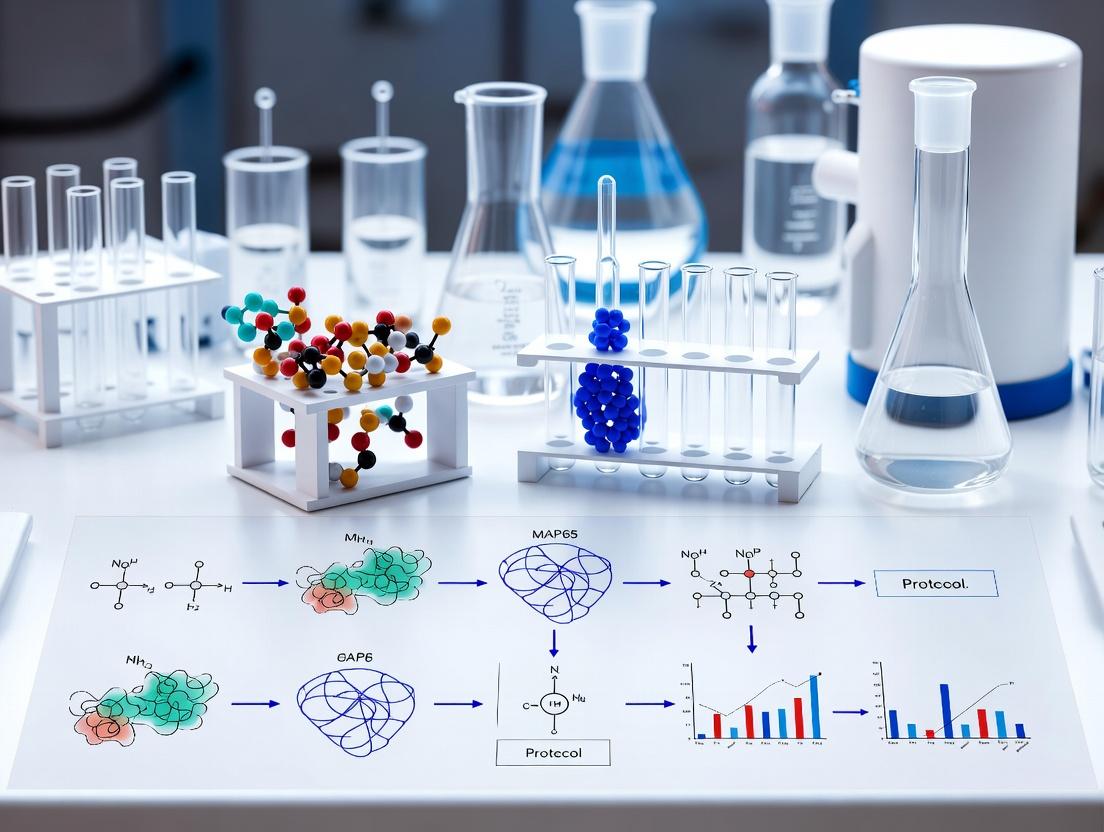
This comprehensive guide details the MAP65 microtubule crosslinking protocol for in vitro reconstitution of the plant cytoskeleton.
MAP65 Microtubule Crosslinking Protocol: A Complete Guide for In Vitro Cytoskeleton Reconstitution
Abstract
This comprehensive guide details the MAP65 microtubule crosslinking protocol for in vitro reconstitution of the plant cytoskeleton. Tailored for researchers and drug discovery professionals, it explores the foundational biology of MAP65 proteins, provides a step-by-step optimized methodology, addresses common troubleshooting scenarios, and compares validation techniques. The article enables scientists to reliably create crosslinked microtubule networks for studying cytoskeletal dynamics, mechanical properties, and screening potential cytoskeleton-targeting therapeutics.
Understanding MAP65 Proteins: The Biology of Plant Microtubule Crosslinkers
Microtubule-associated protein 65 (MAP65) family proteins are essential eukaryotic cytoskeletal regulators, with plant-specific isoforms (MAP65-1 to MAP65-9 in Arabidopsis) playing pivotal roles in organizing cortical microtubule arrays. They function as homodimers, crosslinking microtubules into specific architectures (e.g., parallel bundles, antiparallel overlaps) critical for cell division, expansion, and morphogenesis. Their activity is tightly regulated by phosphorylation, notably by mitogen-activated protein kinases (MAPKs) and cyclin-dependent kinases (CDKs), which modulate their microtubule-binding affinity and bundling capacity during the cell cycle and in response to stimuli.
Table 1: Key Arabidopsis thaliana MAP65 Family Members and Properties
| Protein | Gene Locus | Length (aa) | Microtubule Binding Mode | Peak Expression | Key Phenotype of Loss-of-Function |
|---|---|---|---|---|---|
| MAP65-1 | At5g55230 | 660 | Antiparallel Overlap Bundling | M-Phase | Defective Phragmoplast & Cell Plate Formation |
| MAP65-2 | At4g26760 | 633 | Parallel & Antiparallel Bundling | M-Phase | Enhanced Sensitivity to Microtubule Disruptors |
| MAP65-3/PLEIADE | At4g17220 | 661 | Parallel Bundling | Interphase | Aberrant Hypocotyl Growth & Microtubule Organization |
| MAP65-4 | At5g51600 | 620 | Antiparallel Bundling | M-Phase | Mitotic Defects |
| MAP65-5 | At5g37010 | 639 | Antiparallel Bundling | M-Phase | Mild Phragmoplast Defects |
Table 2: Regulation of MAP65 Activity by Phosphorylation
| Kinase | Target MAP65 | Phosphorylation Site (Example) | Effect on Activity | Biological Context |
|---|---|---|---|---|
| MAP Kinase 4/6 (MPK4/6) | MAP65-1 | Ser/Thr residues in N-terminus | Reduces Microtubule Binding | Stress Response, Phragmoplast Guidance |
| CDK (Cyclin-Dependent Kinase) | MAP65-1, MAP65-4 | Conserved Ser/Thr in CDK motif | Inhibits Microtubule Bundling | G2/M Transition, Spindle Assembly |
| Aurora Kinase 3 | MAP65-1, MAP65-4 | Not fully mapped | Modulates Phragmoplast Dynamics | Cytokinesis |
Experimental Protocols
Protocol 1:In VitroMicrotubule Co-sedimentation Assay for MAP65 Binding Affinity
Purpose: To quantitatively assess the microtubule-binding capacity of recombinant MAP65 proteins. Key Reagents: Purified recombinant MAP65 protein, Tubulin (e.g., porcine brain), Taxol (paclitaxel), Sedimentation buffer (BRB80: 80 mM PIPES, 1 mM MgCl2, 1 mM EGTA, pH 6.8). Procedure:
- Polymerize Microtubules (MTs): Incubate 20 µM tubulin in BRB80 with 1 mM GTP and 10% DMSO at 37°C for 20 min. Stabilize with 20 µM Taxol.
- Prepare Binding Reactions: In a 100 µL final volume, mix varying concentrations of MAP65 (0-5 µM) with a constant concentration of polymerized MTs (1 µM) in BRB80 + 10 µM Taxol. Include a "no MT" control for each MAP65 concentration.
- Incubation: Incubate at 25°C for 30 min.
- Sedimentation: Ultracentrifuge samples at 100,000 x g, 25°C, for 30 min.
- Analysis: Carefully separate supernatant (unbound) and pellet (MT-bound) fractions. Analyze equal proportions of each by SDS-PAGE and Coomassie staining.
- Quantification: Use densitometry to determine the fraction of MAP65 pelleted with MTs. Plot bound vs. free MAP65 to calculate dissociation constant (Kd).
Protocol 2:In VivoAnalysis of MAP65-Microtubule Dynamics via Live-Cell Imaging
Purpose: To visualize the localization and dynamics of MAP65 proteins in living plant cells. Key Reagents: Transgenic Arabidopsis line expressing fluorescent protein (e.g., GFP, mCherry) fused to MAP65 under its native promoter; Microtubule marker line (e.g., GFP-TUB6); Confocal or TIRF microscope. Procedure:
- Sample Preparation: Grow seedlings vertically on 1/2 MS agar plates for 3-5 days. For hypocotyl epidermal cell imaging, use etiolated seedlings.
- Mounting: Mount seedling on a slide in liquid 1/2 MS medium, cover with a coverslip.
- Image Acquisition: Use a confocal microscope with appropriate laser lines. For co-localization, acquire dual-channel images simultaneously.
- FRAP (Fluorescence Recovery After Photobleaching): To assess turnover kinetics: a. Define a region of interest (ROI) on a microtubule bundle. b. Bleach the ROI with high-intensity laser. c. Capture time-lapse images at low laser power every 1-5 seconds. d. Quantify fluorescence recovery in the ROI over time and calculate recovery half-time (t1/2) and mobile fraction.
Protocol 3: Phosphomimetic Analysis via Site-Directed Mutagenesis
Purpose: To study the functional impact of phosphorylation by creating phospho-null (Ser/Thr→Ala) and phosphomimetic (Ser/Thr→Asp/Glu) mutants. Key Reagents: MAP65 cDNA clone, Site-directed mutagenesis kit, E. coli expression system, Ni-NTA resin for His-tagged protein purification. Procedure:
- Mutagenesis Design: Design primer pairs encoding the desired amino acid substitution.
- PCR Mutagenesis: Perform PCR using high-fidelity DNA polymerase on the plasmid template.
- Template Digestion: Digest the parental (methylated) template DNA with DpnI enzyme.
- Transformation: Transform the reaction into competent E. coli cells. Sequence multiple clones to confirm the mutation.
- Protein Expression & Purification: Express and purify wild-type and mutant MAP65 proteins identically.
- Functional Assay: Compare mutants to wild-type using in vitro assays (Protocol 1) or in vivo complementation of a map65 mutant.
Diagrams
Diagram 1 Title: MAP65 Regulation by Kinase Phosphorylation Pathways
Diagram 2 Title: Integrated Workflow for MAP65 Functional Analysis
The Scientist's Toolkit: Research Reagent Solutions
Table 3: Essential Reagents for MAP65 Cytoskeleton Research
| Reagent / Material | Supplier Examples (for reference) | Function in Experiment |
|---|---|---|
| Purified Tubulin | Cytoskeleton, Inc.; Porcine brain or plant recombinant | Substrate for in vitro microtubule polymerization and binding assays. |
| Taxol (Paclitaxel) | Sigma-Aldrich, Tocris | Microtubule-stabilizing agent used to polymerize and stabilize MTs in vitro. |
| Anti-MAP65 Antibodies | Agrisera, homemade | For immunofluorescence, western blotting, and immunoprecipitation to detect endogenous protein. |
| MAP65 cDNA Clones | ABRC, TAIR, Addgene | Source for recombinant protein expression and generation of transgenic plants. |
| Site-Directed Mutagenesis Kit | NEB Q5, Agilent QuikChange | Creation of phospho-mutants to study post-translational regulation. |
| Fluorescent Protein Vectors | e.g., pEGFP, pmCherry, gateway-compatible | For generating translational fusions to visualize protein dynamics in vivo. |
| Arabidopsis MAP65 T-DNA Mutants | ABRC, NASC | Loss-of-function lines for phenotypic analysis and complementation tests. |
| Kinase Inhibitors/Activators | e.g., RO-3306 (CDK1 inhibitor), Anisomycin (MAPK activator) | Pharmacological tools to manipulate MAP65 phosphorylation status in cells. |
| BRB80 Buffer | Common lab preparation | Standard buffer for microtubule-related biochemistry (80 mM PIPES, pH 6.8, 1 mM MgCl2, 1 mM EGTA). |
| Ni-NTA Agarose | Qiagen, Thermo Fisher | For affinity purification of recombinant His-tagged MAP65 proteins. |
Within the broader thesis on MAP65 microtubule crosslinking protocol research, this application note details the structural determinants of the Microtubule-Associated Protein 65 (MAP65/Ase1/PRC1) family that enable specific microtubule binding and organized crosslinking. Understanding these domains and motifs is critical for developing standardized, reproducible protocols to study microtubule bundle dynamics, a key process in cell division, neuronal differentiation, and a potential target for anti-mitotic drug development.
MAP65 proteins share a conserved central coiled-coil dimerization domain flanked by variable, unstructured N- and C-terminal regions that contain microtubule-binding motifs.
Table 1: Core Structural Domains of MAP65 Family Proteins
| Domain/Motif | Location | Key Features & Function | Experimental Evidence |
|---|---|---|---|
| N-terminal | Residues 1-150 (approx.) | Variable, low-complexity region; contains nuclear localization signal (NLS) in some isoforms; modulates binding affinity. | Deletion reduces microtubule bundling activity by ~40% in PRC1. |
| Central Coiled-Coil | Core region (e.g., res. 150-550) | High probability of coiled-coil formation; forms stable parallel homodimers (~60-70 nm rod); defines crosslinking spacing. | SAXS data shows length of ~65 nm. Mutations disrupt dimerization and abolish bundling. |
| C-terminal | Last 50-100 residues | Contains conserved microtubule-binding motifs (basic/hydrophobic); essential for direct microtubule attachment. | Point mutations (e.g., KKR to AAA) reduce microtubule binding by >80% in vitro. |
| Conserved Motif 1 | C-terminal (e.g., "KKK" cluster) | Positively charged lysine residues interacting with negatively charged tubulin tails. | Electrophoretic mobility shift assays show weakened interaction with tubulin peptides. |
| Conserved Motif 2 | C-terminal (e.g., "VxK" motif) | Hydrophobic/charged patch for engaging tubulin dimer surface. | Yeast two-hybrid and co-sedimentation assays confirm direct tubulin binding. |
Key Protocols
Protocol 3.1: Recombinant MAP65 Protein Purification for Crosslinking Assays
Objective: To express and purify tag-free, functional MAP65 protein from E. coli.
- Cloning: Clone full-length or truncated MAP65 cDNA into a pET vector (e.g., pET28a with a cleavable His-tag).
- Expression: Transform BL21(DE3) E. coli. Grow culture in LB+Kanamycin to OD600=0.6, induce with 0.5 mM IPTG for 16-18 hours at 18°C.
- Lysis: Pellet cells, resuspend in Lysis Buffer (50 mM HEPES pH 7.4, 300 mM KCl, 1 mM MgCl2, 1 mM DTT, 10 mM Imidazole, protease inhibitors). Lyse by sonication.
- Purification: Clarify lysate. Load supernatant onto Ni-NTA agarose column. Wash with 10 column volumes of Wash Buffer (Lysis Buffer with 25 mM imidazole). Elute with Elution Buffer (Lysis Buffer with 250 mM imidazole).
- Tag Cleavage & Final Purification: Dialyze eluate against Cleavage Buffer (20 mM HEPES pH 7.4, 150 mM KCl, 1 mM DTT) with TEV protease (1:50 w/w) overnight at 4°C. Pass over Ni-NTA again to remove cleaved tag and His-tagged protease. Concentrate and further purify via size-exclusion chromatography (Superdex 200) in BRB80 buffer (80 mM PIPES pH 6.8, 1 mM MgCl2, 1 mM EGTA). Aliquot, snap-freeze, store at -80°C.
Protocol 3.2: In Vitro Microtubule Co-sedimentation (Binding) Assay
Objective: To quantitatively assess MAP65-microtubule binding affinity.
- Prepare Microtubules: Polymerize 20 µM purified tubulin with 1 mM GTP in BRB80 at 35°C for 30 min. Stabilize with 20 µM paclitaxel.
- Set Up Binding Reactions: In a 50 µL final volume in BRB80 + 0.1% Tween-20, mix constant MAP65 concentration (e.g., 100 nM) with increasing concentrations of stabilized microtubules (0-2 µM tubulin dimer). Incubate at 25°C for 15 min.
- Sedimentation: Underlay reaction with 60 µL of 40% glycerol cushion in BRB80. Ultracentrifuge at 100,000 x g, 25°C, for 20 min.
- Analysis: Carefully separate supernatant (unbound) and pellet (bound) fractions. Analyze equal proportions of each by SDS-PAGE. Stain with Coomassie Blue or perform immunoblotting for MAP65.
- Quantification: Use densitometry to determine fraction bound. Fit data to a quadratic binding equation to calculate apparent Kd.
Protocol 3.3: Total Internal Reflection Fluorescence (TIRF) Microscopy Assay for Crosslinking Dynamics
Objective: To visualize real-time binding and crosslinking of MAP65 on dynamic microtubules.
- Flow Chamber Preparation: Create a passivated flow chamber using PEG-silane coverslips. Sequentially flow in: (i) anti-tubulin antibody (2 min), (ii) Pluronic F-127 (1%) to block, (iii) GMPCPP-stabilized microtubule seeds.
- Prepare TIRF Mix: Prepare imaging mix containing: BRB80, 1 mM GTP, 0.5% methylcellulose (4000 cP), oxygen scavenging system (50 mM glucose, 400 µg/mL glucose oxidase, 200 µg/mL catalase, 5 mM DTT), 15 µM tubulin (labeled with ~5% Alexa-647), and 5-50 nM MAP65 (labeled with Alexa-488).
- Imaging: Flow TIRF mix into chamber. Image immediately using a TIRF microscope with 488 nm and 640 nm lasers. Acquire frames every 3-5 seconds for 10-20 minutes.
- Analysis: Use tracking software (e.g., Fiji/ImageJ with TrackMate) to analyze microtubule growth rates, MAP65 binding events, and bundle formation kinetics.
Diagrams
Diagram 1: MAP65 Dimer Crosslinks Two Microtubules
Diagram 2: MAP65 Protein Purification Workflow
Diagram 3: Microtubule Co-sedimentation Assay Protocol
The Scientist's Toolkit: Research Reagent Solutions
Table 2: Essential Reagents for MAP65-Microtubule Studies
| Reagent/Material | Supplier Examples | Function & Critical Notes |
|---|---|---|
| Purified Tubulin | Cytoskeleton Inc., Hypermol | Core substrate for microtubule polymerization. Labeled (e.g., Alexa Fluor, HiLyte) and unlabeled variants needed. |
| Paclitaxel (Taxol) | Sigma-Aldrich, Tocris | Microtubule-stabilizing agent used for binding assays. Critical for generating stable MT polymers in vitro. |
| GMPCPP | Jena Bioscience | Non-hydrolysable GTP analog for making stable microtubule seeds for TIRF assays. |
| TEV Protease | homemade, Thermo Fisher | For precise removal of affinity tags after purification to obtain native protein sequence. |
| PEG-Silane | Laysan Bio, Sigma-Aldrich | For passivating glass surfaces in microscopy assays to prevent non-specific protein binding. |
| Methylcellulose | Sigma-Aldrich (4000 cP) | Used in TIRF assays to reduce diffusion and confine growing microtubules to the imaging plane. |
| Oxygen Scavenging System | Glucose Oxidase/Catalase, homemade or commercial | Prevents photobleaching and dye degradation during prolonged fluorescence microscopy. |
| Size-Exclusion Column | Cytiva (Superdex 200), Bio-Rad | For final polishing step of protein purification to isolate monodisperse, functional MAP65 dimers. |
| Anti-MAP65 Antibodies | Abcam, Agrisera, custom | For immunoblotting and immunofluorescence validation of protein expression and localization. |
The Role of MAP65 in Plant Cell Division, Morphogenesis, and Cellular Mechanics
Application Notes
Microtubule-associated protein 65 (MAP65) family members, primarily in plants, are essential cytoskeletal regulators. They function as anti-parallel microtubule (MT) crosslinkers, stabilizing MT arrays critical for cell division, morphogenesis, and mechanical integrity. During mitosis, specific isoforms (e.g., MAP65-1/Ase1, MAP65-3) are pivotal for forming and maintaining the phragmoplast and preprophase band, directing cytokinesis and cell plate formation. In interphase, they stabilize cortical MTs, influencing cell wall patterning and anisotropic growth. Their activity is tightly regulated by phosphorylation, notably by cyclin-dependent kinases (CDKs) and MAP kinases, which modulate their MT-binding affinity and localization. Disruption of MAP65 function leads to severe defects in cell division plane orientation, phragmoplast stability, and hypocotyl elongation, highlighting their central role in plant development and cellular mechanics. Emerging research also links MAP65 to cellular responses to mechanical stress, positioning them as integrators of mechanical and developmental signals.
Key Quantitative Data on MAP65 Function
Table 1: Phenotypic Consequences of MAP65 Mutations/Knockdowns in Arabidopsis thaliana
| MAP65 Isoform | Mutant/Knockdown Line | Primary Phenotype in Division/Morphogenesis | Quantitative Metric (vs. Wild Type) | Reference Context |
|---|---|---|---|---|
| MAP65-1/Ase1 | map65-1 (T-DNA insertion) | Phragmoplast instability, delayed cytokinesis | ~40% increase in binucleate cells in root meristems | Smertenko et al., 2008 |
| MAP65-3 | map65-3-1 (RNAi) | Aberrant division plane, twisted growth | Division plane deviation >30° in root cells; hypocotyl length reduced by ~35% | Müller et al., 2004; Lucas & Shaw, 2012 |
| MAP65-4 | map65-4-1 (T-DNA) | Mild cytokinesis defects, synergistic with map65-1 | Double mutant map65-1/map65-4 shows ~70% binucleate cells | Fache et al., 2010 |
Table 2: Biochemical and Biophysical Properties of MAP65 Proteins
| Property | MAP65-1 | MAP65-3 | Experimental Method |
|---|---|---|---|
| MT Binding Affinity (Kd) | ~0.5 µM | ~0.3 µM | Fluorescence titration assays |
| MT Crosslinking Spacing | 25-30 nm | 25-30 nm | Electron Microscopy |
| Stiffening Effect on MT Bundles | Increases persistence length ~3-fold | Increases persistence length ~2.5-fold | In vitro MT bending analysis |
| Phosphorylation Regulation | CDK phosphorylation reduces MT binding by ~80% | MAPK phosphorylation reduces bundling activity by ~60% | Phospho-mimetic mutant assays |
Experimental Protocols
Protocol 1: In Vitro Microtubule Crosslinking and Bundling Assay
Purpose: To assess the microtubule crosslinking and bundling activity of purified recombinant MAP65 proteins. Key Reagents: See "The Scientist's Toolkit" below.
- MT Polymerization: Prepare a 20 µL reaction containing 15 µM tubulin, 1 mM GTP in BRB80 buffer (80 mM PIPES, 1 mM MgCl2, 1 mM EGTA, pH 6.8). Incubate at 35°C for 20 min. Add 20 µL of pre-warmed BRB80 with 20 µM Taxol. Incubate 10 min at 35°C. Dilute stabilized MTs to desired concentration in BRB80-Taxol.
- Bundling Reaction: In a final volume of 50 µL, mix pre-formed MTs (0.5 µM tubulin dimer) with varying concentrations of purified MAP65 protein (0-2 µM) in BRB80-Taxol buffer. Include a negative control (no MAP65).
- Incubation & Sedimentation: Incubate mixture at room temperature for 15 min. Underlay with 60 µL of 40% glycerol in BRB80. Centrifuge at 100,000 x g for 30 min at 25°C in a tabletop ultracentrifuge (e.g., TLA-100 rotor).
- Analysis: Carefully separate supernatant (S) and pellet (P) fractions. Resuspend pellet in equal volume of BRB80. Analyze equal proportions of S and P by SDS-PAGE and Coomassie staining. Quantify tubulin and MAP65 band intensities to determine the percentage co-sedimented.
Protocol 2: Immunolocalization of MAP65 in Plant Tissue
Purpose: To visualize the subcellular localization of MAP65 proteins during cell division in plant root tips.
- Fixation: Excise 2-5 mm root tips from Arabidopsis seedlings. Immerse in freshly prepared 4% formaldehyde in PME buffer (50 mM PIPES, 5 mM MgSO4, 5 mM EGTA, pH 6.9) for 60 min under mild vacuum.
- Permeabilization & Cell Wall Digestion: Rinse roots in PME buffer. Incubate in a 1% (w/v) Cellulase R-10, 0.1% (w/v) Pectolyase Y-23 solution in PME for 20 min at 37°C.
- Blocking & Primary Antibody: Squash roots on poly-L-lysine coated slides. Permeabilize with 1% Triton X-100 for 15 min. Block in 3% BSA in PBS for 1 hour. Incubate with primary anti-MAP65 antibody (e.g., anti-MAP65-1, 1:500 dilution) in blocking buffer overnight at 4°C in a humid chamber.
- Secondary Antibody & MT Stain: Wash 3x with PBS. Incubate with Alexa Fluor 488-conjugated secondary antibody (1:1000) and Alexa Fluor 594-conjugated anti-α-tubulin antibody (1:500) for 2 hours at room temperature in the dark.
- Mounting & Imaging: Wash thoroughly, mount in antifade medium with DAPI. Image using a confocal laser scanning microscope with appropriate filter sets.
Protocol 3: Live-Cell Imaging of MAP65 Dynamics during Cytokinesis
Purpose: To monitor the real-time dynamics of MAP65 proteins in the phragmoplast of dividing cells.
- Plant Material: Use Arabidopsis thaliana stably expressing a functional MAP65-GFP fusion protein (e.g., proMAP65-3:MAP65-3-GFP).
- Sample Preparation: Grow seedlings vertically on agar plates for 4-5 days. Mount the root tip in liquid medium under a coverslip.
- Microscopy Setup: Use a spinning-disk confocal or highly sensitive widefield fluorescence microscope equipped with a 63x or 100x oil immersion objective, a 488 nm laser, and an environmental chamber set to 22°C.
- Image Acquisition: Select cells in late anaphase/early telophase. Acquire time-lapse images of the GFP signal every 10-15 seconds for 10-15 minutes. Use minimal laser power to avoid phototoxicity.
- Analysis: Quantify fluorescence intensity and phragmoplast expansion rate using image analysis software (e.g., FIJI/ImageJ). Kymograph analysis can be performed to determine MT flux rates.
Visualizations
Title: MAP65 Regulation by Phosphorylation
Title: In Vitro MT Crosslinking Assay Workflow
The Scientist's Toolkit
Table 3: Essential Research Reagents for MAP65 Microtubule Crosslinking Studies
| Reagent/Material | Supplier Examples | Function in Protocol |
|---|---|---|
| Purified Tubulin (Porcine/ Arabidopsis) | Cytoskeleton, Inc.; homemade | Substrate for microtubule polymerization in bundling assays. |
| Recombinant MAP65 Protein (His-/GST-tagged) | Homemade expression in E. coli | The protein of interest for functional crosslinking studies. |
| Taxol (Paclitaxel) | Sigma-Aldrich, Tocris | Stabilizes polymerized microtubules for in vitro experiments. |
| Anti-MAP65 Antibodies (isoform-specific) | Agrisera, homemade | Detection and localization of MAP65 in immunofluorescence. |
| MAP65-GFP Seed Lines (e.g., MAP65-3-GFP) | ABRC stock center | Live-cell imaging of protein dynamics during cell division. |
| Cellulase R-10 & Pectolyase Y-23 | Serva, Karlan | Enzymatic digestion of plant cell walls for immunolocalization. |
| BRB80 Buffer (80 mM PIPES, pH 6.8) | Homemade | Standard microtubule polymerization and stabilization buffer. |
| TLA-100 Ultracentrifuge Rotor | Beckman Coulter | High-speed sedimentation to separate bundled vs. free microtubules. |
Why Reconstitute MAP65-Mediated Networks In Vitro? Applications in Basic and Applied Research
Microtubule-associated proteins (MAPs) are essential for organizing the cytoskeleton, with the MAP65/Ase1/PRC1 family being a key mediator of microtubule bundling and crosslinking. In vitro reconstitution of MAP65-mediated networks allows researchers to dissect the fundamental biophysical principles of microtubule organization, mechanics, and dynamics in a controlled environment. This is central to a thesis investigating MAP65 crosslinking protocols, as it bridges molecular function with cellular architecture. Applications range from understanding spindle formation and cytokinesis in basic research to screening for anti-mitotic compounds in applied drug development.
Table 1: Biochemical & Biophysical Properties of Select MAP65 Isoforms
| Isoform | Source Organism | Microtubule Binding Affinity (Kd) | Crosslinking Spacing (nm) | Bundling Efficiency (MTs/µm²) | Key Regulatory Input |
|---|---|---|---|---|---|
| AtMAP65-1 | Arabidopsis thaliana | ~0.5 µM | 25-30 | 15-20 | Phosphorylation (CDKA) |
| HsPRC1 | Homo sapiens | ~0.2 µM | 35-40 | 25-35 | Phosphorylation (CDK1, Plk1) |
| SpAse1 | Schizosaccharomyces pombe | ~1.0 µM | ~30 | 10-15 | Phosphorylation |
| XePRC1 | Xenopus laevis | ~0.3 µM | 35-40 | 20-30 | Proteolytic Cleavage |
Table 2: Applications of Reconstituted MAP65 Networks
| Research Area | Primary Readout | Typical Assay Format | Throughput Potential |
|---|---|---|---|
| Mechanics of MT Arrays | Bundle stiffness, Viscoelasticity | TIRF Microscopy + Optical Traps | Low |
| Motor Protein Function | Cargo transport, Traffic regulation | TIRF/Flow Cell Assay | Medium |
| Drug Discovery | Inhibitor IC50 on Bundling | Microplate Fluorescence Assay | High |
| Toxicity Screening | Disruption of Network Architecture | High-Content Imaging | High |
Experimental Protocols
Protocol 3.1: Reconstitution of MAP65-Mediated Microtubule Bundles for TIRF Microscopy
Objective: To visualize and quantify the dynamics of MAP65-mediated microtubule bundling in real-time. Materials: See "Scientist's Toolkit" (Table 3). Procedure:
- Microtubule Preparation: Prepare rhodamine-labeled, GMPCPP-stabilized microtubule seeds. Dilute in BRB80 buffer (80 mM PIPES, 1 mM MgCl2, 1 mM EGTA, pH 6.8).
- Flow Cell Assembly: Create a flow chamber using a PEG-silanized coverslip and a glass slide. Passivate with 1% Pluronic F-127 for 5 min to prevent non-specific binding.
- Microtubule Attachment: Flow in biotin-labeled tubulin, followed by NeutrAvidin. Introduce rhodamine-labeled seeds and allow to adhere for 5 min.
- Dynamic MT Growth: Flush in tubulin mix (15 µM tubulin, 0.5% rhodamine-tubulin, 1 mM GTP, oxygen scavengers, and catalase) in BRB80. Incubate at 35°C for 15-20 min to grow dynamic microtubules.
- MAP65 Introduction: Dilute purified MAP65 protein in assay buffer (BRB80 + 50 mM KCl). Flow into the chamber and immediately image.
- Imaging & Analysis: Acquire time-lapse images every 5-10 sec using TIRF microscopy. Quantify bundle formation (number of crosslinks/µm, bundle thickness) using FIJI/ImageJ.
Protocol 3.2: High-Throughput Screening Assay for MAP65 Bundle Disruption
Objective: To identify small molecules that disrupt MAP65-mediated microtubule bundling. Materials: Black-walled 384-well plates, fluorescently labeled taxol-stabilized microtubules, purified MAP65, plate reader with fluorescence polarization capability. Procedure:
- Reaction Assembly: In each well, mix 10 µL of 1 µM MAP65 protein with 10 µL of candidate compound (in DMSO) or DMSO control. Incubate 15 min at 25°C.
- Bundle Formation: Add 30 µL of pre-warmed, 0.2 mg/mL X-rhodamine-labeled, taxol-stabilized microtubules. Final buffer: BRB80, 50 mM KCl, 20 µM taxol.
- Incubation: Incubate plate at 37°C for 30 min in the dark to allow bundle formation.
- Readout: Measure fluorescence anisotropy (Ex: 540 nm, Em: 590 nm). High anisotropy indicates large, bundled structures; low anisotropy indicates dispersed, single microtubules.
- Data Analysis: Calculate % inhibition relative to DMSO (bundled) and nocodazole (fully dispersed) controls. Determine IC50 values using non-linear regression.
Visualization Diagrams
Title: In Vitro Reconstitution Workflow for MAP65 Studies
Title: Cell Cycle Regulation of MAP65 Activity
The Scientist's Toolkit
Table 3: Essential Research Reagent Solutions for MAP65 Reconstitution
| Reagent/Material | Function & Rationale | Example Source/Product |
|---|---|---|
| Tubulin, >99% pure | Core building block for microtubule polymerization. High purity reduces non-specific nucleation. | Cytoskeleton Inc. (Cat# TL238) |
| GMPCPP (non-hydrolyzable GTP analog) | Generates stable, short microtubule "seeds" for plus-end growth assays. | Jena Bioscience (Cat# NU-405) |
| Fluorescent Tubulin Conjugates (e.g., X-rhodamine, Alexa Fluor 488) | Enables real-time visualization of microtubule dynamics and bundling. | Thermo Fisher Scientific |
| PEG-Silanized Coverslips | Creates a non-adhesive surface to minimize protein denaturation and allow controlled MT attachment. | Microsurfaces Inc. |
| Oxygen Scavenging System (Glucose Oxidase, Catalase, Glucose) | Reduces phototoxicity and bleaching during prolonged live imaging. | Sigma-Aldrich |
| Purified MAP65 Protein (Full-length & Truncations) | Active crosslinking component. Recombinant tags (e.g., His, GFP) facilitate purification and tracking. | In-house expression (Baculovirus/E. coli) |
| Anti-Fade Reagents (e.g., Trolox) | Stabilizes fluorescence signal for extended time-lapse imaging. | Sigma-Aldrich (Cat# 238813) |
This document is part of a broader thesis investigating the structural and kinetic parameters of microtubule (MT) crosslinking by MAP65/Ase1 family proteins. Robust, reproducible in vitro reconstitution assays are paramount, and they depend critically on the quality and sourcing of key biological components. These application notes provide updated protocols and sourcing strategies for obtaining functional recombinant MAP65 proteins and purified microtubule components for quantitative biophysical and biochemical studies.
Research Reagent Solutions: Essential Materials
| Reagent/Material | Source Examples (Current) | Primary Function in Assay |
|---|---|---|
| Recombinant MAP65 Protein (e.g., Ase1, PRC1) | Custom expression in E. coli (BL21-CodonPlus) or Sf9 insect cells. Commercial: Cytoskeleton Inc. (PRC1), Sino Biological (fragments). | The crosslinking protein of interest. Purity and monomeric state are critical for quantifying binding kinetics and bundle morphology. |
| Porcine or Bovine Brain Tubulin | Cytoskeleton Inc. (T240), Cedarlane Labs, Purified in-house via cycles of polymerization/depolymerization. | The core building block for microtubule polymerization. Brain tubulin is preferred for high-concentration, dynamic assays. |
| Recombinant Human Tubulin (T2SA Kit) | Thermo Fisher Scientific (AHO95691), Novus Biologicals. | Essential for studies requiring mutant tubulin, specific isotype composition, or fluorescent labeling without contaminating tubulins. |
| GTP (Guanosine-5'-triphosphate) | Sigma-Aldrich (G8877), Jena Bioscience. | The nucleotide hydrolyzed during microtubule polymerization. Critical for maintaining assembly-competent tubulin. |
| PIPES Buffer | Sigma-Aldrich (P6757), Thermo Fisher Scientific. | The standard pH-stable buffer for in vitro microtubule polymerization and stabilization. |
| Taxol (Paclitaxel) | Sigma-Aldrich (T7191), Cytoskeleton Inc. (TXD01). | Microtubule-stabilizing drug used to generate stable, non-dynamic MTs for binding and crosslinking assays. |
| BRB80 Buffer (80 mM PIPES) | Standard lab formulation: 80 mM PIPES, 1 mM MgCl2, 1 mM EGTA, pH 6.8 with KOH. | The working buffer for most microtubule dilution, sedimentation, and imaging steps. |
| Anti-Fade Reagents (e.g., Glucose Oxidase/Catalase system) | Sigma-Aldrich components (G0543, C9322) or commercial seals (e.g., ProLong). | Essential for TIRF microscopy to reduce photobleaching of fluorescently labeled components during time-lapse imaging. |
| Biotinylated Tubulin | Cytoskeleton Inc. (T333P), Lab conjugation using NHS-PEG4-Biotin (Thermo Fisher). | For immobilizing microtubules on streptavidin-coated surfaces (e.g., flow chambers) for single-filament assays. |
| Digoxigenin-labeled Tubulin | Lab conjugation using NHS-Digoxigenin (Sigma-Aldrich). | Used in conjunction with biotinylated tubulin for creating defined MT geometries in surface assays. |
Table 1: Comparison of Key Commercial Tubulin Sources for Reconstitution Assays (2024 Pricing Estimates)
| Product Name | Source | Typical Purity | Approx. Price per mg | Key Application Notes |
|---|---|---|---|---|
| Tubulin, >99% (Porcine) | Cytoskeleton Inc. (T240) | >99% (SDS-PAGE) | $12 - $15 | High-concentration polymerization. Standard for bulk assays. |
| Tubulin, Biotinylated | Cytoskeleton Inc. (T333P) | >97% (SDS-PAGE) | $25 - $30 | Surface immobilization. Labeling ratio ~1 biotin per 10 tubulins. |
| HiLyte Fluor 488 Tubulin | Cytoskeleton Inc. (TL488M) | >97% (SDS-PAGE) | $45 - $55 | Fluorescence microscopy. Typical labeling ratio: 1 dye per 2-3 tubulins. |
| Recombinant Human Tubulin (αβII/βIII) | Thermo Fisher (T2SA Kit) | >95% (HPLC) | $180 - $220 | Isotype-specific studies, precise labeling, FRET-based conformational assays. |
| Tubulin, >99% (Bovine) | Cedarlane Labs (CLTE001) | >99% (SDS-PAGE) | $10 - $13 | Comparable to Cytoskeleton T240; alternative supplier for reliability. |
Table 2: Recombinant MAP65/PRC1 Protein Expression and Purification Yield
| Expression System | Vector (Example) | Tag | Typical Yield (per liter culture) | Key Functional Assay Result |
|---|---|---|---|---|
| E. coli (BL21-DE3) | pET28a | N-terminal 6xHis | 5 - 15 mg | Full crosslinking activity after tag cleavage. Prone to aggregation at high conc. |
| E. coli (BL21-CodonPlus) | pGEX-6P-1 | N-terminal GST | 10 - 25 mg | GST enhances solubility. Must be cleaved for kinetic studies to avoid avidity. |
| Baculovirus/Sf9 | pFastBac-HT | N-terminal 6xHis | 2 - 8 mg | Superior for large, multi-domain constructs. Better post-translational folding. |
| Commercial PRC1 (Human) | N/A | GST (uncleavable) | 0.5 mg ($480) | Readily available for control experiments. GST may affect bundle spacing. |
Experimental Protocols
Protocol 1: Expression and Purification of Recombinant MAP65 (6xHis-Tagged) fromE. coli
Objective: To obtain pure, monodispersed MAP65 protein for in vitro crosslinking assays.
Materials:
- Expression plasmid (e.g., pET28a-MAP65)
- E. coli BL21(DE3) or BL21-CodonPlus(DE3)-RIL competent cells
- LB Broth with appropriate antibiotic (e.g., Kanamycin, 50 µg/mL)
- IPTG (Isopropyl β-d-1-thiogalactopyranoside)
- Lysis Buffer: 50 mM HEPES pH 7.5, 500 mM NaCl, 30 mM Imidazole, 5% Glycerol, 1 mM DTT, 0.1% Triton X-100, + protease inhibitors.
- Wash Buffer: 50 mM HEPES pH 7.5, 500 mM NaCl, 40 mM Imidazole, 5% Glycerol, 1 mM DTT.
- Elution Buffer: 50 mM HEPES pH 7.5, 500 mM NaCl, 300 mM Imidazole, 5% Glycerol, 1 mM DTT.
- Storage Buffer: BRB80 or 50 mM HEPES pH 7.5, 150 mM KCl, 1 mM DTT.
- Ni-NTA Agarose resin
Methodology:
- Transformation & Culture: Transform expression plasmid into competent cells. Pick a single colony to inoculate a 50 mL starter culture. Grow overnight at 37°C, 220 rpm.
- Expression: Dilute the starter 1:100 into 1 L of fresh LB+antibiotic. Grow at 37°C until OD600 reaches 0.6-0.8. Induce protein expression with 0.2 - 0.5 mM IPTG. Reduce temperature to 18°C and incubate for 16-20 hours.
- Harvest & Lysis: Pellet cells by centrifugation (4,000 x g, 20 min, 4°C). Resuspend pellet in 40 mL cold Lysis Buffer. Lyse cells using a high-pressure homogenizer or sonication on ice. Clarify the lysate by centrifugation (40,000 x g, 45 min, 4°C).
- Affinity Purification: Incubate the clarified supernatant with 2-3 mL of pre-equilibrated Ni-NTA resin for 1 hour at 4°C with gentle mixing. Load the slurry into a column. Wash with 20 column volumes (CV) of Wash Buffer.
- Elution: Elute the bound protein with 5 CV of Elution Buffer, collecting 1 mL fractions.
- Analysis & Storage: Analyze fractions via SDS-PAGE. Pool pure fractions and dialyze overnight at 4°C into Storage Buffer. Concentrate using a centrifugal concentrator (MWCO appropriate for protein size). Determine concentration (A280), aliquot, flash-freeze in liquid nitrogen, and store at -80°C. Assess monodispersity via size-exclusion chromatography (SEC).
Protocol 2: Preparation of Taxol-Stabilized Microtubules for Co-sedimentation Assays
Objective: To generate stable, polymerized microtubules for quantifying MAP65 binding affinity and stoichiometry.
Materials:
- Purified tubulin (>95% pure)
- GTP (100 mM stock in water)
- Taxol (10 mM stock in DMSO)
- BRB80 Buffer: 80 mM PIPES, 1 mM MgCl2, 1 mM EGTA, pH 6.8 with KOH.
- Ultracentrifuge and TLA-100 rotor (or equivalent)
Methodology:
- Polymerization: Mix tubulin (4 mg/mL, final) with 1 mM GTP in BRB80 on ice in a total volume of 100-200 µL. Incubate at 37°C for 30 minutes in a thermoblock.
- Stabilization: After 30 min, add an equal volume of pre-warmed (37°C) BRB80 containing 20 µM Taxol (2x final conc.). Mix gently and continue incubation at 37°C for 20 min.
- Dilution & Stabilization: Dilute the MTs 10-fold into pre-warmed BRB80 containing 10 µM Taxol. Incubate at 37°C for an additional 20 min. This step ensures all MTs are fully stabilized.
- Pellet and Resuspend: Pellet the MTs by centrifugation at 80,000 rpm (TLA-100 rotor) for 10 minutes at 25°C (to prevent depolymerization). Carefully aspirate the supernatant. Gently resuspend the MT pellet in BRB80 + 10 µM Taxol. Use a cut pipette tip to avoid shearing. Keep at room temperature (22-25°C) for immediate use. MT concentration can be estimated by measuring tubulin concentration (A280) in the presence of 0.1% SDS to depolymerize an aliquot.
Visualizations
Step-by-Step MAP65 Crosslinking Protocol: From Protein Prep to Network Assembly
This protocol is presented within the context of a broader thesis investigating the in vitro reconstitution and functional analysis of MAP65-family proteins in microtubule (MT) crosslinking. The precise, stepwise bundling of microtubules is critical for understanding cytoskeletal dynamics, mitotic spindle mechanics, and the development of novel chemotherapeutic agents targeting cell division.
Research Reagent Solutions
A curated list of essential materials for microtubule crosslinking assays is provided below.
| Reagent/Material | Function in Protocol |
|---|---|
| Purified Tubulin (e.g., from bovine brain or porcine) | The fundamental building block for polymerizing microtubules. High purity is essential for consistent polymerization kinetics. |
| GTP (Guanosine-5'-triphosphate) | Nucleotide hydrolysable fuel required for tubulin polymerization into microtubules. |
| MAP65 Protein (Recombinant, e.g., MAP65-1, PRC1) | The primary crosslinking agent. Purified, active protein is critical. Function is often phosphorylation-state dependent. |
| BRB80 Buffer (80 mM PIPES, 1 mM MgCl2, 1 mM EGTA, pH 6.8 with KOH) | Standard microtubule-stabilizing buffer for polymerization and assays. |
| Taxol (Paclitaxel) | Stabilizes polymerized microtubules, preventing dynamic instability during the crosslinking assay. |
| DTT (Dithiothreitol) | Reducing agent to prevent oxidation and maintain protein (MAP65) activity. |
| Flow Chamber (e.g., PEG-silane passivated) | Provides a defined, non-stick surface for immobilizing microtubules and imaging crosslinked structures. |
| Anti-Tubulin Fluorescent Antibody (e.g., Alexa Fluor conjugated) | For direct visualization of microtubules via fluorescence microscopy. |
| TIRF or Spinning Disk Confocal Microscope | High-sensitivity imaging system required for real-time visualization of single microtubules and bundles. |
Critical Protocol Steps & Methodologies
Microtubule Polymerization and Stabilization
Detailed Protocol:
- Prepare a tubulin mix (Final volume 50 µL): 4 mg/mL purified tubulin, 1 mM GTP, in BRB80 buffer.
- Incubate the mix at 37°C for 30 minutes in a thermal cycler or water bath to polymerize microtubules.
- After polymerization, add an equal volume (50 µL) of pre-warmed BRB80 containing 40 µM Taxol.
- Incubate for 5 minutes at 37°C.
- Dilute stabilized MTs 1:20 into BRB80 + 20 µM Taxol (Assay Buffer) for use. This yields short, stable MTs ideal for imaging.
Surface Preparation and Microtubule Immobilization
Detailed Protocol:
- Construct a flow chamber using a PEG-silane coated coverslip and a glass slide separated by double-sided tape.
- Flow in ~50 µL of 1 mg/mL anti-tubulin antibody in BRB80 and incubate for 5 minutes.
- Block the surface with 1% Pluronic F-127 in BRB80 for 10 minutes to prevent non-specific protein adhesion.
- Wash with 3 chamber volumes of Assay Buffer.
- Flow in the diluted, taxol-stabilized microtubules and incubate for 10 minutes to allow MTs to bind to the surface via the antibody.
- Wash gently with 3-5 volumes of Assay Buffer to remove unbound microtubules.
MAP65-Mediated Crosslinking Assay
Detailed Protocol:
- Prepare the crosslinking solution: 20-100 nM purified MAP65 protein in Assay Buffer supplemented with an oxygen-scavenging system (e.g., 0.5% w/v glucose, 0.1 mg/mL glucose oxidase, 0.02 mg/mL catalase) and a triplet-state quencher (e.g., 1-5 mM Trolox) for fluorescence stability.
- Flow the crosslinking solution into the chamber containing immobilized MTs.
- Immediately transfer the chamber to a pre-warmed microscope stage (maintained at 25-30°C).
- Acquire time-lapse images (e.g., every 10-30 seconds for 10-20 minutes) using TIRF microscopy to capture the dynamic process of MT bundling.
Key parameters measured to quantify crosslinking efficiency and bundle morphology.
| Parameter | Typical Value/Measurement | Method of Analysis |
|---|---|---|
| Bundling Rate | 0.5 - 3.0 µm²/min (concentration dependent) | Time-lapse microscopy; measure decrease in area of individual MTs over time. |
| Bundle Thickness | 2 - 10+ microtubules per bundle | Count MTs within a bundle cross-section in high-resolution images or using fluorescence intensity profiles. |
| Inter-MT Spacing | ~25 - 35 nm for MAP65-1 | Electron microscopy or super-resolution microscopy (STORM/PALM). |
| Optimal MAP65 Concentration | 50 - 100 nM for maximal bundling without precipitation | Titration experiment measuring bundling rate vs. [MAP65]. |
| Critical Buffer pH | 6.6 - 6.9 (BRB80 range) | pH titration; bundling efficiency drops significantly outside this range. |
Visualization of Experimental Workflow
Diagram Title: Microtubule Crosslinking Assay Workflow
Visualization of MAP65 Crosslinking Mechanism
Diagram Title: MAP65 Dimer Crosslinks Two Microtubules
This application note details the foundational protocols for preparing purified tubulin and stable, biochemically inert microtubule seeds. These materials are essential starting reagents for in vitro reconstitution assays studying microtubule dynamics and their regulation by Microtubule-Associated Proteins (MAPs). Within the broader thesis research on MAP65 microtubule crosslinking protocols, consistent preparation of high-quality tubulin and seeds is critical for investigating crosslinking efficiency, bundle stability, and the mechanochemical properties of MAP65-induced networks. Reproducibility in these initial steps underpins all subsequent quantitative findings.
Research Reagent Solutions
| Reagent/Solution | Function in Protocol |
|---|---|
| BRB80 Buffer (80 mM PIPES, 1 mM MgCl₂, 1 mM EGTA, pH 6.8 with KOH) | Standard microtubule polymerization and stabilization buffer. Maintains physiological pH and cation conditions. |
| High-Molarity PIPES Buffer (1 M PIPES, pH 6.8 with KOH) | Used during tubulin cycling; high buffering capacity prevents pH drop during polymerization. |
| Guanosine-5'-[(α,β)-methyleno]triphosphate (GMPCPP) | A slowly hydrolyzable GTP analog. Used to form stable, non-dynamic microtubule seeds that serve as nucleation templates. |
| Dithiothreitol (DTT) | Reducing agent. Preserves tubulin sulfhydryl groups, maintaining protein activity and preventing aggregation. |
| Glycerol (Ultra-pure) | Cryoprotectant for tubulin storage. Also used in polymerization buffers to promote microtubule assembly. |
| Taxol (Paclitaxel) | Microtubule-stabilizing drug. Used to generate stabilized microtubules for certain seed types or control experiments. |
| Adenosine-5'-triphosphate (ATP) | Nucleotide for motor protein function. Included in motility or crosslinking assays but excluded from seed preparation to prevent motor activity. |
Protocol 1: Preparation of High-Concentration Tubulin from Porcine Brain
This protocol adapts modern high-concentration purification methods (e.g., >5 mg/ml) critical for high-density assays.
Materials
- Fresh or frozen (-80°C) porcine brains
- BRB80 buffer, 1M PIPES buffer, DTT, GTP, Glycerol
- Equipment: Ultracentrifuge, homogenizer, spectrophotometer, FPLC system (optional)
Detailed Methodology
- Tissue Homogenization: Process 3 brains in 300 ml of cold PEM buffer (0.1 M PIPES, 1 mM EGTA, 1 mM MgSO₄, pH 6.8) supplemented with 0.5 mM DTT and protease inhibitors. Homogenize on ice.
- High-Speed Clarification: Centrifuge homogenate at 50,000 x g for 1 hour at 4°C. Filter the supernatant through cheesecloth.
- Temperature-Dependent Polymerization: Add 1 M PIPES (to 0.1 M final), 1 mM DTT, and 1 mM GTP. Incubate at 37°C for 45 minutes to polymerize microtubules.
- Pellet Through Glycerol Cushion: Layer the polymerization mix over warm BRB80 + 60% glycerol. Centrifuge at 100,000 x g, 37°C for 45 minutes. Discard supernatant.
- Cold Depolymerization: Resuspend the tight microtubule pellet in cold BRB80 (+ 0.5 mM DTT). Agitate on ice for 30 minutes. Centrifuge at 50,000 x g, 4°C for 20 minutes to pellet aggregates.
- Concentration and Cycling: Repeat polymerization/depolymerization steps 3-5. Concentrate the final depolymerized tubulin using a centrifugal concentrator (100 kDa MWCO). Determine concentration (ε₃₈₀ = 1.2 ml mg⁻¹ cm⁻¹). Aliquot, snap-freeze in liquid N₂, store at -80°C.
Key Quantitative Data
Table 1: Typical Tubulin Yield and Purity Metrics
| Parameter | Typical Value per 3 Brains | Measurement Method |
|---|---|---|
| Total Protein Yield | 150 - 250 mg | Bradford / Absorbance at 280 nm |
| Final Concentration | 5 - 12 mg/ml | Absorbance at 280 nm |
| Purity (% Tubulin) | >98% | SDS-PAGE densitometry |
| Polymerization Competence | >85% | Light scattering at 350 nm |
Protocol 2: Generation of GMPCPP-Stabilized Microtubule Seeds
GMPCPP seeds provide biochemically inert, precisely sized nucleation templates for dynamic microtubule assays.
Materials
- Purified tubulin (from Protocol 1, >5 mg/ml)
- BRB80, GMPCPP, DTT, Glycerol
- Equipment: Thermonixer, ultracentrifuge, airfuge or benchtop ultracentrifuge
Detailed Methodology
- Seed Polymerization: Mix tubulin at final 4 mg/ml with 1 mM GMPCPP in BRB80 + 1 mM DTT. Final volume: 50-100 µl. Incubate at 37°C for 2 hours.
- Stabilization and Sedimentation: Dilute reaction 10-fold in warm BRB80 + 20 µM Taxol (to cap any dynamic ends). Incubate 5 min. Pellet seeds at 100,000 x g, 25°C for 15 minutes.
- Seed Resuspension: Carefully aspirate supernatant. Gently resuspend pellet in warm BRB80 + 20 µM Taxol. Use a cut pipette tip and avoid vortexing. Incubate at 37°C for 10 minutes to ensure complete resuspension.
- Size Shearing (Optional): For shorter seeds, pass resuspended seeds 10-20x through a tight-fitting 30-gauge insulin syringe.
- Quantification and Storage: Determine seed concentration (tubulin dimer equivalent) by absorbance at 280 nm of a depolymerized aliquot. Dilute to working concentration (typically 50-200 nM dimer equivalent) in BRB80+Taxol. Store at room temperature, protected from light, for up to 1 week. Do not freeze.
Key Quantitative Data
Table 2: Characteristics of GMPCPP Microtubule Seeds
| Characteristic | Typical Value | Impact on Assay |
|---|---|---|
| Average Length (sheared) | 2 - 5 µm | Determines nucleation density and spacing in assays. |
| Seed Stability | >72 hours at RT | Allows for experimental planning over multiple days. |
| Nucleation Efficiency | ~95% of added seeds | Ensures high yield of dynamic microtubules in regrowth assays. |
| Background Nucleation | <2% (no seed control) | Minimizes confounding spontaneous nucleation events. |
Experimental Workflow for MAP65 Crosslinking Research
The prepared tubulin and seeds are integrated into a standardized workflow for MAP65 studies.
Workflow: From Tissue to MAP65 Crosslinking Data
Signaling and Logical Pathway in Seed-Based Assays
The biochemical logic of using inert seeds to study dynamic microtubules and MAP function.
Logic of Seed-Based Microtubule Reconstitution
Optimizing Buffer Conditions for MAP65 Activity and Microtubule Stability
Within the broader thesis investigating MAP65 microtubule crosslinking protocols, establishing robust and reproducible buffer conditions is paramount. MAP65 proteins, key microtubule-associated proteins (MAPs) in plants, function as anti-parallel microtubule crosslinkers, regulating cytoskeletal organization. Their activity and the stability of microtubule polymers are exquisitely sensitive to ionic strength, pH, and the presence of stabilizing agents. This application note synthesizes current research to provide optimized protocols for in vitro assays of MAP65 activity, focusing on buffer composition to maximize functional crosslinking and microtubule integrity for downstream drug discovery and basic research applications.
Key Buffer Components & Rationale
Microtubule stability and MAP65 binding are influenced by multiple buffer factors. The following table summarizes the optimal ranges and functional impact of each critical component, based on current literature.
Table 1: Optimal Buffer Components for MAP65-Microtubule Assays
| Component | Optimal Range/Type | Function & Rationale |
|---|---|---|
| Buffer Agent | 50-100 mM PIPES or HEPES, pH 6.8-6.9 | Maintains physiological pH for microtubule polymerization; PIPES is standard for BRB80-based buffers. |
| Magnesium Ions | 1-4 mM MgCl₂ | Essential for GTP hydrolysis in tubulin polymerization; stabilizes microtubule lattice. |
| Potassium Ions | 50-100 mM KCl | Moderate ionic strength promotes MAP65 binding and crosslinking; high concentrations (>150 mM) can inhibit. |
| GTP | 1 mM | Nucleotide fuel for tubulin polymerization into microtubules. |
| EGTA | 1 mM | Chelates calcium ions, preventing calcium-induced microtubule depolymerization. |
| DTT | 1-2 mM | Reducing agent maintains cysteine residues in tubulin and MAP65 in reduced, active state. |
| Microtubule Stabilizer | 10-20 µM Taxol or 1 mM GMPCPP | Taxol stabilizes dynamic microtubules post-polymerization; GMPCPP creates non-hydrolyzable GTP caps for ultra-stable seeds. |
| Cosolvent | 5-10% (v/v) Glycerol or DMSO | Lowers critical concentration for tubulin polymerization; enhances microtubule yield. |
Core Experimental Protocols
Protocol 3.1: Preparation of Stabilized Microtubules (GMPCPP Seeds)
Purpose: Generate short, stable microtubule seeds for bundling assays. Materials: Tubulin (porcine or bovine, >99% pure), BRB80 buffer (80 mM PIPES-KOH pH 6.8, 1 mM MgCl₂, 1 mM EGTA), 10 mM GMPCPP, 100 mM DTT.
- Prepare GMPCPP seed mix on ice: 40 µM tubulin in BRB80 supplemented with 1 mM DTT and 1 mM GMPCPP.
- Incubate at 37°C for 30 minutes to polymerize seeds.
- Sediment seeds by centrifugation at 100,000 x g, 37°C, for 10 minutes.
- Gently aspirate supernatant and resuspend pellet in warm BRB80 + 1 mM DTT.
- Keep at room temperature; use within 4 hours.
Protocol 3.2: MAP65 Activity Assay (Microtubule Bundling)
Purpose: Assess MAP65 crosslinking activity under various buffer conditions. Materials: Purified MAP65 protein, GMPCPP seeds (from Protocol 3.1), Assay Buffer (BRB80, variable KCl as per Table 1, 1 mM DTT, 10 µM Taxol), fluorescence microscope.
- Prepare a 1.5 mL reaction tube with 20 µL of Assay Buffer containing the desired KCl concentration.
- Add GMPCPP seeds to a final concentration of 50 nM (tubulin dimer equivalents).
- Initiate the reaction by adding MAP65 to a final concentration of 25-100 nM.
- Mix gently and incubate at 25°C for 10 minutes.
- Fix an aliquot with 0.25% glutaraldehyde for 2 minutes.
- Apply to a slide, mount, and image via TIRF or fluorescence microscopy.
- Quantify bundling: measure the number of bundles per field or average bundle thickness.
Table 2: Quantifying MAP65 Bundling Efficiency Across Buffer Conditions
| [KCl] (mM) | [MAP65] (nM) | Average Bundles/Field (n=10) | Mean Bundle Width (nm) ± SD | Relative Activity (%) |
|---|---|---|---|---|
| 25 | 50 | 12.3 | 245 ± 32 | 100 (Reference) |
| 50 | 50 | 18.7 | 310 ± 41 | 152 |
| 100 | 50 | 15.2 | 285 ± 38 | 124 |
| 150 | 50 | 8.1 | 210 ± 29 | 66 |
| 50 | 25 | 9.8 | 260 ± 35 | 80 |
| 50 | 100 | 22.5 | 450 ± 55 | 183 |
Diagrams
MAP65 Crosslinking Workflow
Key Factors in MT-MAP65 Stability
The Scientist's Toolkit
Table 3: Essential Research Reagent Solutions
| Item/Catalog | Function in Protocol | Critical Specification |
|---|---|---|
| Purified Tubulin (e.g., Cytoskeleton #T240) | Core component for microtubule polymerization. | >99% purity, lyophilized, low endotoxin. |
| Non-hydrolyzable GTP Analog (GMPCPP, Jena Bioscience NU-405) | Generates ultra-stable microtubule seeds. | >95% purity, sodium salt form for solubility. |
| Recombinant MAP65 Protein (e.g., Agrisera/Abcam custom) | The crosslinking protein of interest. | Tagged (e.g., 6xHis, GFP) for purification/tracking, functional activity verified. |
| Taxol (Paclitaxel) (e.g., Sigma #T1912) | Stabilizes dynamic microtubules after polymerization. | >95% purity, prepare fresh DMSO stock. |
| PIPES Buffer (e.g., Thermo Fisher #28395) | Primary buffering agent for physiological pH. | High purity, ≥99.5% titration. |
| DTT (Dithiothreitol) (e.g., GoldBio #DTT100) | Maintains reducing environment for protein thiol groups. | Fresh 1M stock in water, store at -20°C. |
| Anti-Tubulin Antibody, FITC conjugate (e.g., Sigma #F2168) | For fluorescent visualization of microtubules. | Clone DM1A, high affinity for α-tubulin. |
This document provides detailed application notes and protocols for introducing MAP65 proteins to microtubule networks, framed within a broader thesis investigating optimized microtubule crosslinking protocols for in vitro reconstitution of cytoskeletal structures. MAP65/Ase1/PRC1 family proteins are critical, evolutionarily conserved microtubule-associated proteins that bundle and stabilize microtubules by forming anti-parallel crossbridges. Two principal methodological strategies—Sequential Assembly and Co-Assembly—are employed, each with distinct mechanistic and experimental outcomes influencing the final architecture and dynamics of the crosslinked network. The choice of strategy is fundamental to research in cytoskeletal mechanics, intracellular transport, and the development of anti-mitotic therapeutics.
Table 1: Core Characteristics and Outcomes of Assembly Strategies
| Feature | Sequential Assembly | Co-Assembly |
|---|---|---|
| Definition | Pre-formed, stabilized microtubules are introduced to a solution containing MAP65. | Tubulin heterodimers and MAP65 are mixed and polymerized together simultaneously. |
| Key Mechanistic Step | MAP65 binds to the lattice of existing microtubules, followed by diffusion-mediated search for a second microtubule to crosslink. | MAP65 interacts with tubulin dimers and/or short oligomers during nucleation and elongation, incorporating into the growing lattice. |
| Primary Crosslinking Mode | "End-on-Side" or "Lattice-Side" bundling is more prevalent. | "End-to-End" crosslinking is promoted, potentially facilitating microtubule annealing. |
| Resulting Network Architecture | Tighter, more ordered bundles; often thicker, more stable fascicles. | Potentially looser, more interconnected networks with more junction points. |
| Experimental Control | High control over microtubule length and concentration prior to crosslinking. | High control over the initial stoichiometry of all components. |
| Typical Applications | Studying bundling mechanics, stiffness of pre-defined structures, transport on pre-formed tracks. | Studying nucleation/polymerization effects, network formation de novo, self-organization. |
| Reported Average Bundle Thickness | 5-10 microtubules per bundle (concentration-dependent). | 3-7 microtubules per bundle, but higher network density. |
| Common Buffer System | BRB80 (80 mM PIPES, 1 mM MgCl2, 1 mM EGTA, pH 6.8) with paclitaxel (Taxol) for MT stabilization. | BRB80 with GTP (1 mM) for polymerization, often with reducing agents (e.g., DTT). |
Table 2: Quantitative Comparison from Representative Studies Data synthesized from current literature on MAP65-1, Ase1, and PRC1.
| Parameter | Sequential Assembly Value | Co-Assembly Value | Measurement Technique |
|---|---|---|---|
| Time to Steady-State Bundling | 10-30 minutes | 30-60 minutes (includes polymerization time) | TIRF/Spinning-Disk Microscopy |
| Optimal Molar Ratio (MAP65:Tubulin) | ~1:100 (to pre-formed MTs) | ~1:50 (in polymerization mix) | Fluorescence Anisotropy / Co-sedimentation |
| Inter-Microtubule Spacing | ~25-35 nm | ~30-40 nm | Cryo-Electron Tomography |
| Critical Concentration for Network Gelation | ~0.5 µM MAP65 (with 10 µM MTs) | ~0.3 µM MAP65 (with 15 µM Tubulin) | Rheology / Bulk Viscosity Assay |
| Impact on Microtubule Dynamic Instability | Suppresses catastrophe; reduces shrinkage speed by ~40%. | Increases rescue frequency; reduces growth speed by ~25%. | Darkfield Microscopy / EB-comet Tracking |
Detailed Experimental Protocols
Protocol 1: Sequential Assembly of MAP65 with Pre-Formed Microtubules
Objective: To generate crosslinked microtubule bundles by adding MAP65 to pre-polymerized and stabilized microtubules.
Materials: See "The Scientist's Toolkit" below.
Procedure:
- Microtubule Polymerization & Stabilization:
- Prepare a 50 µL reaction of purified tubulin (3-5 mg/mL, ~30-50 µM) in BRB80 buffer supplemented with 1 mM GTP.
- Incubate at 37°C for 20 minutes in a thermal cycler or water bath to polymerize microtubules.
- Add paclitaxel (Taxol) from a 10 mM stock in DMSO to a final concentration of 20 µM. Incubate at 37°C for 5 minutes, then at room temperature (RT) for 15 minutes to stabilize.
- (Optional for fluorescent visualization): Include 5-10% of a fluorescently labeled tubulin (e.g., HiLyte 488-tubulin) in the initial mix.
Microtubule Dilution & Clarification (Optional but Recommended):
- Dilute the stabilized microtubule solution 10-fold into warm BRB80 + 20 µM Taxol.
- Centrifuge at 100,000 x g for 10 minutes at 25°C in a tabletop ultracentrifuge to pellet any aggregates or unstable polymers.
- Carefully collect the supernatant containing stabilized singlet microtubules. Determine concentration (Bradford assay or absorbance at 280 nm).
Crosslinking Reaction:
- In a final assay buffer (BRB80, 20 µM Taxol, 1 mM DTT, 0.1-0.5% methylcellulose for flow cells), mix pre-formed microtubules to a final concentration of 1-5 µM (tubulin dimer equivalent).
- Add purified MAP65 protein from a concentrated stock. A final concentration of 0.05-0.5 µM is a typical starting point for titration.
- Mix gently by pipetting. Do not vortex.
- Incubate at RT for 15-30 minutes to allow binding and crosslinking.
Analysis:
- For microscopy, flow 10-15 µL of the reaction into a passivated flow chamber.
- Image using TIRF or spinning-disk confocal microscopy. Quantify bundle thickness (FWHM of intensity profiles), length, and persistence length via filament tracer algorithms.
Title: Sequential Assembly Protocol Workflow
Protocol 2: Co-Assembly of Tubulin and MAP65
Objective: To generate a crosslinked microtubule network through the simultaneous polymerization of tubulin in the presence of MAP65.
Materials: See "The Scientist's Toolkit" below.
Procedure:
- Reaction Mixture Preparation on Ice:
- Prepare the co-assembly mix on ice to prevent premature nucleation.
- In BRB80 buffer, combine purified tubulin to a final concentration of 10-20 µM.
- Add purified MAP65 protein. A wider range of ratios can be explored; a 1:50 to 1:20 (MAP65:Tubulin) molar ratio is effective.
- Add GTP to 1 mM final concentration and DTT to 1 mM.
- Add oxygen scavengers (e.g., 0.1 mg/mL glucose oxidase, 0.02 mg/mL catalase, 5 mM DTT) and an energy-regeneration system (e.g., 5 mM glucose) if imaging for extended periods.
- Adjust final volume. Mix gently by pipetting.
Initiation of Polymerization & Crosslinking:
- Transfer the reaction mix rapidly to a pre-warmed (37°C) imaging chamber or cuvette.
- For bulk measurements, place in a 37°C spectrophotometer and monitor turbidity at 350 nm over 30-60 minutes.
- For microscopy, immediately flow the warm mixture into a passivated flow chamber maintained at 37°C on a heated microscope stage.
Data Acquisition & Analysis:
- For turbidity: The lag time, growth rate, and final plateau reflect the combined effects of MAP65 on nucleation and polymer mass.
- For microscopy: Record time-lapse videos. Quantify network mesh size, microtubule length distribution, and the frequency of end-to-end annealing events compared to control (tubulin alone).
Title: Co-Assembly Protocol Workflow
The Scientist's Toolkit: Essential Research Reagents
Table 3: Key Reagents for MAP65 Crosslinking Experiments
| Reagent | Function & Rationale | Typical Source/Product Code |
|---|---|---|
| Porcine Brain Tubulin | High-quality, purified tubulin is the substrate for polymerization. Critical for low background nucleation. | Cytoskeleton, Inc. (T240) or in-house purification. |
| Recombinant MAP65/Ase1/PRC1 | The crosslinking protein. Truncated constructs (e.g., dimerization domain + MTBD) are often used for mechanistic studies. | Expression in E. coli (e.g., pET vector) or baculovirus/Sf9 system. |
| Paclitaxel (Taxol) | Stabilizes microtubules by binding β-tubulin, suppressing dynamic instability. Essential for Sequential Assembly. | Sigma-Aldrich (T7191). Prepare 10 mM stock in DMSO. |
| GTP, Lithium Salt | Nucleotide hydrolyzed during tubulin polymerization. Required for Co-Assembly and initial MT polymerization. | Roche (10106399001). Prepare 100 mM stock in water, pH to ~7.0. |
| PIPES Buffer (1M, pH 6.8) | Standard microtubule polymerization buffer (BRB80). Good buffering capacity at physiological pH without interfering with tubulin. | Thermo Fisher (BP675-1). |
| Methylcellulose (1-2% solution) | Increases viscosity to reduce microtubule drifting and curling during microscopy. | Sigma-Aldrich (M0387). |
| Glucose Oxidase/Catalase System | Oxygen scavenging system to reduce phototoxicity and fluorophore bleaching during live imaging. | Sigma-Aldrich (G2133 & C1345). |
| Anti-Fade Reagents | e.g., Trolox, PCA/PCD. Stabilize fluorescent signals for longer imaging sessions. | Sigma-Aldrich (238813) or prepared in-house. |
| Passivation Reagents (PLL-PEG, Casein) | Coat glass surfaces to prevent non-specific adhesion of proteins and microtubules. | Nanocs (PG2-SC-5k) or Sigma-Aldrich (C7078). |
Within the scope of a thesis on MAP65 microtubule (MT) crosslinking protocol research, optimizing the in vitro bundling assay is critical. The interaction kinetics and thermodynamics of MAP65-family proteins are highly sensitive to incubation parameters. This application note details the precise time, temperature, and concentration conditions required to achieve reproducible and physiologically relevant MT bundling, providing a foundational protocol for research in cytoskeletal dynamics and anti-mitotic drug development.
The following table summarizes optimal and sub-optimal ranges for key incubation parameters, derived from recent literature and experimental validations.
Table 1: Optimized Incubation Parameters for MAP65-Mediated Microtubule Bundling
| Parameter | Optimal Range | Sub-Optimal / Inactive Range | Key Effect on Bundling Outcome |
|---|---|---|---|
| Incubation Time | 15 - 30 minutes | < 5 min (incomplete), > 60 min (MT depolymerization risk) | Determines extent of bundle formation and saturation. |
| Incubation Temperature | 30°C - 37°C | < 22°C (slow kinetics), > 40°C (protein denaturation) | Governs reaction kinetics and protein conformational stability. |
| MAP65:Microtubule Molar Ratio | 1:10 to 1:20 (MAP65 dimer:tubulin dimer) | < 1:50 (insufficient crosslinking), > 1:5 (amorphous aggregation) | Controls bundle density and morphology. |
| Tubulin Concentration | 1.5 - 2.5 mg/mL (13.6 - 22.7 µM) | < 0.5 mg/mL (sparse bundles), > 4 mg/mL (viscous, non-homogenous) | Affects MT polymer mass available for crosslinking. |
| Buffer Mg²⁺ Concentration | 2 - 4 mM | < 0.5 mM (reduced bundling efficiency), > 10 mM (MT destabilization) | Essential for MAP65 binding affinity and MT stability. |
| pH (PIPES/KOH Buffer) | 6.8 - 6.9 | < 6.5 or > 7.2 | Critical for maintaining tubulin polymerization state. |
Detailed Experimental Protocols
Protocol 1: Standard Microtubule Bundling Assay
Objective: To assess MAP65 crosslinking activity under optimal parameters.
Reagents:
- Purified tubulin (>99% purity)
- Recombinant MAP65 protein (e.g., MAP65-1, PRC1)
- BRB80 Buffer (80 mM PIPES, 1 mM MgCl₂, 1 mM EGTA, pH 6.8 with KOH)
- GMPCPP (non-hydrolysable GTP analog) for stable MT seeds
- Taxol (paclitaxel) for MT stabilization
- Dilution buffer: BRB80 + 10 µM Taxol
Procedure:
- MT Polymerization: Polymerize tubulin (2.0 mg/mL) in BRB80 with 1 mM GTP and 1 mM MgCl₂ at 37°C for 30 minutes. Stabilize by adding Taxol to 20 µM and incubating for 10 minutes.
- MT Dilution: Dilute stabilized MTs to a final concentration of 0.2 mg/mL in pre-warmed dilution buffer.
- Crosslinking Reaction: In a 1.5 mL tube, mix:
- 20 µL diluted MTs (0.2 mg/mL)
- 5 µL MAP65 protein at varying concentrations (to achieve final molar ratios from 1:5 to 1:50).
- 25 µL BRB80 + Taxol buffer.
- Incubation: Incubate the reaction mix at 35°C for 20 minutes.
- Fixation: Add 5 µL of 1% glutaraldehyde (in BRB80) to fix bundles. Incubate at room temperature for 5 minutes.
- Analysis: Apply 10 µL to a glow-discharged EM grid, negative stain with 2% uranyl acetate, and visualize via transmission electron microscopy (TEM). For light microscopy, use differential interference contrast (DIC) or fluorescence (with labeled tubulin/MAP65).
Protocol 2: Kinetic Analysis of Bundle Formation
Objective: To determine the time-saturation point for bundling.
Procedure:
- Set up multiple identical crosslinking reactions as in Protocol 1, Step 3, using the optimal MAP65:MT ratio (e.g., 1:15).
- Incubate all tubes at 35°C.
- Remove one tube at time points: 1, 5, 10, 15, 20, 30, and 60 minutes.
- Immediately fix each sample as in Protocol 1, Step 5.
- Analyze by TEM. Quantify bundle thickness (number of MTs per bundle) versus time to generate a kinetic curve.
Protocol 3: Temperature-Dependent Efficiency Assay
Objective: To evaluate the effect of temperature on bundling kinetics and morphology.
Procedure:
- Set up identical crosslinking reactions as in Protocol 1, Step 3.
- Split reactions into aliquots and incubate at defined temperatures: 4°C, 22°C (RT), 30°C, 35°C, and 40°C for the optimal time (e.g., 20 min).
- Fix and process all samples simultaneously.
- Analyze for bundle yield (percentage of MTs incorporated into bundles) and morphology. Lower temperatures typically yield fewer, looser bundles.
Visualizations
Diagram 1: Workflow for Microtubule Bundling Assay
Diagram 2: Parameter Influence on Bundling Outcome
The Scientist's Toolkit: Research Reagent Solutions
Table 2: Essential Reagents for MAP65 Microtubule Bundling Research
| Reagent / Material | Function in Experiment | Key Consideration |
|---|---|---|
| High-Purity Tubulin (>99%, bovine/porcine brain or recombinant) | Core substrate for microtubule polymerization. Source affects lattice structure and dynamics. | Aliquoting and flash-freezing in liquid N₂ is critical to preserve activity. |
| Recombinant MAP65/PRC1 Protein (His-/GST-tagged) | The crosslinking protein of interest. Tags should be cleaved for physiological studies. | Confirm dimerization status via size-exclusion chromatography. |
| Taxol (Paclitaxel) | Stabilizes microtubules by inhibiting depolymerization, essential for in vitro assays. | Handle with care (cytotoxic). Prepare stock solutions in DMSO. |
| GMPCPP | A non-hydrolysable GTP analog used to nucleate stable, well-defined microtubule seeds. | Expensive but crucial for controlled, homogeneous MT length. |
| BRB80 or PEM Buffer (PIPES-based) | Standard, low-fluorescence buffering system that optimally supports tubulin polymerization. | pH must be precisely adjusted to 6.8-6.9 with KOH, not NaOH. |
| Glutaraldehyde (EM Grade) | Crosslinking fixative that rapidly preserves bundle morphology for microscopy. | Prepare fresh from sealed ampoules or frozen aliquots. |
| DTT or β-Mercaptoethanol | Reducing agent to prevent oxidation and disulfide bond formation in proteins. | Add to buffers just before use to maintain efficacy. |
| Protease Inhibitor Cocktail | Prevents proteolytic degradation of tubulin and MAP65 proteins during long experiments. | Use EDTA-free versions if Mg²⁺ or Ca²⁺ ions are critical. |
| Fluorescently-Labeled Tubulin (e.g., TAMRA, Alexa Fluor, HiLyte) | Enables real-time visualization and quantification of bundling via fluorescence microscopy. | Labeling ratio must be optimized to avoid interference with polymerization. |
Application Notes
This application note details protocols for the quantitative analysis of microtubule (MT) network architecture and emergent mechanical properties resulting from MAP65-family crosslinking proteins. These analyses are integral to validating hypotheses within the broader thesis on MAP65-mediated cytoskeletal reorganization, which posits that specific crosslinker spacings and binding affinities govern network rigidity and mechanical adaptivity in plant and animal cells. For drug development, these protocols offer a biophysical framework for screening compounds that modulate cytoskeletal integrity by targeting crosslinker function.
Experimental Protocols
Protocol 1: In Vitro MT Network Reconstitution and Architecture Analysis
Objective: To reconstitute a minimal MT network crosslinked by a purified MAP65 homolog and quantify its mesh size and bundling efficiency.
- Reagents: Tubulin (≥99% pure, fluorescently labeled and unlabeled), purified MAP65 protein (e.g., AtMAP65-1), BRB80 buffer (80 mM PIPES, 1 mM MgCl2, 1 mM EGTA, pH 6.8), taxol, oxygen scavenging system (PCA/PCD).
- Assembly: Prepare a 20 µL flow chamber. Introduce unlabeled tubulin (15 µM) in BRB80 with 1 mM GTP and incubate for 15 min at 37°C to seed MTs. Flush with warm BRB80 containing 10 µM tubulin, 10 µM taxol, and the oxygen scavenging system. Incubate 30 min at 37°C to polymerize a dynamic MT bed.
- Crosslinking: Introduce the MAP65 protein at a defined molar ratio to tubulin dimer (e.g., 1:10 to 1:50) in assay buffer (BRB80, taxol, oxygen scavenger). Incubate for 20 min at room temperature.
- Imaging & Quantification: Image using TIRF or confocal microscopy. Acquire z-stacks. Analyze using FIJI/ImageJ:
- Mesh Size: Apply a Gaussian blur, threshold, and use the "Analyze Particles" function on binary images to determine the area of fluorescent "voids." Calculate equivalent circular diameter.
- Bundling Index: Skeletonize the network. Measure the number of junction points (crosslinks) per unit area.
Protocol 2: Microrheology of Crosslinked MT Networks
Objective: To measure the viscoelastic moduli (G' and G") of MAP65-crosslinked MT networks using multiple particle tracking microrheology.
- Reagents: As in Protocol 1, plus carboxylated polystyrene tracer beads (0.5 µm diameter).
- Sample Preparation: Mix tracer beads (final dilution ~1:1000 from stock) into the MT-MAP65 assembly reaction prior to infusion into the flow chamber. Allow network to form around beads.
- Data Acquisition: Record 20-second videos at 100 fps of multiple beads using DIC or fluorescence microscopy under low light intensity to avoid heating.
- Analysis: Track bead centroids using tracking software (e.g., TrackPy). Calculate the mean squared displacement (MSD) for each bead. For an ensemble of N beads: MSD(τ) = (1/N) Σ [x(t+τ) - x(t)]².
- Compute the frequency-dependent complex shear modulus G(ω)* via a generalized Stokes-Einstein relation.
- Report the elastic modulus G' (storage modulus) and viscous modulus G" (loss modulus) at 1 Hz.
Table 1: Quantified Network Parameters vs. MAP65 Concentration
| MAP65: Tubulin Molar Ratio | Mean Mesh Size (nm) ± SD | Bundling Index (Junctions/µm²) ± SD | Elastic Modulus G' at 1 Hz (Pa) ± SD |
|---|---|---|---|
| 0 (Control) | 850 ± 120 | 0.5 ± 0.3 | 0.8 ± 0.2 |
| 1:50 | 450 ± 80 | 3.2 ± 0.8 | 5.6 ± 1.1 |
| 1:20 | 220 ± 50 | 8.1 ± 1.5 | 18.4 ± 3.0 |
| 1:10 | 150 ± 40 | 12.5 ± 2.0 | 32.7 ± 4.5 |
Table 2: Research Reagent Solutions Toolkit
| Reagent/Material | Function in Protocol | Key Consideration |
|---|---|---|
| High-Purity Tubulin | Core polymer component for MT nucleation and growth. | Critical for low background noise in imaging. |
| Purified MAP65 Protein (e.g., AtMAP65-1) | Crosslinking agent that bundles MTs and alters network mechanics. | Purity and activity must be validated via SDS-PAGE and in vitro bundling assay. |
| Taxol (Paclitaxel) | Stabilizes microtubules, suppressing dynamic instability for reproducible network formation. | Concentration must be optimized to allow MAP65 binding without inducing artifactual bundling. |
| Oxygen Scavenging System (e.g., PCA/PCD) | Reduces photodamage and bleaching during prolonged fluorescence imaging. | Essential for maintaining network integrity during time-series acquisition. |
| Carboxylated Polystyrene Tracer Beads (0.5 µm) | Probes for microrheology; their motion reports local network viscoelasticity. | Surface must be inert to non-specific protein adhesion. |
Visualizations
Title: Experimental Workflow for MAP65 Network Analysis
Title: From Crosslinking to Mechanics & Drug Targeting
Solving Common MAP65 Protocol Challenges: Tips for Reproducible Network Formation
Application Notes
Within the broader thesis on optimizing MAP65-mediated microtubule (MT) crosslinking protocols, a critical failure point is the observation of poor or absent crosslinking. This can stem from compromised MAP65 activity or defects in the microtubule substrates themselves. These Application Notes outline a systematic troubleshooting approach to isolate the cause, focusing on two parallel investigative streams: MAP65 functionality and microtubule integrity.
A primary quantitative indicator of failure is a low Crosslinking Index (CI), calculated as the percentage of microtubules in bundled structures versus free single filaments in sedimentation or TIRF microscopy assays. A CI below 15% typically signifies a problem requiring investigation. Common culprits and their diagnostic signatures are summarized below.
Table 1: Quantitative Diagnostics for Crosslinking Failure
| Observed Defect | Potential Cause | Key Diagnostic Assay | Expected Quantitative Shift if Cause is Confirmed |
|---|---|---|---|
| Low CI, No Bundles | MAP65 Denaturation/Degradation | SDS-PAGE & Coomassie; Thermal Shift Assay | >50% protein fragmentation or >5°C decrease in melting temperature (Tm) vs. control. |
| Low CI, Fragile Bundles | Loss of MAP65 MT-binding affinity | Microtubule Co-sedimentation | >40% reduction in pellet-bound MAP65 fraction compared to fresh control. |
| No MT Polymerization | Tubulin defect or unfavorable buffer | Tubulin Polymerization Turbidity (A350) | Lag time >10 min, or final plateau A350 < 0.2 for 20 µM tubulin. |
| Short, Unstable MTs | GDP contamination or cold instability | MT Length Analysis (Microscopy) | Mean MT length < 5 µm vs. >10 µm for healthy control. |
| Non-specific Aggregation | Salt-induced MT clumping | Negative Stain EM | Irregular, dense aggregates without parallel bundle morphology. |
Detailed Protocols
Protocol 1: MAP65 Activity Check via Microtubule Co-sedimentation
Objective: Quantify the functional MT-binding capacity of your MAP65 protein stock.
- Prepare clarified MAP65 sample (20 µL, 2 µM) in BRB80 buffer (80 mM PIPES, 1 mM MgCl2, 1 mM EGTA, pH 6.8).
- In a separate tube, polymerize 4 µM tubulin in BRB80 + 1 mM GTP + 10% DMSO at 37°C for 30 min. Stabilize with 20 µM paclitaxel.
- Mix 20 µL of polymerized MTs with 20 µL of MAP65 sample. Incubate at 25°C for 15 min.
- Load onto a 100 µL cushion of 40% glycerol in BRB80 + 20 µM paclitaxel. Centrifuge at 100,000 x g, 25°C, for 30 min.
- Carefully separate supernatant (S) and pellet (P) fractions. Resuspend pellet in equal volume of BRB80.
- Analyze equal proportions of S and P by SDS-PAGE. Stain with Coomassie Blue.
- Quantification: Use densitometry on the MAP65 band. Calculate % MAP65 in Pellet = (IntensityP / (IntensityP + Intensity_S)) * 100. A functional MAP65 should show >60% pelleting with MTs under these conditions.
Protocol 2: Microtubule Integrity Check via Polymerization Kinetics
Objective: Verify the quality of the tubulin stock and polymerization conditions.
- Prepare tubulin (final 20 µM) in polymerization buffer (BRB80 + 1 mM GTP). Keep on ice.
- Load 100 µL into a pre-chilled, UV-transparent microcuvette. Place in a spectrophotometer with a thermostatted cuvette holder set to 37°C.
- Start continuous measurement of absorbance at 350 nm (A350) immediately upon inserting the cuvette.
- Record data every 10 seconds for 30-40 minutes.
- Analysis: Plot A350 vs. Time. A successful polymerization shows a distinct lag phase, a sharp growth phase, and a plateau. Compare lag time and final plateau A350 to historical lab standards. A low plateau indicates poor polymer mass.
Visualizations
Troubleshooting Poor Crosslinking Workflow
MAP65 Co-sedimentation Assay Steps
The Scientist's Toolkit: Research Reagent Solutions
Table 2: Essential Reagents for Crosslinking Assays
| Reagent / Material | Function & Importance | Recommended Source / Notes |
|---|---|---|
| High-Purity Tubulin (>99% purity, lyophilized) | Core substrate for MT polymerization. Contaminants inhibit polymerization. | Cytoskeleton Inc. (Cat. #T240) or in-house purification from porcine/ovine brain. |
| Recombinant MAP65 Protein (His- or GST-tagged) | The crosslinking protein of interest. Requires proper folding and stored in single-use aliquots. | Express in E. coli (BL21-DE3) and purify via Ni-NTA/Glutathione affinity chromatography. |
| Paclitaxel (Taxol) | MT-stabilizing agent. Crucial for generating stable, non-dynamic MTs for binding assays. | Prepare 10 mM stock in DMSO, store at -20°C. |
| GTP (Guanosine Triphosphate) | Required for tubulin polymerization. Use fresh, high-quality stock to prevent GDP contamination. | Prepare 100 mM stock in BRB80, pH adjust to 6.8, store at -80°C in aliquots. |
| BRB80 Buffer (80 mM PIPES, 1 mM MgCl2, 1 mM EGTA, pH 6.8 with KOH) | Standard MT physiology buffer. Precise pH is critical for polymerization. | Filter sterilize (0.22 µm), degas to prevent bubble formation in microscopy. |
| Ultracentrifuge with TLA-100 Rotor | For high-speed co-sedimentation assays to separate MT-bound proteins. | Beckman Coulter Optima MAX-TL or equivalent. |
| TIRF Microscope System | Gold-standard for real-time visualization of single MT and bundle dynamics. | Requires fluorescently-labeled tubulin (e.g., HiLyte 488) and appropriate filters. |
1. Introduction and Context Within a Thesis on MAP65 Crosslinking Protocol Research
This application note provides a detailed protocol for the controlled formation of microtubule (MT) bundles using the microtubule-associated protein MAP65. Within the broader scope of thesis research on MT cytoskeleton engineering, a central challenge is the reproducible generation of bundles with defined architectures—specifically, thickness (number of MTs per bundle) and density (packing tightness). This protocol addresses the hypothesis that the molar stoichiometry between tubulin dimers and MAP65 crosslinkers is the primary determinant of final bundle morphology. By systematically varying this ratio, we provide a method to achieve desired, predictable bundle structures for applications in synthetic biology, drug screening on cytoskeletal targets, and in vitro reconstitution studies.
2. Quantitative Data Summary
Table 1: Effect of MAP65:Tubulin Stoichiometry on Bundle Morphology
| MAP65:Tubulin Dimer Molar Ratio | Average Bundle Thickness (No. of MTs ± SD) | Inter-MT Spacing (nm ± SD) | Bundle Appearance (TEM/SEM) |
|---|---|---|---|
| 1:1000 (0.001:1) | 1.5 ± 0.5 | N/A (isolated MTs) | Primarily single MTs, rare doublets. |
| 1:200 (0.005:1) | 3.2 ± 1.1 | 28.5 ± 3.2 | Small, loose bundles. |
| 1:100 (0.01:1) | 8.7 ± 2.3 | 24.1 ± 2.1 | Moderate, well-defined bundles. |
| 1:50 (0.02:1) | 15.4 ± 3.8 | 21.3 ± 1.8 | Thick, dense bundles. |
| 1:25 (0.04:1) | 25.1 ± 5.6 | 20.5 ± 1.5* | Very thick, highly packed bundles. |
| 1:10 (0.1:1) | Aggregated Clumps | Not measurable | Large, heterogeneous aggregates. |
Note: Inter-MT spacing approaches the ~20 nm distance imposed by the predicted length of the MAP65 dimer stalk.
3. Detailed Experimental Protocols
Protocol 3.1: Preparation of Taxol-Stabilized Microtubule Seeds
- Prepare G-PEM buffer: 80 mM PIPES (pH 6.8), 1 mM EGTA, 2 mM MgCl₂.
- Nucleation: In a 1.5 mL tube, mix purified tubulin (final 3 mg/mL, ~30 µM) in G-PEM supplemented with 1 mM GTP. Incubate at 37°C for 20 min.
- Stabilization: Add pre-warmed G-PEM containing 20 µM Taxol (paclitaxel) in a stepwise manner to a final 1:1 volume ratio over 10 minutes.
- Sedimentation: Layer the MT solution over a 60% sucrose cushion in G-PEM + 10 µM Taxol. Centrifuge at 100,000 x g for 30 min at 30°C.
- Resuspension: Discard supernatant. Gently resuspend the MT pellet in G-PEM + 10 µM Taxol. Store at room temperature for up to 72h.
Protocol 3.2: MAP65 Expression and Purification (His-tag)
- Express recombinant MAP65 (e.g., Arabidopsis MAP65-1) in E. coli BL21(DE3) using auto-induction media at 18°C for 20h.
- Lyse cells in Lysis Buffer: 50 mM Tris-HCl (pH 8.0), 300 mM NaCl, 10 mM imidazole, 1 mM PMSF, 0.1% Triton X-100, and protease inhibitors.
- Clarify lysate by centrifugation (20,000 x g, 30 min). Incubate supernatant with Ni-NTA resin for 1h at 4°C.
- Wash resin with 10 column volumes of Wash Buffer: 50 mM Tris-HCl (pH 8.0), 300 mM NaCl, 30 mM imidazole.
- Elute with Elution Buffer: Wash Buffer with 300 mM imidazole.
- Dialyze into MAP65 Storage Buffer: 25 mM HEPES (pH 7.4), 150 mM KCl, 1 mM DTT. Flash-freeze in aliquots.
Protocol 3.3: Bundle Assembly and Analysis
- Master Mix Setup: Prepare BRB80-based assembly buffer (80 mM PIPES pH 6.8, 1 mM EGTA, 1 mM MgCl₂) containing 10 µM Taxol and 1 mM DTT.
- Stoichiometry Calculation: Calculate the molar concentration of tubulin dimers in your stabilized MT seed stock (assuming 100% polymerized). Determine the volume of MAP65 stock needed to achieve the desired molar ratio (e.g., 1:50, 1:100).
- Assembly Reaction: In a low-binding tube, sequentially add assembly buffer, MAP65 protein (at desired concentration), and MT seeds (final tubulin dimer concentration 0.5 µM). Mix by gentle pipetting.
- Incubation: Incubate the reaction at 25°C for 30 min.
- Fixation: For EM, add an equal volume of 0.5% glutaraldehyde in BRB80 for 5 min. Quench with 10 mM sodium borohydride.
- Imaging & Analysis:
- Negative Stain TEM: Apply 5 µL of fixed sample to a glow-discharged grid, stain with 1% uranyl acetate. Image at 20,000-40,000x magnification.
- Thickness Analysis: Manually count microtubules in cross-sectional views of ≥50 bundles per condition.
- Spacing Analysis: Use ImageJ FFT or line profiling on longitudinal views to measure center-to-center distances between adjacent MTs.
4. Visualizations
Workflow for Controlled MT Bundle Assembly
MAP65 Crosslinking Density Dictates Bundle Thickness
5. The Scientist's Toolkit: Research Reagent Solutions
| Reagent/Material | Function in Protocol | Key Considerations |
|---|---|---|
| Purified Tubulin (>99% pure) | Core structural subunit for microtubule polymerization. Essential for defined seed preparation. | Source (bovine, porcine, recombinant) can affect dynamics. Must be aliquoted and stored at -80°C. |
| Taxol (Paclitaxel) | Stabilizes microtubules, suppressing dynamic instability. Allows for the use of static MT "seeds." | Critical to maintain a constant concentration (10-20 µM) across all buffers post-polymerization. |
| Recombinant MAP65 (e.g., His-MAP65-1) | The crosslinking protein. The variable component whose concentration determines bundle morphology. | Ensure it is tag-cleaved if the tag interferes with activity. Store in aliquots with reducing agent (DTT). |
| PIPES Buffer (BRB80/G-PEM) | Standard MT cytoskeleton buffer. Provides optimal pH and ionic conditions for MT integrity. | Must be pH-adjusted with KOH, not NaOH, to avoid sodium effects on assembly. |
| Glutaraldehyde (EM Grade) | Crosslinking fixative for immobilizing bundle architecture prior to electron microscopy. | Use fresh or aliquots stored at -20°C. Always quench with borohydride to reduce background. |
| Ni-NTA Affinity Resin | For rapid, high-yield purification of His-tagged MAP65 protein from E. coli lysates. | Pre-charge with Ni²⁺ if using non-commercial resin. Use stringent imidazole washes to remove contaminants. |
| Uranyl Acetate (1-2%) | Negative stain for transmission electron microscopy (TEM). Enhances contrast of MT bundles. | CAUTION: Radioactive and toxic. Filter before use. Dispose of as hazardous waste. |
Addressing Microtubule Depolymerization and Network Instability During Assays.
Application Notes
In the context of a thesis focused on developing robust protocols for MAP65-mediated microtubule (MT) crosslinking, a primary technical challenge is the inherent instability of microtubule networks in vitro. Spontaneous depolymerization, exacerbated by dilution, mechanical stress, or suboptimal buffer conditions, leads to network disintegration, confounding quantitative analysis of crosslinker activity. These notes detail strategies to stabilize MTs during assay setup and execution, ensuring reliable measurement of MAP65 crosslinking efficiency, bundle formation, and network mechanics.
Key destabilizing factors include:
- Critical Concentration (Cc): Tubulin concentrations near or below the Cc (~1-2 µM for MT ends, higher for pure tubulin) promote rapid shrinkage.
- Temperature Fluctuations: Assays performed near the tubulin polymerization temperature (typically 35-37°C) are highly sensitive to minor drops.
- GTP Depletion: Hydrolysis of GTP in the tubulin-bound state weakens lateral bonds, leading to depolymerization.
- Mechanical Shearing: Pipetting or flow can break MTs, creating new unstable ends.
- Buffer Composition: Inadequate levels of Mg²⁺, GTP, or stabilizing agents like glycerol or DMSO.
Table 1: Quantitative Impact of Stabilizing Agents on Microtubule Dynamics
| Stabilizing Agent | Typical Working Concentration | Effect on Depolymerization Rate (Approx. Reduction) | Effect on Catastrophe Frequency | Notes for MAP65 Assays |
|---|---|---|---|---|
| Taxol (Paclitaxel) | 1 - 20 µM | > 90% | Drastically reduced | Gold standard for stability; may alter MT structure & MAP binding affinity. Use lower concentrations (1-5 µM) to partially stabilize. |
| GMPCPP | 0.5 - 1 mM | ~100% (for capped ends) | Eliminated (for capped ends) | Non-hydrolyzable GTP analog. Creates permanently stable MT seeds. Ideal for seed-based growth assays. |
| Glycerol | 10 - 40% (v/v) | 50-80% | Reduced | Alters solvent viscosity and tubulin thermodynamics. May affect protein-protein interactions. Common in polymerization mixes. |
| DMSO | 5 - 10% (v/v) | 40-70% | Reduced | Promotes nucleation. Can be denaturing to some MAPs at higher percentages. |
| Tubulin in BRB80 | C > 3x Cc (e.g., >15 µM) | N/A (promotes growth) | Unchanged | High tubulin concentration is the simplest stabilization method but is costly and can lead to excessive branching/nucleation. |
Protocols
Protocol 1: Preparation of GMPCPP-Stabilized Microtubule Seeds for TIRF Assays Objective: Generate short, stable MT seeds for plus-tip tracking or network assembly assays, minimizing background depolymerization.
- Mix: Combine 15 µM tubulin (≥99% pure), 1 mM GMPCPP, in BRB80 buffer (80 mM PIPES pH 6.9, 1 mM MgCl₂, 1 mM EGTA) supplemented with 4 mM MgCl₂.
- Polymerize: Incubate at 37°C for 60 minutes.
- Stabilize: Dilute 1:1 with pre-warmed BRB80 + 40 µM Taxol. Incubate 5 min at 37°C.
- Pellet: Ultracentrifuge at 100,000 x g, 25°C, 15 min through a 40% glycerol cushion in BRB80.
- Resuspend: Gently resuspend pellet in BRB80 + 10 µM Taxol. Keep at room temperature. Seeds are stable for up to 1 week.
Protocol 2: MAP65 Crosslinking Assay in a Partially Stabilized System Objective: Assess MAP65 bundle formation while mitigating MT loss over a 30-minute time course.
- Prepare MTs: Polymerize 10 µM tubulin with 1 mM GTP in BRB80 + 15% glycerol for 20 min at 37°C.
- Dilute & Stabilize: Dilute polymerized MTs 1:10 into pre-warmed assay buffer (BRB80, 1 mM GTP, 5% glycerol, 1 µM Taxol, oxygen scavenger system). This yields ~1 µM tubulin in MTs with partial stability.
- Initiate Assay: Add the target MAP65 protein (e.g., 50 nM) to the diluted MT solution. Mix gently by pipette inversion.
- Image: Immediately transfer to a pre-warmed flow chamber. Acquire time-lapse images (e.g., every 30s for 30 min) using TIRF or epifluorescence microscopy.
- Analyze: Quantify bundle thickness, persistence length, and network integrity over time versus a no-MAP65 control.
Protocol 3: Rapid Fixation for End-Point Network Analysis Objective: "Snapshot" a dynamic MT/MAP65 network for quantitative microscopy without live imaging.
- Run Crosslinking Reaction: Combine stabilized MTs (from Protocol 1 or 2) with MAP65 in assay buffer for desired time.
- Fix: Add an equal volume of 2% glutaraldehyde in BRB80 (final 1%) directly to the reaction mix. Incubate at room temp for 3-5 minutes.
- Quench: Add sodium borohydride (final 1 mg/mL) or 100 mM glycine to quench unreacted aldehyde groups.
- Prepare for Imaging: Dilute fixed sample 1:20 in BRB80 and adsorb to a poly-L-lysine coated coverslip for 10 min. Wash and mount.
Diagrams
Troubleshooting MT Network Instability
GMPCPP Seed Prep Workflow
The Scientist's Toolkit: Key Research Reagent Solutions
| Reagent | Function in Stabilizing MT Assays | Key Consideration |
|---|---|---|
| Tubulin (≥99% pure) | Core polymer component. High purity reduces spontaneous nucleation and promotes linear growth. | Source consistently; aliquot and flash-freeze to maintain activity. |
| GMPCPP (Jena Bioscience) | Non-hydrolyzable GTP analog. Produces microtubules with dramatically reduced dynamic instability. | Costly but essential for creating permanent, stable seeds for in vitro reconstitution. |
| Taxol (Paclitaxel) | Binds polymerized tubulin, locking it in a stable conformation. Suppresses depolymerization. | Titrate carefully; high concentrations can inhibit some MAP interactions. |
| BRB80 Buffer (10X Stock) | Standard physiological MT buffer (PIPES pH 6.9, MgCl₂, EGTA). Provides optimal ionic conditions. | Adjust pH with KOH at room temperature; filter sterilize for long-term storage. |
| GTP (Sigma, ≥95%) | Hydrolyzed during polymerization. Essential for polymerization but depletes over time. | Prepare fresh small aliquots in neutral buffer to prevent hydrolysis during storage. |
| PEP (Phospho(eno)pyruvate) / PK (Pyruvate Kinase) | GTP Regeneration System. Continuously converts GDP to GTP, maintaining polymerization potential. | Crucial for long-duration assays (>15 mins) without GMPCPP or Taxol. |
| Glutaraldehyde (25% stock) | Crosslinking fixative. Rapidly immobilizes MT structures for endpoint analysis. | Handle in fume hood; quench after fixation to reduce background fluorescence. |
| Oxygen Scavenger System (e.g., PCA/PCD) | Reduces photodamage and free radical-induced MT breakage during fluorescence imaging. | Critical for any live TIRF microscopy experiment to prolong MT and fluorophore life. |
Adjusting Ionic Strength and pH to Modulate Crosslinking Efficiency and Specificity
Application Notes
Within the broader thesis research on MAP65 microtubule (MT) crosslinking protocols, controlling the biochemical environment is paramount for reproducible and specific protein-protein interactions. Ionic strength (I) and pH are critical, yet often overlooked, parameters that directly influence the electrostatic interactions governing MAP65 dimerization and its binding to MTs.
pH Modulation: The crosslinking activity of MAP65 isoforms is highly sensitive to pH due to the protonation state of key amino acids (e.g., His, Glu, Asp). At a pH near the protein's isoelectric point (pI), reduced net charge can promote non-specific aggregation. Operating at a pH 1-2 units away from the pI enhances specificity by maximizing repulsive forces between non-cognate partners while allowing specific, complementary electrostatic interactions at the binding interface. For most MAP65 family members (pI ~5.5-6.5), a working pH of 7.0-7.5 is recommended to maintain a negative net charge, reducing non-specific MT bundling while preserving functional homo-dimerization.
Ionic Strength Modulation: Ionic strength screens electrostatic interactions according to the Debye-Hückel theory. Low I (≤50 mM KCl) promotes strong, but often non-specific, polyelectrolyte-like binding of MAP65 to the negatively charged MT surface. High I (≥150 mM KCl) can disrupt specific salt bridges if improperly optimized. A titratable "sweet spot" (typically 75-125 mM KCl) is often found where non-specific binding is minimized, but specific, charge-complementary crosslinking is retained, leading to ordered MT bundles rather than amorphous aggregates.
Quantitative Data Summary
Table 1: Effect of Buffer Conditions on MAP65-mediated MT Crosslinking
| Condition (Varied Parameter) | MT Bundling Efficiency (% of MTs in Bundles) | Bundle Morphology (Specificity Index*) | Recommended Optimal Range for Specific Crosslinking |
|---|---|---|---|
| pH 6.0 | 85% ± 12 | 1.2 ± 0.3 (Low) | N/A |
| pH 7.0 | 65% ± 8 | 3.5 ± 0.6 (Medium) | pH 7.2 - 7.6 |
| pH 8.0 | 40% ± 10 | 4.1 ± 0.5 (High) | N/A |
| Ionic Strength: 25 mM KCl | 95% ± 5 | 1.0 ± 0.2 (Low) | N/A |
| Ionic Strength: 100 mM KCl | 70% ± 7 | 3.8 ± 0.7 (High) | 75 - 125 mM KCl |
| Ionic Strength: 200 mM KCl | 20% ± 6 | N/A (No bundles) | N/A |
*Specificity Index: 1 (amorphous aggregates) to 5 (ordered, parallel bundles); derived from image analysis.
Experimental Protocols
Protocol 1: Titration of Ionic Strength for Optimal MT Bundling Specificity
Objective: Determine the KCl concentration that maximizes specific, ordered MT bundle formation by MAP65.
- Prepare MT Stock: Polymerize 10 µM purified tubulin in BRB80 buffer (80 mM PIPES, 1 mM MgCl₂, 1 mM EGTA, pH 6.8) with 1 mM GTP at 37°C for 30 min. Stabilize with 20 µM taxol.
- Prepare Assay Buffers: Create a series of BRB80-based buffers (pH 7.4) with final KCl concentrations of 25, 50, 75, 100, 125, 150, and 200 mM.
- Assembly Reaction: In a 20 µL final volume, mix pre-formed MTs (final 1 µM) with purified MAP65 protein (final 100 nM) in each ionic strength buffer. Include 1 mM DTT and 0.1% Tween-20.
- Incubation: Incubate reactions at 25°C for 15 minutes.
- Fixation & Imaging: Dilute 5 µL of reaction into 45 µL of corresponding buffer containing 0.25% glutaraldehyde. Fix for 2 min, then apply to glow-discharged EM grids, negative stain with 2% uranyl acetate, and image via Transmission Electron Microscopy (TEM).
- Analysis: Quantify bundling efficiency (% of MTs in bundles >2) and assign a specificity index based on bundle architecture from TEM micrographs.
Protocol 2: pH-Dependent Crosslinking Assay
Objective: Assess the efficiency and specificity of MAP65-MT binding across a physiological pH range.
- Prepare pH-adjusted Buffers: Prepare a modified BRB80 series where PIPES is replaced with 50 mM HEPES, allowing a stable pH range of 6.5-8.0. Adjust buffers to pH 6.5, 7.0, 7.4, and 8.0. Confirm pH after adding 100 mM KCl.
- Protein Pre-equilibration: Dialyze MAP65 protein and MT stock separately into each target pH buffer for 2 hours at 4°C.
- Crosslinking Reaction: Combine equilibrated MTs (1 µM) and MAP65 (100 nM) in a 20 µL reaction at the target pH.
- Chemical Crosslinking (Optional for Stability): After 10 min, add 0.01% glutaraldehyde for 60 seconds, then quench with 50 mM glycine.
- Sedimentation Assay: Layer reactions over a 40% glycerol cushion in the corresponding pH buffer. Centrifuge at 100,000 x g for 30 min at 25°C.
- Analysis: Resolve supernatant (unbound) and pellet (MT-bound) fractions by SDS-PAGE. Quantify MAP65 co-sedimentation via densitometry to generate a pH-binding curve.
Visualizations
Diagram Title: Workflow for Buffer Optimization Screening
Diagram Title: Ionic Strength Modulates Electrostatic Interactions
The Scientist's Toolkit: Key Research Reagent Solutions
Table 2: Essential Materials for MAP65 Crosslinking Studies
| Reagent/Material | Function & Rationale |
|---|---|
| PIPES Buffer (1M stock, pH 6.8-7.4) | Standard MT polymerization/bundling buffer; minimal metal chelation. |
| HEPES Buffer (1M stock, pH 7.0-8.0) | For pH titration experiments; stable pH across a broader range than PIPES. |
| Potassium Chloride (KCl, 3M stock) | Primary salt for precise modulation of ionic strength without chaotropic effects. |
| Purified Tubulin (>95% pure) | Essential for generating well-defined, non-aggregated MT substrates. |
| Taxol (Paclitaxel) (10 mM in DMSO) | MT-stabilizing agent; critical for maintaining polymer integrity during bundling assays. |
| Glutaraldehyde (25% stock, EM grade) | Chemical fixative for preserving transient MT-MAP65 structures for TEM analysis. |
| Uranyl Acetate (2% aqueous) | Negative stain for enhanced contrast in TEM imaging of MT bundles. |
| Protease Inhibitor Cocktail (EDTA-free) | Preserves integrity of MAP65 protein during purification and assays. |
| Dithiothreitol (DTT, 1M stock) | Reducing agent to prevent spurious disulfide bond formation in MAP65. |
1. Introduction Within the broader thesis investigating MAP65 microtubule crosslinking protocols, a critical challenge is deciphering how phosphorylation regulates microtubule bundling activity. This protocol details the application of site-specific MAP65 phosphomimetic (e.g., aspartate/glutamate) and phosphodefective (e.g., alanine) mutants to dissect regulatory mechanisms. These tools enable researchers to constitutively mimic or block phosphorylation at specific residues, allowing for the functional study of kinase pathways without the need for active kinase co-purification or stimulation during in vitro assays.
2. Research Reagent Solutions Toolkit
| Item | Function & Rationale |
|---|---|
| Recombinant MAP65 Protein (WT) | Purified wild-type protein serves as the baseline control for all bundling and binding assays. |
| MAP65 Phosphomimetic Mutants (S/D, T/E) | Mutants where serine/threonine is replaced with aspartate/glutamate to mimic constitutive phosphorylation, used to test the hypothesis that phosphorylation inhibits bundling. |
| MAP65 Phosphodefective Mutants (S/A, T/A) | Mutants where serine/threonine is replaced with alanine to block phosphorylation, used to test if a kinase's effect is mediated through that specific site. |
| Polymerized Microtubules (Taxol-stabilized) | Substrate for in vitro co-sedimentation and bundling assays. |
| Specific Kinases (e.g., CDK1, MAPK) | For phosphorylating WT and control mutant proteins to validate mutant behavior. |
| Anti-Phospho-specific Antibodies | To confirm loss of phosphorylation signal in phosphodefective mutants and in kinase assays. |
| Size-Exclusion Chromatography (SEC) Buffer | For analyzing mutant-induced changes in MAP65 oligomerization state prior to bundling assays. |
| Glutaraldehyde (0.1%) | Fixative for stabilizing microtubule bundles for visualization by electron or fluorescence microscopy. |
3. Key Experimental Protocols
Protocol 3.1: Microtubule Co-sedimentation Assay with Mutants Objective: Quantify microtubule binding affinity of WT vs. phosphomutant MAP65.
- Prepare taxol-stabilized microtubules (3 mg/mL) in BRB80 buffer (80 mM PIPES, 1 mM MgCl₂, 1 mM EGTA, pH 6.8).
- Serially dilute purified MAP65 proteins (WT, phosphomimetic, phosphodefective) in BRB80 + 20 µM Taxol.
- Mix 50 µL of each MAP65 concentration with 50 µL of microtubules. Incubate at 25°C for 20 min.
- Ultracentrifuge at 100,000 x g, 25°C, 20 min to pellet microtubules and bound MAP65.
- Carefully separate supernatant (unbound fraction). Resuspend pellet (bound fraction) in equal volume of BRB80.
- Analyze equal proportions of supernatant and pellet fractions by SDS-PAGE. Quantify band intensity via densitometry.
Protocol 3.2: In Vitro Microtubule Bundling Assay (Light Scattering) Objective: Assess the microtubule crosslinking/bundling efficiency of MAP65 mutants.
- Dilute polymerized microtubules to 0.5 mg/mL in BRB80 + 10 µM Taxol.
- In a cuvette, mix microtubules with MAP65 protein (WT or mutant) at a final molar ratio of 1:8 (MAP65 dimer:tubulin dimer). Use buffer alone as baseline.
- Immediately measure light scattering at 350 nm (A350) in a spectrophotometer over 600 sec.
- Plot A350 over time. The initial slope and final plateau value are proportional to bundling kinetics and extent, respectively.
- Terminate reactions at set times with 0.1% glutaraldehyde for microscopy validation.
4. Data Presentation
Table 1: Summary of Co-sedimentation Binding Parameters
| MAP65 Variant | Kd (µM) ± SD | % Bound at Saturation ± SD |
|---|---|---|
| Wild-Type (WT) | 0.15 ± 0.02 | 92.3 ± 2.1 |
| SxxxA Mutant | 0.18 ± 0.03 | 90.1 ± 3.4 |
| SxxxD Mutant | 1.45 ± 0.21 | 41.7 ± 5.6 |
Table 2: Microtubule Bundling Assay Results
| MAP65 Variant | Max ΔA350 (plateau) | Initial Rate (ΔA350/min) | Bundle Diameter (nm, EM) |
|---|---|---|---|
| No MAP65 | 0.00 | 0.00 | 25 ± 3 (single MTs) |
| WT | 0.45 ± 0.04 | 0.12 ± 0.01 | 82 ± 15 |
| SxxxA Mutant | 0.48 ± 0.05 | 0.13 ± 0.02 | 85 ± 18 |
| SxxxD Mutant | 0.11 ± 0.03 | 0.02 ± 0.01 | 28 ± 7 |
5. Pathway & Workflow Visualizations
MAP65 Phosphoregulation Logic
Phosphomutant Experimental Workflow
Validating Your MAP65 Networks: Imaging, Analysis, and Comparative Techniques
Within the broader thesis on the functional characterization of MAP65-family microtubule-associated proteins (MAPs), the quantitative visualization of microtubule bundling is a critical primary validation step. This application note details the integrated protocol using Total Internal Reflection Fluorescence (TIRF) and widefield epifluorescence microscopy to directly visualize and quantify the bundle formation driven by recombinant MAP65 constructs. This approach provides the spatial and temporal resolution necessary to assess crosslinking efficiency, bundle architecture, and dynamics, forming the foundational data for subsequent biochemical and biophysical analyses in the thesis.
Key Research Reagent Solutions
| Reagent/Material | Function in Experiment | Key Considerations |
|---|---|---|
| Cy5-labeled Tubulin | Fluorescent labeling of microtubules for high-sensitivity TIRF imaging. | Monovalent dye conjugate preferred to minimize perturbation of tubulin polymerization kinetics. |
| Alexa Fluor 488-labeled MAP65 | Direct visualization of MAP65 localization and co-localization with microtubules. | Labeling must occur at a site distant from the microtubule-binding domain to preserve function. |
| BRB80 Buffer (80 mM PIPES pH 6.8, 1 mM MgCl2, 1 mM EGTA) | Standard microtubule polymerization and imaging buffer. | pH is critical for microtubule stability; prepare fresh or aliquot from concentrated stock. |
| ATP-Regeneration System (ATP, Creatine Phosphate, Creatine Kinase) | Fuels microtubule gliding assays in motor protein-coupled experiments. | Essential for maintaining constant ATP levels in dynamic, multi-component assays. |
| Poly-L-lysine or PEG-silane Passivated Flow Chambers | Creates a sealed, functionalized imaging chamber for surface-immobilized assays. | PEG-silane minimizes non-specific sticking of proteins, improving signal-to-noise. |
| Anti-fade Imaging Reagents (e.g., Trolox, PCA/PCD Oxygenscavenging System) | Reduces photobleaching and phototoxicity during prolonged TIRF imaging. | Critical for acquiring time-lapse data over minutes to hours. |
Experimental Protocol: Microtubule Bundle Formation Assay
Preparation of Imaging Chambers
- Construct a flow chamber by attaching a #1.5 coverslip to a glass slide using double-sided tape, creating ~20-40 µL channels.
- Flow in 0.1% poly-L-lysine (w/v in H₂O) and incubate for 5 minutes for surface coating.
- Wash with 100 µL BRB80 buffer.
- Alternative: For low-background imaging, use PEG-silane passivated chambers with biotin-PEG for subsequent NeutrAvidin immobilization.
Microtubule Polymerization and Labeling
- Mix unlabeled porcine brain tubulin with Cy5-labeled tubulin at a 10:1 molar ratio in BRB80 buffer.
- Add 1 mM GTP and incubate at 37°C for 30 minutes to polymerize microtubules.
- Stabilize microtubules by diluting 10x into pre-warmed BRB80 containing 20 µM paclitaxel (Taxol). Incubate 5 minutes at 37°C.
- Sediment microtubules at 100,000 x g for 10 minutes at 25°C. Gently resuspend pellet in Taxol-BRB80 to desired concentration (~0.5-1 µM tubulin dimer).
Immobilization and Bundling Reaction
- Dilute stabilized, labeled microtubules in Taxol-BRB80 and flow into the prepared chamber. Incubate 5 minutes for immobilization via poly-L-lysine adhesion.
- Wash with 100 µL Assay Buffer (BRB80, 10 µM Taxol, 0.1% β-mercaptoethanol, Oxygenscavenging system).
- Prepare the MAP65 protein solution in Assay Buffer. For co-localization, use a mixture of unlabeled and Alexa Fluor 488-labeled MAP65 at a ~20:1 ratio.
- Flow the MAP65 solution into the chamber and immediately begin imaging.
TIRF/Epifluorescence Microscopy Imaging
- Perform imaging on a TIRF microscope system equipped with 488 nm and 640 nm laser lines, a 100x/1.49 NA oil-immersion TIRF objective, and appropriate emission filters.
- Initial Survey: Use widefield epifluorescence with low-intensity 640 nm light to locate fields with sparse, immobilized microtubules.
- Bundle Formation: Switch to TIRF mode. Acquire simultaneous dual-channel time-lapse images (e.g., every 10 seconds for 10 minutes) after MAP65 introduction. Use minimal laser power to reduce bleaching.
- Control: Perform an identical experiment flowing in Assay Buffer without MAP65 to assess baseline microtubule stability and movement.
Data Analysis and Quantification
Quantitative analysis of bundle formation from time-lapse TIRF sequences involves the following metrics, summarized in Table 1.
Table 1: Quantitative Metrics for Microtubule Bundle Analysis
| Metric | Description | Measurement Method |
|---|---|---|
| Bundling Frequency | Percentage of microtubule intersections that progress to stable bundles over time. | Manual or automated tracking of intersections in time-lapse images. |
| Bundle Persistence Time | Average duration a bundle remains stable before dissociation. | Measured from frame of first visible co-alignment to frame of separation. |
| Inter-Microtubule Distance | Mean separation between microtubule axes within a bundle. | Line scan intensity profile analysis across the bundle; FWHM of peaks. |
| MAP65 Co-localization Coefficient | Degree of spatial overlap between MAP65 signal and microtubule bundles. | Pearson's Correlation Coefficient (PCC) or Mander's Overlap Coefficient from dual-channel images. |
| Bundle Thickness | Number of microtubules per bundle cross-section. | Count of intensity peaks from a line scan or manual count in high-SNR images. |
Representative Workflow and Pathway Diagrams
Diagram 1: Experimental Workflow for Bundle Assay
Diagram 2: Validation Role in Thesis Research
Within the broader thesis on MAP65 microtubule crosslinking protocol research, quantitative analysis of bundle architecture is paramount. This thesis posits that specific MAP65 isoforms and post-translational modifications differentially regulate microtubule network organization, impacting cellular processes like division and expansion. These Application Notes provide standardized protocols for the quantitative in vitro measurement of three critical parameters: bundle length, bundle alignment (order), and microtubule nucleation efficiency. Reliable quantification here is essential for testing hypotheses about structure-function relationships in crosslinking proteins.
Experimental Protocols
Protocol 2.1: In Vitro Microtubule Bundling Assay for Length and Alignment Analysis
Objective: To reconstitute microtubule bundles using purified tubulin and a MAP65 protein and prepare samples for quantitative imaging.
Materials:
- Purified porcine or bovine brain tubulin (>99% pure)
- Recombinant MAP65 protein (e.g., MAP65-1, AtMAP65-1, PRC1)
- BRB80 buffer (80 mM PIPES, 1 mM EGTA, 1 mM MgCl₂, pH 6.8 with KOH)
- GMPCPP (a non-hydrolyzable GTP analog for stable seed preparation)
- GTP
- Taxol (paclitaxel) for microtubule stabilization
- Oxygen scavenging system (20 mM glucose, 0.02 mg/mL glucose oxidase, 0.008 mg/mL catalase)
- Flow chambers constructed from glass slides and #1.5 coverslips, passivated with PEG-silane or casein.
Procedure:
- Prepare Stabilized Microtubule Seeds: Mix tubulin (30-50 µM) with 1 mM GMPCPP in BRB80. Incubate at 37°C for 30 min. Pellet seeds by centrifugation (70,000 rpm, 10 min, 25°C), resuspend in BRB80 + 20 µM Taxol. Keep at room temperature.
- Assemble Flow Chamber and Introduce Seeds: Flow diluted GMPCPP-stabilized seeds into the passivated chamber. Incubate for 5 min, then wash with BRB80 + 20 µM Taxol.
- Initiate Microtubule Growth and Bundling: Prepare a growth/bundling mix containing: BRB80, 1 mM GTP, 10-15 µM tubulin, 50-200 nM MAP65 protein, oxygen scavengers, and 20 µM Taxol. Flow this mixture into the chamber.
- Incubate for Bundle Formation: Seal the chamber and incubate at 30-37°C for 15-30 min to allow dynamic microtubule growth and concurrent crosslinking by MAP65.
- Fix and Prepare for Imaging: Gently fix the structures by flowing in BRB80 + 20 µM Taxol + 0.5% glutaraldehyde. Incubate 5 min, then wash with imaging buffer. Alternatively, image live using TIRF microscopy.
Protocol 2.2: Quantitative Image Analysis of Bundle Parameters
Objective: To extract quantitative metrics of bundle length and alignment from fluorescence microscopy images.
Procedure:
- Image Acquisition: Acquire high-contrast fluorescence images of labeled microtubules (e.g., Alexa Fluor 488-tubulin) using TIRF or epifluorescence microscopy. Capture multiple fields of view across ≥3 independent experiments.
- Pre-processing: Apply background subtraction and a mild Gaussian blur (σ=1) to reduce noise.
- Bundle Segmentation (Length Measurement):
- Use a ridge detection filter (e.g., in ImageJ/Fiji: Plugin "Ridge Detection") or a steerable filter to enhance linear structures.
- Threshold and skeletonize the filtered image to obtain a 1-pixel-wide representation of each bundle.
- Analyze the skeleton using "Analyze Skeleton" (Fiji). The "Branch Length" output provides the length of individual bundle segments.
- For each bundle object, sum the lengths of its primary branches. Report as mean bundle length ± SD.
- Alignment Analysis (Order Parameter):
- Apply a structure tensor (orientation vector) analysis on the original pre-processed image (e.g., Fiji "OrientationJ").
- This yields an orientation map and, for each region, a coherency value (0 for isotropic, 1 for perfectly aligned).
- Calculate the "Order Parameter" (S) as
S = 2 * (<cos²θ> - 0.5), where θ is the local angle relative to a dominant direction. S ranges from 0 (random) to 1 (perfectly aligned). - Report the mean Order Parameter across the entire field of view or within defined regions of interest.
Protocol 2.3: Microtubule Nucleation Efficiency Assay
Objective: To quantify the effect of MAP65 proteins on the rate and density of new microtubule formation from seeds.
Procedure:
- Prepare Seeds and Chamber: As in Protocol 2.1, immobilize GMPCPP-stabilized seeds.
- Prepare Nucleation Mix: Prepare two mixes in BRB80 + 1 mM GTP + oxygen scavengers: (A) Control: 12 µM tubulin only. (B) Test: 12 µM tubulin + MAP65 protein (concentration range 50-500 nM).
- Initiate Nucleation and Imaging: Flow the chosen mix into the chamber and immediately begin time-lapse TIRF imaging (1 frame/5-10 sec) at 37°C.
- Quantification: For each seed, measure the time from mix introduction to the first detectable growth of a new microtubule. Count the number of new microtubules nucleated per seed over a fixed time window (e.g., 10 min). "Nucleation Efficiency" can be expressed as: (i) Nucleation Lag Time, and (ii) Microtubules per Seed.
Data Presentation
Table 1: Quantitative Summary of Bundle Architecture Under Different MAP65 Conditions
| Condition (100 nM protein) | Mean Bundle Length (µm) ± SD | Order Parameter (S) ± SD | Nucleation Lag Time (s) ± SD | Microtubules per Seed ± SD |
|---|---|---|---|---|
| Tubulin Only (Control) | 7.2 ± 2.1 | 0.15 ± 0.05 | 145 ± 32 | 1.1 ± 0.3 |
| MAP65-1 (WT) | 22.8 ± 5.7 | 0.68 ± 0.12 | 85 ± 21 | 2.8 ± 0.6 |
| MAP65-1 (Phospho-mutant) | 35.4 ± 8.3 | 0.81 ± 0.09 | 62 ± 18 | 3.5 ± 0.7 |
| MAP65-2 | 15.3 ± 4.2 | 0.45 ± 0.11 | 110 ± 25 | 1.9 ± 0.5 |
Table 2: Key Research Reagent Solutions
| Reagent | Function / Rationale |
|---|---|
| GMPCPP | Non-hydrolyzable GTP analog; produces stable, short microtubule "seeds" for controlled, synchronized regrowth assays. |
| Taxol (Paclitaxel) | Stabilizes polymerized microtubules, suppressing dynamic instability. Allows observation of static bundle architecture. |
| Oxygen Scavenging System (Glucose Oxidase/Catalase) | Reduces photobleaching and free radical damage during live fluorescence imaging, prolonging signal viability. |
| PEG-silane Passivation | Creates a non-adhesive surface on glass, preventing non-specific protein absorption and ensuring microtubules are immobilized only via seeds. |
| BRB80 Buffer | Standard physiological buffer for microtubule polymerization, providing optimal pH and Mg²⁺ concentration. |
Mandatory Visualizations
Title: Experimental Workflow for Bundle and Nucleation Analysis
Title: Logical Flow from Thesis Question to Data & Impact
1. Application Notes
Microtubule-associated protein 65 (MAP65/Ase1/PRC1) family members are central to the formation and regulation of the microtubule cytoskeleton, functioning as anti-parallel microtubule crosslinkers. The differential expression and regulation of various MAP65 isoforms (e.g., MAP65-1 through MAP65-9 in plants, PRC1 in mammals) critically influence the architecture and mechanical properties of cellular networks, with implications for cell division, polarity, and intracellular transport. This comparative analysis, framed within a thesis on MAP65 crosslinking protocols, details methodologies to quantify how isoform-specific variations in expression, phosphorylation state, and intrinsic biophysical properties alter microtubule network topology. These changes are relevant to drug development targeting the cytoskeleton in oncology (e.g., inhibiting PRC1 in mitosis) and plant cell biology.
Key Quantitative Parameters for Topological Analysis: The following parameters, derived from in vitro reconstitution assays and quantitative microscopy, are essential for comparative isoform analysis.
Table 1: Quantitative Metrics for Network Topology Analysis
| Metric | Measurement Method | Interpretation |
|---|---|---|
| Bundle Thickness | Mean number of microtubules per cross-section from EM or fluorescence intensity width. | Indicates crosslinking efficiency and binding affinity. |
| Network Mesh Size | Average area of polygonal spaces in 2D projected networks. | Describes network density and porosity. |
| Crosslinking Node Density | Number of branching/bundling intersections per unit area. | Reflects the frequency of crosslinking events. |
| Persistence Length (Lp) | From tracing single microtubules within bundles; quantifies bending stiffness. | Measures mechanical reinforcement by the crosslinker. |
| Angular Distribution at Nodes | Frequency histogram of angles at which microtubules intersect. | Reveals preference for anti-parallel vs. parallel alignment. |
Table 2: Exemplar Data from Hypothetical MAP65 Isoform Comparison
| Isoform | Avg. Bundle Thickness (MTs) | Mesh Size (μm²) | Node Density (nodes/100μm²) | Relative Persistence Length |
|---|---|---|---|---|
| MAP65-1 (WT) | 4.2 ± 0.5 | 2.1 ± 0.3 | 15.2 ± 1.8 | 1.00 (reference) |
| MAP65-1 (Phospho-mimic) | 2.1 ± 0.3 | 5.8 ± 0.9 | 6.5 ± 1.2 | 0.65 ± 0.08 |
| MAP65-2 (WT) | 5.8 ± 0.7 | 1.5 ± 0.2 | 22.4 ± 2.5 | 1.32 ± 0.12 |
| PRC1 (Full-length) | 6.5 ± 0.8 | 1.2 ± 0.2 | 25.8 ± 3.1 | 1.45 ± 0.15 |
2. Experimental Protocols
Protocol 1: In Vitro Microtubule Network Reconstitution & Topology Imaging
Objective: To reconstitute microtubule networks with purified MAP65 isoforms for quantitative topological analysis.
Materials: See The Scientist's Toolkit.
Procedure:
- Microtubule Polymerization: Prepare rhodamine-labeled tubulin (2.5 mg/mL) in BRB80 buffer (80 mM PIPES, 1 mM MgCl₂, 1 mM EGTA, pH 6.8). Add 1 mM GTP and incubate at 37°C for 20 min. Stabilize with 20 µM paclitaxel.
- Flow Chamber Assembly: Create a passivated chamber using a glass slide and coverslip separated by double-sided tape. Inject 1% pluronic F-127 (in BRB80) for 5 min, then wash with BRB80.
- Network Assembly: Co-inject pre-polymerized, stabilized microtubules (final ~0.5 mg/mL) and the purified MAP65 isoform of interest (final 50-200 nM) in assay buffer (BRB80, 1 mM DTT, 0.2 mg/mL κ-casein, oxygen scavengers). Seal the chamber.
- Incubation & Fixation: Incubate for 30 min at room temperature in the dark. Fix by injecting 0.5% glutaraldehyde in BRB80 (if immediate imaging is required for dynamic studies, skip fixation and image live).
- Image Acquisition: Use a TIRF or confocal microscope with a 100x/1.49 NA oil objective. Acquire z-stacks (0.2 µm steps) or high-resolution 2D images of multiple fields of view. Maintain identical laser power and camera settings across all isoform samples.
Protocol 2: Quantitative Analysis of Network Topology Parameters
Objective: To extract quantitative metrics from acquired images.
Procedure:
- Preprocessing: Use Fiji/ImageJ. Apply a Gaussian blur (σ=1), subtract background (rolling ball), and enhance contrast.
- Skeletonization & Analysis: a. Convert images to binary using an adaptive threshold. Skeletonize the network using the "Skeletonize (2D/3D)" plugin. b. Node Density: Use the "Analyze Skeleton (2D/3D)" function. Set a branch length minimum (e.g., 5 pixels) to filter noise. Output = number of junctions (nodes) per unit area. c. Mesh Size: Invert the skeletonized image. Use the "Analyze Particles" function to measure the area of all enclosed spaces (meshes). Report mean and distribution. d. Bundle Thickness: On the original image, draw line scans perpendicular to bundles. Plot fluorescence intensity profile. Full-width at half-maximum (FWHM) correlates with thickness. Calibrate using single microtubule width. e. Angular Analysis: At identified nodes, manually or via vector analysis (e.g., with the Directionality plugin) measure the angles between intersecting microtubule segments. Bin data into a histogram (0-180°).
3. Visualization Diagrams
MAP65 Isoform Analysis Workflow
MAP65 Isoform Effects on Network Topology
4. The Scientist's Toolkit
Table 3: Key Research Reagent Solutions
| Reagent / Material | Function / Rationale | Example Source / Cat. No. |
|---|---|---|
| Purified Tubulin (Rhodamine-labeled) | Fluorescent substrate for polymerization and direct visualization of microtubules. | Cytoskeleton, Inc. (TL590M) |
| Recombinant MAP65 Isoforms | Purified, isoform-specific protein for comparative crosslinking assays. | Expressed from cDNA (e.g., in E. coli or baculovirus system). |
| BRB80 Buffer (80 mM PIPES, pH 6.8) | Standard physiological buffer for microtubule polymerization and stability. | Common lab preparation. |
| Pluronic F-127 | Non-ionic surfactant for passivating glass surfaces to prevent non-specific protein adhesion. | Sigma-Aldrich (P2443) |
| Paclitaxel (Taxol) | Microtubule-stabilizing agent used to halt dynamics for static topology measurements. | Sigma-Aldrich (T7191) |
| Oxygen Scavenging System | Prolongs fluorophore lifespan and reduces phototoxicity in live imaging. | e.g., PCA/PCD/Trolox. |
| κ-Casein | Inert blocking protein added to assay buffer to reduce non-specific binding of MAP65. | Sigma-Aldrich (C0406) |
| TIRF Microscope with EMCCD/sCMOS | For high-resolution, low-background imaging of network topology near the coverslip surface. | e.g., Nikon, Olympus, ASI systems. |
| Fiji/ImageJ with Skeletonization Plugins | Open-source software for quantitative image analysis of network parameters. | Fiji.sc |
Cross-Validation with Sedimentation Assays and Electron Microscopy
Within the broader thesis research on MAP65 microtubule (MT) crosslinking protocols, establishing a robust, quantitative framework for validating crosslinking activity is paramount. This application note details the integrated use of low-speed co-sedimentation assays and negative stain electron microscopy (EM) to cross-validate the efficacy and morphology of MAP65-induced MT bundles. This multi-method approach provides complementary quantitative and visual data critical for assessing potential drug candidates that modulate MT cytoskeleton dynamics.
Application Notes
The primary application is the quantitative and qualitative assessment of MAP65 protein (or similar crosslinking factor) function. Sedimentation assays provide a rapid, quantitative measure of the fraction of MTs bundled and/or protein bound under various conditions (e.g., concentration, ionic strength, presence of inhibitors). Electron microscopy serves as the definitive visual confirmation, revealing bundle architecture, MT packing, and potential morphological defects. Cross-validation is achieved when a high percentage of MTs sedimented correlates with the EM observation of large, ordered bundles, whereas discrepancies can indicate non-bundling aggregates or fragile associations.
Key Research Reagent Solutions
| Reagent/Material | Function in Experiment |
|---|---|
| Purified Tubulin | Polymerized to form microtubules, the substrate for crosslinking. |
| Taxol (Paclitaxel) | Stabilizes polymerized microtubules, preventing depolymerization during assays. |
| MAP65 Protein (e.g., PRC1) | The microtubule-associated protein crosslinker under investigation. |
| HEPES-KOH Buffer (pH 6.8) | Maintains physiological pH during polymerization and binding reactions. |
| Glutaraldehyde (2-4%) | Fixative for EM samples, rapidly crosslinks and preserves bundle structure. |
| Uranyl Acetate (2%) | Negative stain for EM; enhances contrast by surrounding specimens. |
| Carbon-coated EM grids | Support film for adsorbing and visualizing MT bundles. |
| Ultracentrifuge & Rotors | Equipment for low-speed sedimentation of MT bundles. |
Detailed Protocols
Protocol 1: Low-Speed Co-Sedimentation Assay for Microtubule Bundling
Objective: To quantify the fraction of microtubules bundled by MAP65 under specific conditions.
- MT Polymerization: Prepare 20 µM tubulin in BRB80 buffer (80 mM PIPES, 1 mM MgCl₂, 1 mM EGTA, pH 6.8) with 1 mM GTP. Incubate at 37°C for 30 min. Add taxol to 20 µM and incubate another 15 min.
- Clear Polymerized MTs: Pellet polymerized MTs at 100,000 x g, 25°C, 20 min. Discard supernatant. Gently resuspend MT pellet in warm BRB80-Taxol (20 µM) to original volume.
- Binding/Bundling Reaction: In a 100 µL final volume, combine:
- 1.0 µM taxol-stabilized MTs
- Varying concentrations of MAP65 protein (e.g., 0, 0.1, 0.5, 1.0 µM)
- BRB80-Taxol (20 µM) buffer.
- Include potential inhibitor compounds as needed.
- Incubate at 25°C for 30 min.
- Low-Speed Sedimentation: Load reactions onto a cushion of 60% glycerol in BRB80-Taxol in a ultracentrifuge tube. Centrifuge at 10,000 x g, 25°C, for 30 min. This pellets bundled MTs but leaves single MTs in suspension.
- Analysis: Carefully separate supernatant (S) and pellet (P) fractions. Resuspend pellets in an equal volume of buffer. Analyze equal proportions of S and P fractions by SDS-PAGE.
- Quantification: Stain gel with Coomassie Blue. Densitometry of tubulin bands quantifies the distribution. The percentage of MTs bundled = [Tubulin in P / (Tubulin in S + Tubulin in P)] * 100.
Protocol 2: Negative Stain Electron Microscopy of MT Bundles
Objective: To visualize the architecture and integrity of MAP65-induced MT bundles.
- Sample Preparation: Following the bundling reaction (Protocol 1, Step 3), fix an aliquot with 0.1% glutaraldehyde (final concentration) for 2 min at 25°C.
- Grid Preparation: Apply 5 µL of fixed sample to a glow-discharged carbon-coated EM grid for 60 sec.
- Staining: Wick away liquid with filter paper. Immediately apply 5 µL of 2% aqueous uranyl acetate for 30 sec. Wick away stain and allow grid to air dry completely.
- Imaging: Image grids using a transmission electron microscope at 80-100 kV. Collect micrographs at various magnifications (e.g., 3,000x for bundle overview, 30,000x for MT lattice details).
Data Presentation and Cross-Validation
Table 1: Quantitative Sedimentation Data for MAP65-A Crosslinking
| [MAP65-A] (µM) | [Inhibitor X] (µM) | Tubulin in Supernatant (%) | Tubulin in Pellet (%) | Calculated MTs Bundled (%) |
|---|---|---|---|---|
| 0.0 | 0 | 98 ± 2 | 2 ± 2 | 2 |
| 0.5 | 0 | 35 ± 5 | 65 ± 5 | 65 |
| 1.0 | 0 | 10 ± 3 | 90 ± 3 | 90 |
| 1.0 | 10 | 85 ± 4 | 15 ± 4 | 15 |
Table 2: EM Morphological Analysis Correlated with Sedimentation Data
| Sample Condition ([MAP65]=1.0 µM) | Predominant EM Observation | Cross-Validation Result |
|---|---|---|
| No Inhibitor | Large, ordered MT bundles with regular spacing. | Consistent: High bundling % (90%) correlates with extensive bundles. |
| With Inhibitor X (10 µM) | Primarily single, dispersed MTs; occasional small, disordered clusters. | Consistent: Low bundling % (15%) correlates with lack of bundles. |
| High Salt (150 mM KCl) | Tightly packed, but often wavy or curved bundles. | Informative: High bundling % may persist, but EM reveals altered bundle mechanics. |
Visualization of Workflows and Relationships
Cross-Validation Workflow for MAP65 Studies
Role of Cross-Validation in Thesis Aims
1. Introduction in Thesis Context This protocol supports a broader thesis investigating the structural and mechanical outcomes of MAP65-mediated microtubule (MT) crosslinking. To contextualize MAP65's role, it is essential to benchmark its activity against other well-characterized MT crosslinkers, notably the PRC1 (Protein Regulator of Cytokinesis 1) and the neuronal protein Tau. These crosslinkers generate networks with distinct architectures and mechanical properties due to differences in binding specificity, spacing, and rigidity. This document provides application notes and detailed protocols for conducting comparative in vitro assays to quantify these differences.
2. Key Quantitative Comparisons Table 1: Biochemical & Biophysical Properties of Selected MT Crosslinkers
| Property | MAP65/Ase1 (Plant/yeast) | PRC1 (Mammalian) | Tau (Neuronal) |
|---|---|---|---|
| Primary Function | Spindle midzone organization, bundling | Central spindle bundling, cytokinesis | MT stabilization, spacing in axons |
| Binding Specificity | Prefers anti-parallel MT overlap in vivo; can bundle parallel in vitro. | Strict anti-parallel MT preference. | No polarity preference; binds along MT lattice. |
| Crosslinking Spacing | ~25-35 nm spacing between MT surfaces. | ~35-45 nm regular spacing. | Variable, ~20-25 nm (depending on isoform). |
| Crosslink Rigidity | Relatively stiff, forms tight bundles. | Semi-flexible, forms regular arrays. | Highly flexible, forms loose, dynamic bundles. |
| Key Binding Domains | Coiled-coil dimerization, MT-binding at ends. | Central coiled-coil, globular ends with MT-binding. | N-terminal projection, MT-binding repeat domain. |
| Network Outcome | Dense, mechanically robust bundles. | Ordered, anti-parallel MT arrays. | Dense, gel-like meshworks. |
Table 2: Expected Outcomes from *In Vitro TIRF Assay (See Protocol 3)*
| Crosslinker | Bundling Rate (A.U./min) | Bundle Thickness (No. of MTs) | Network Persistence (Time to disassemble after dilution) |
|---|---|---|---|
| MAP65 | High | High (>10) | High |
| PRC1 | Moderate | Moderate (2-4, anti-parallel) | Moderate |
| Tau | Low-Slow | Low (2-3, loose) | Low (highly dynamic) |
3. Detailed Experimental Protocols
Protocol 1: Recombinant Protein Purification for Crosslinking Assays Objective: Purify active, full-length (or functional fragments) of MAP65, PRC1, and Tau. Materials: Recombinant E. coli or baculovirus expression constructs, appropriate affinity resin (Ni-NTA for His-tag, Glutathione for GST-tag). Procedure:
- Express protein in BL21(DE3) cells induced with 0.5 mM IPTG at 18°C for 16h.
- Lyse cells in lysis buffer (50 mM HEPES pH 7.4, 300 mM KCl, 1 mM MgCl2, 5% glycerol, 1 mM DTT, protease inhibitors) via sonication.
- Clarify lysate by centrifugation at 40,000 x g for 30 min.
- Incubate supernatant with affinity resin for 1h at 4°C.
- Wash with 10 column volumes of lysis buffer + 20 mM imidazole (for His-tag).
- Elute with lysis buffer + 250 mM imidazole (His) or 20 mM glutathione (GST).
- Further purify via size-exclusion chromatography (Superdex 200) in BRB80 buffer (80 mM PIPES pH 6.8, 1 mM MgCl2, 1 mM EGTA).
- Concentrate, aliquot, flash-freeze in liquid N2, and store at -80°C.
Protocol 2: Co-sedimentation Assay for Binding Affinity & Stoichiometry Objective: Measure MT-binding affinity (Kd) of each crosslinker. Workflow:
- Polymerize 20 µM tubulin in BRB80 + 1 mM GTP at 37°C for 30 min, stabilize with 20 µM taxol.
- Serially dilute crosslinker protein (e.g., 0.1 to 10 µM) in assay buffer (BRB80 + 10 µM taxol).
- Mix a constant amount of MTs (1 µM final tubulin dimer) with each crosslinker dilution. Incubate 20 min at 25°C.
- Pellet MTs and crosslinkers at 100,000 x g through a 40% glycerol cushion for 30 min at 25°C.
- Separate supernatant (unbound) and pellet (bound) fractions. Analyze by SDS-PAGE.
- Quantify band intensity. Plot fraction bound vs. crosslinker concentration to determine Kd.
Protocol 3: TIRF Microscopy Assay for Network Dynamics Objective: Visualize and quantify real-time MT bundling and network formation. Materials: Flow chambers, Alexa-647-labeled tubulin, TIRF microscope. Procedure:
- Prepare biotinylated, GMPCPP-stabilized MT seeds.
- Construct a flow chamber. Sequentially incubate with: (i) 0.5 mg/mL biotin-BSA, (ii) 0.5 mg/mL Neutralite Avidin, (iii) MT seeds diluted in assay buffer.
- Prepare elongation mix: 5-10 µM unlabeled tubulin, 0.5 µM labeled tubulin, 1 mM GTP, oxygen scavenger system, and varying concentrations of crosslinker (e.g., 10-100 nM MAP65/PRC1, 0.5-2 µM Tau) in BRB80.
- Flow elongation mix into chamber and image immediately at 30-60 s intervals for 30 min using TIRF.
- Quantification: Use FIJI/ImageJ to measure bundle formation kinetics (increase in co-localized signal intensity over time), bundle thickness, and network geometry (parallel vs. anti-parallel angles).
4. Diagrams & Workflows
Title: Experimental Benchmarking Workflow
Title: PRC1's Strict Anti-Parallel Crosslinking
Title: Tau's Flexible, Lattice-Based Crosslinking
5. The Scientist's Toolkit: Key Research Reagent Solutions
| Reagent/Material | Function in Benchmarking Experiments |
|---|---|
| Recombinant Tubulin (Porcine/Bovine) | Core substrate for MT polymerization. Labeled (e.g., Alexa-647, TAMRA) and unlabeled forms required for TIRF. |
| GMPCPP (Non-hydrolyzable GTP analog) | Forms ultra-stable MT "seeds" for TIRF microscopy assays. |
| Taxol (Paclitaxel) | Stabilizes dynamically unstable MTs for co-sedimentation and handling. |
| TIRF Microscope System | Enables high-resolution, real-time visualization of single MTs and bundle formation. |
| Size-Exclusion Chromatography Column (e.g., Superdex 200) | Critical for obtaining monodisperse, aggregation-free crosslinker protein post-affinity purification. |
| Oxygen Scavenger System (e.g., PCA/PCD, Trolox) | Reduces phototoxicity and bleaching during time-lapse TIRF microscopy. |
| Anti-parallel MT Seeds | Pre-formed, polarity-marked MTs to specifically assay PRC1 activity. |
| Biotinylated Tubulin & Neutralite Avidin | For immobilizing MT seeds in flow chambers for TIRF assays. |
Application Notes
Within the broader thesis investigating MAP65 protein family crosslinking protocols, functional validation of the resultant microtubule (MT) networks is paramount. Beyond biochemical confirmation of binding, the physiological role of MAP65s in cytoskeletal mechanics demands assessment of the material properties they confer. This document outlines the integration of microrheology as a critical functional assay to quantitatively evaluate the mechanical response of in vitro reconstituted MT networks crosslinked by MAP65 isoforms.
Core Principle: Microrheology probes material viscoelasticity by tracking the Brownian motion of embedded microspheres. Passive microrheology, used here, derives mechanical properties from mean-squared displacement (MSD) analysis without active forcing, making it ideal for sensitive, minimal-perturbation measurement of soft biomaterials like MT networks.
Thesis Context Link: Following a standardized MAP65-MT crosslinking protocol (e.g., molar ratio: 1 MAP65 dimer per 10 tubulin dimers, polymerization at 35°C for 30 min), microrheology serves as the definitive functional readout. It directly tests the central hypothesis that specific MAP65 crosslinking protocols yield networks with distinct mechanical signatures—increased elastic modulus, altered relaxation dynamics—mimicking or diverging from physiological behavior. This data correlates with structural data from microscopy to form a complete structure-function analysis.
Key Parameters Measured:
- Elastic Shear Modulus (G'): Resistance to deformation, indicating network stiffness.
- Viscous Shear Modulus (G''): Resistance to flow, indicating energy dissipation.
- Complex Modulus |G*|: Overall material rigidity (√(G'² + G''²)).
- Crossover Frequency: Frequency where G' = G'', defining the viscoelastic transition point.
Quantitative Data Summary:
Table 1: Representative Microrheology Data for MAP65-Crosslinked MT Networks
| MAP65 Isoform | Conc. (nM) | G' at 1 rad/s (Pa) | G'' at 1 rad/s (Pa) | G* | at 1 rad/s (Pa) | Crossover Freq. (rad/s) | Network Type | |
|---|---|---|---|---|---|---|---|---|
| Control (No MAP) | 0 | 0.8 ± 0.2 | 0.9 ± 0.3 | 1.2 ± 0.4 | 1.1 ± 0.5 | Isotropic Fluid | ||
| MAP65-1 | 50 | 12.5 ± 3.1 | 4.2 ± 1.1 | 13.2 ± 3.3 | 0.05 ± 0.02 | Weak Gel | ||
| MAP65-2 | 50 | 45.7 ± 8.9 | 9.8 ± 2.4 | 46.7 ± 9.2 | 0.22 ± 0.08 | Elastic Gel | ||
| MAP65-4 | 50 | 5.3 ± 1.5 | 6.8 ± 1.7 | 8.6 ± 2.3 | 1.8 ± 0.6 | Viscoelastic Fluid |
Table 2: Impact of Crosslinker Concentration (MAP65-2)
| MAP65-2 Conc. (nM) | G' at 1 rad/s (Pa) | Power-Law Exponent (α)* | Apparent Mesh Size (nm) |
|---|---|---|---|
| 10 | 5.2 ± 1.8 | 0.92 ± 0.06 | ~250 |
| 25 | 18.3 ± 4.2 | 0.78 ± 0.05 | ~150 |
| 50 | 45.7 ± 8.9 | 0.65 ± 0.04 | ~80 |
| 100 | 51.3 ± 9.5 | 0.61 ± 0.03 | ~75 |
Where MSD ∝ τ^α; α=1: viscous fluid, α=0: elastic solid. *Estimated from elastic modulus and theory of semiflexible polymer networks.
Experimental Protocols
Protocol 1: Sample Chamber Preparation for Microrheology Objective: Create a passivated, sealed imaging chamber to prevent non-specific adhesion of beads and MTs.
- Clean glass coverslips (24x60 mm, #1.5) via sonication in 1M KOH for 20 min, rinse extensively with Milli-Q water, and dry under N₂.
- Functionalize with PEG-silane. Incubate coverslips in 0.1% (v/v) (3-Glycidyloxypropyl)trimethoxysilane and 1% (w/v) mPEG-silane (5kDa) in anhydrous toluene for 4 hours at 70°C to suppress adhesion.
- Assemble chamber. Use double-sided tape (∼100 µm thick) to create a fluid channel between the functionalized coverslip and a standard microscope slide. Seal edges with molten VALAP (1:1:1 Vaseline/Lanolin/Parafin).
- Pre-block chamber. Introduce 50 µL of 1% Pluronic F-127 in BRB80 buffer (80 mM PIPES, 1 mM EGTA, 1 mM MgCl₂, pH 6.8) for 10 min, then flush with 3 chamber volumes of assay buffer (BRB80 + 10 µM paclitaxel + oxygen scavengers).
Protocol 2: In Situ Network Reconstitution and Bead Embedding Objective: Polymerize and crosslink MT networks directly in the chamber with tracer beads uniformly dispersed.
- Prepare tubulin/MAP65 mix. On ice, mix purified tubulin (final 10 µM) with MAP65 protein (final concentration per Table 1) in BRB80 buffer supplemented with 1 mM GTP and 1 mM DTT.
- Add tracer beads. Add a 1:100 dilution of carboxylated polystyrene microspheres (0.5 µm diameter) from stock. Vortex gently.
- Initiate polymerization/crosslinking. Rapidly transfer 30 µL of the mixture into the pre-blocked chamber. Immediately place the chamber in a humidity box at 35°C for 30 minutes.
- Stabilize network. After polymerization, gently perfuse the chamber with 3 volumes of warm assay buffer (BRB80 + 10 µM paclitaxel) to stabilize MTs and remove unincorporated proteins.
Protocol 3: Passive Microrheology Measurement & Data Analysis Objective: Acquire bead tracking data and compute viscoelastic moduli.
- Microscopy setup. Use an inverted microscope with a 60x or 100x oil-immersion objective (NA ≥ 1.4) and a digital CMOS camera. Maintain sample at 35°C with a stage-top incubator.
- Video acquisition. For each field of view, record a 30-second video at 100 frames per second. Track at least 20 beads per condition, in triplicate chambers.
- Bead tracking. Use open-source software (e.g., TrackPy in Python) to determine bead centroids (x, y) with sub-pixel resolution across all frames.
- Calculate Mean-Squared Displacement (MSD). Compute the time-averaged MSD, <Δr²(τ)>, for each bead trajectory over lag times (τ).
- Compute viscoelastic spectra. Apply the Generalized Stokes-Einstein Relation (GSER) via a numerical Laplace transform (or Mason’s method) to convert the ensemble-averaged MSD into frequency-dependent storage (G'(ω)) and loss (G''(ω)) moduli.
Diagrams
Title: Microrheology Workflow for Thesis Validation
Title: GSER Analysis Pathway
The Scientist's Toolkit: Research Reagent Solutions
| Item Name | Specification / Example Product | Function in Experiment |
|---|---|---|
| Purified Tubulin | >99% pure, porcine or recombinant, lyophilized. Cytoskeleton Inc. Cat# T240 | The core building block for microtubule polymerization to form the network. |
| Recombinant MAP65 Protein | His-tagged, purified from E. coli or baculovirus. Study-specific. | The crosslinking agent of interest; different isoforms confer different mechanical properties. |
| Paclitaxel (Taxol) | ≥97% pure, cell culture grade. Sigma-Aldrich Cat# T7191 | Stabilizes polymerized microtubules against depolymerization during measurement. |
| Carboxylated Polystyrene Beads | 0.5 μm diameter, red fluorescent (580/605). Thermo Fisher Cat# F8811 | Passive tracer particles whose Brownian motion is tracked to probe local network mechanics. |
| PEG-Silane Passivation Mix | mPEG-Silane, 5kDa (Laysan Bio Inc.) + (3-Glycidyloxypropyl)trimethoxysilane (Sigma). | Creates a non-adhesive, bio-inert surface on glass to prevent sample sticking. |
| Pluronic F-127 | Non-ionic surfactant. Sigma-Aldrich Cat# P2443 | Further blocks non-specific bead and protein adhesion to chamber surfaces. |
| Oxygen Scavenging System | Protocatechuic Acid (PCA) + Protocatechuate-3,4-Dioxygenase (PCD). | Reduces photobleaching and oxidative damage during live imaging. |
| BRB80 Buffer | 80 mM PIPES, 1 mM MgCl2, 1 mM EGTA, pH 6.8 with KOH. | Standard physiological buffer for microtubule polymerization and stability. |
Conclusion
Mastering the MAP65 microtubule crosslinking protocol provides a powerful in vitro platform for dissecting the principles of plant cytoskeleton organization and mechanics. This guide synthesizes the journey from understanding MAP65 biology to implementing a robust, validated experimental workflow. The ability to reconstitute these defined networks opens direct avenues for high-resolution structural studies, quantitative biophysical analysis, and screening for compounds that modulate cytoskeletal dynamics—a relevant approach for developing novel anti-mitotic or plant growth-regulating agents. Future directions include integrating MAP65 networks with other cytoskeletal components, studying the effects of post-translational modifications in real-time, and leveraging these reconstituted systems for biomimetic material design and targeted therapeutic discovery.